Key points
- A lyophilised peptide powder is made because proteins and peptides are unstable in solution, and freeze-drying is the most common route to a solid form with an acceptable shelf life [2], [3].
- Peptides degrade by hydrolysis, deamidation, oxidation and aggregation, driven by water, pH, temperature, light, redox-active metals and agitation [3], [1].
- No source gathered here gives a general shelf-life figure for lyophilised research peptides; the dated periods that exist belong to licensed products, such as 3 years before first use and 6 or 8 weeks in use for one semaglutide pen [11].
- Two licensed tesamorelin powders carry different in-use periods after reconstitution, 7 days for one and immediate use for the other, and their labels name different diluents [13], [14].
- One review describes bacteriostatic water as 0.9% benzyl alcohol, an antimicrobial preservative that is inactive against spores, and for proteins it has been reported to speed aggregation [4].
- For cagrilintide the gathered sources hold no stability data, and for BPC-157, TB-500 and GHK-Cu the published work is analysis from structure or one processing study rather than shelf-life measurement [7], [8], [10].
Listen to the summary
A short two-voice summary of this guide.
Transcript
- Host
- Why do research peptides arrive as a dry powder rather than a liquid?
- Researcher
- Because peptides and proteins tend to be unstable in solution. Freeze-drying, called lyophilisation, is the most common way to make a solid form with an acceptable shelf life. A review of the process adds that it has freezing and drying stresses of its own, so even a freeze-dried solid can show limited long-term stability.
- Host
- What actually goes wrong with a peptide over time?
- Researcher
- The reviews list hydrolysis, deamidation, oxidation and aggregation. Water, acidity, temperature, light, trace metals and agitation all influence them. Which routes matter depends on the sequence, for example oxidation mainly hits residues containing sulfur.
- Host
- So how long does a lyophilised peptide last?
- Researcher
- The evidence gathered for this guide gives no general figure, and the guide does not invent one. The numbers that exist belong to licensed products. The Ozempic label gives three years before first use and six or eight weeks in use, depending on the pen. Those are that product's formulation, not a research vial's.
- Host
- What about after reconstitution, and bacteriostatic water?
- Researcher
- Two labelled tesamorelin powders show the range: the Egrifta WR label discards unused solution seven days after mixing, the Egrifta SV label only immediately. One review of preservatives describes bacteriostatic water as zero point nine percent benzyl alcohol, an antimicrobial preservative that is inactive against spores. For proteins, the same review reports that it can speed aggregation.
- Host
- Is there any measurement of a peptide held at different temperatures?
- Researcher
- One study of thymosin beta-four, made in a microneedle matrix, found no significant change in its chromatogram after one week at four degrees Celsius, but a broadened peak and new impurity peaks after one week at thirty-seven degrees. The authors read that as degradation. It is a finding about that system, not about a vial.
- Host
- And the semaglutide and tirzepatide stress studies?
- Researcher
- A forced-degradation study exposed both peptides to acid, base, peroxide, heat and light, and both degraded. Its purpose was to build an analytical method, so it is stress testing, not storage data.
- Host
- And the other research peptides themselves?
- Researcher
- Retatrutide has development reviews that say stability studies are needed, but no stability study in the sources. For cagrilintide nothing is published in the sources gathered, so the guide states no figure for it. BPC-157 has an analysis from its sequence, and GHK-Cu a review of degradation routes still to be characterised.
- Host
- Why does any of this matter?
- Researcher
- A degraded reagent means an experiment measuring something other than the labelled compound. The research compounds discussed are research reagents, not approved for human use; Ozempic, Mounjaro and Egrifta are licensed medicines with their own formulations. Every figure in this conversation is in the guide with its source.
What a lyophilised peptide powder is
The question of how to store research peptides is, in the published literature, a question about a freeze-dried solid and about what changes when water is added back to it. A lyophilised peptide powder is the solid form of a peptide made by lyophilisation, also called freeze-drying. The pharmaceutical literature gives the reason plainly: proteins are unstable in solution, so they often have to be made into solid forms to reach an acceptable shelf life, and lyophilisation is the most commonly used way of making a solid protein pharmaceutical [2]. The same review adds a caution that applies to the powder as well as to the liquid: the process itself generates freezing and drying stresses that can denature proteins to various degrees, and even after a successful run with a stabiliser, a protein in the solid state may still have limited long-term storage stability [2].
Peptides sit in the same position. A review of formulation strategies reports that peptides are often unstable in aqueous solutions, which affects both stability and bioactivity, and that although a stable dry formulation for reconstitution can be designed, a ready-made liquid is the form preferred for economic and practical reasons [3]. The same review notes that most peptide drugs require storage and transport at low temperatures, the arrangement known as the cold chain [3]. These reviews thus treat the solid form and the dissolved form as separate stability problems [2], [3].
This guide describes what the published studies and regulator documents report, and it is deliberately limited by what they contain. The reviews gathered here give no general figure for how many months a lyophilised research peptide lasts at any temperature, and this guide does not supply one. The figures that do exist belong to specific, licensed products with their own formulations, and each is labelled as such wherever it appears. Where no stability study has been published for a compound, that absence is reported as a finding. The compounds discussed are research reagents and investigational substances, not approved for human use; Ozempic, Mounjaro and Egrifta are separate licensed medicines with their own formulations [11], [12], [13], [14].
Pen, before first use
3 years
Labelled shelf life of the licensed semaglutide pre-filled pen before first use; a property of that product's formulation
Tesamorelin, mixed
7 days
Labelled period after which unused reconstituted solution of one licensed tesamorelin powder is discarded
Refrigerator range
2 to 8 °C
The refrigerator range stated on the licensed semaglutide and tirzepatide labels
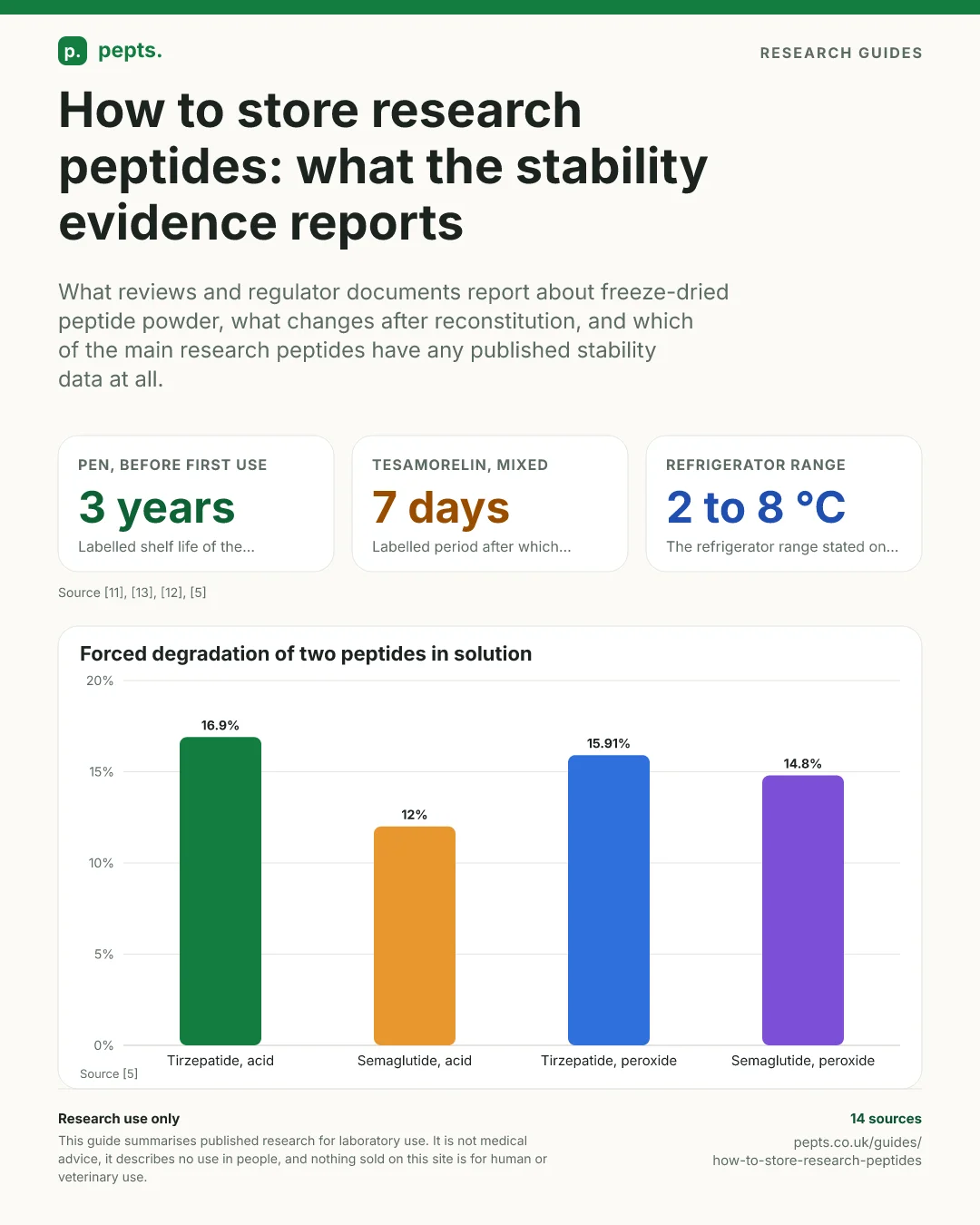
Tirzepatide, 10 min acid
16.90%
Degradation in a forced-degradation stress test, against 12.00% for semaglutide
How peptides degrade
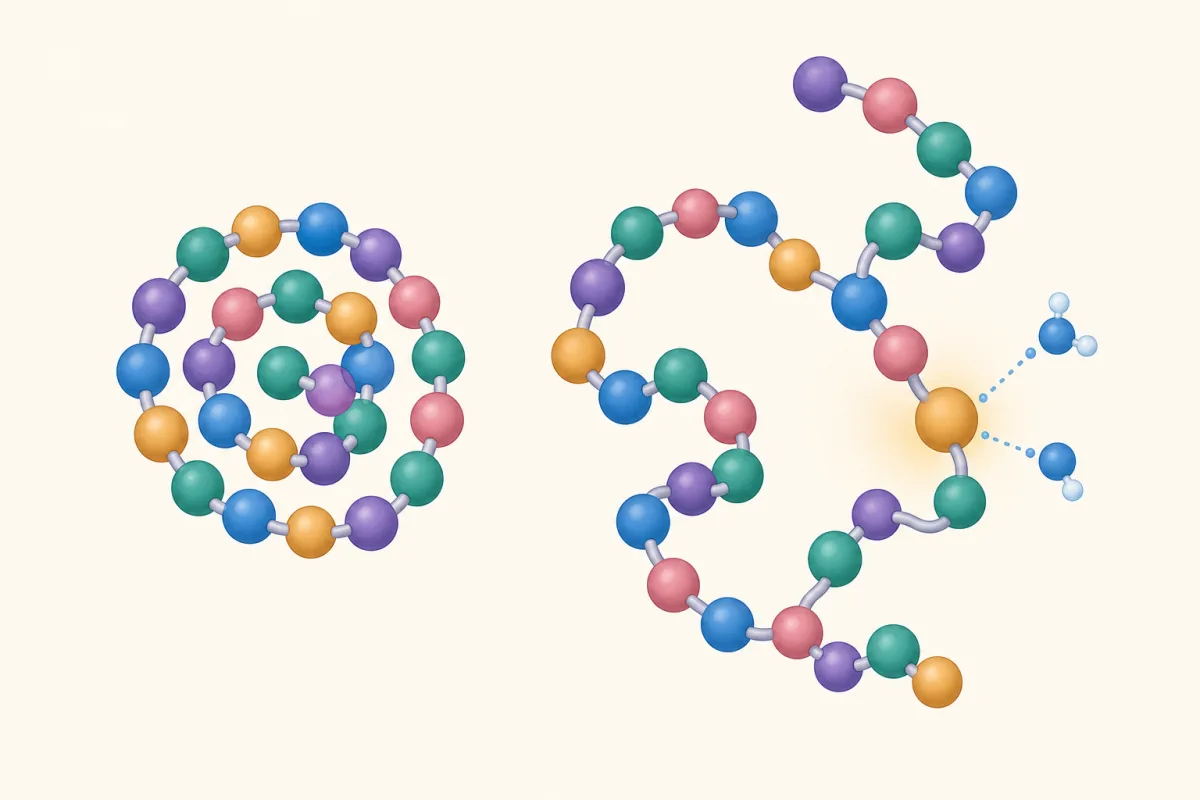
A review of therapeutic peptide stability lists oxidation, hydrolysis, β-elimination, deamidation, racemisation, isomerisation and disulfide exchange as examples of chemical instability pathways [3]. Four of these recur throughout the storage literature, and each depends on a different set of conditions.
- Hydrolysis, the cleavage of bonds by water, is described as one of the main degradation pathways of peptides; it is generally catalysed by Brønsted acids and bases and depends strongly on pH [3].
- Deamidation affects peptides containing glutamine and asparagine, which are converted to glutamic acid and aspartic acid respectively under physiological conditions; the same review reports a pH range between 3 and 5 as the one in which formulations minimise it [3].
- Oxidation acts above all on sulfur-containing residues such as methionine and cysteine, and can be induced by contaminating oxidants, trace amounts of redox-active metals and light, with pH, temperature and buffer composition also mattering [3]. Light-induced oxidation usually affects peptides containing aromatic residues such as tryptophan, tyrosine and phenylalanine, or a disulfide bond [3].
- Aggregation is a physical rather than chemical change: peptides interact to form larger multi-molecular species with altered conformation, solubility and biological activity, and the tendency can rise with changes in pH, temperature and ionic strength [3].
The physical side has its own review. Its authors describe self-association into amorphous aggregates or structured fibrils as a limit on the use of many peptide therapeutics, and survey the effects of sequence, concentration, pH, net charge, excipients, chemical degradation, surfaces and interfaces, and impurities, along with physical parameters such as pressure, temperature, agitation and lyophilisation [1]. A separate review recommends gentle handling of peptides and avoidance of agitation or shear stress, because these can cause structural damage and increase susceptibility to oxidation [3].
The literature on GLP-1 analogues adds a measured observation: temperature and ionic strength influence the conformational properties of these peptides and so their stability during formulation, storage and self-assembly, pH modulates oligomer size, secondary structure and aggregate morphology, and elevated temperature accelerates assembly rearrangement and aggregation [6]. The same review states that the molecular events responsible for initiating irreversible aggregation remain largely unresolved, and that because these peptides sit on shallow energy landscapes even slight process-related disturbances can push them toward partially unfolded or aggregation-prone states [6].
How to store research peptides as dry powder: what labels and reviews report
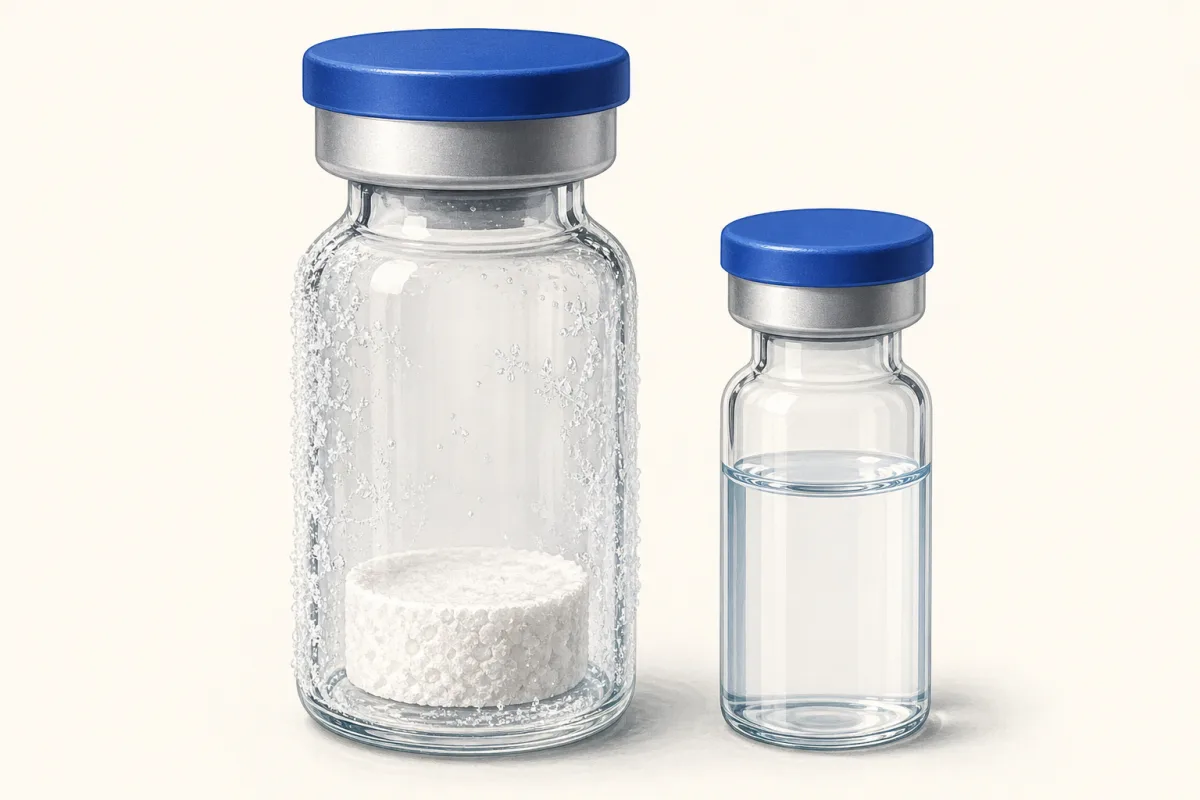
For the dry powder, the evidence gathered for this guide contains no general stability figure at room, refrigerator or freezer temperature. What it contains is a statement of principle and a labelled example. The principle is the one above: a solid form is chosen to reach an acceptable shelf life [2], and even a successfully freeze-dried solid can show limited long-term storage stability [2].
The labelled example is tesamorelin, a peptide supplied as a lyophilised powder. The prescribing information for one licensed product describes 11.6 mg of tesamorelin as a white to off-white lyophilised powder in a vial, supplied with a multiple-dose bacteriostatic water diluent, and states storage of the vial at room temperature, 20°C to 25°C, in the original box to protect it from light, with excursions permitted to 15°C to 30°C [13]. The label for a second tesamorelin product, a 2 mg vial, gives the same 20°C to 25°C range and the same original-box protection from light [14]. These are the manufacturer's labelled conditions for those two formulations. They are facts about two licensed products and not a general statement about lyophilised peptides, and the same sources show how product-specific such statements are: the licensed pens in the next section are labelled for the refrigerator instead [11], [12].
One observation from the compound literature bears on the dry state: excipients matter. A review of BPC-157 notes that the lysine residue at position 7 introduces a glycation liability in the presence of reducing-sugar excipients commonly used in lyophilised peptide formulations, which constrains the choice toward non-reducing alternatives such as trehalose or mannitol [7].
Reconstitution, and what changes in solution
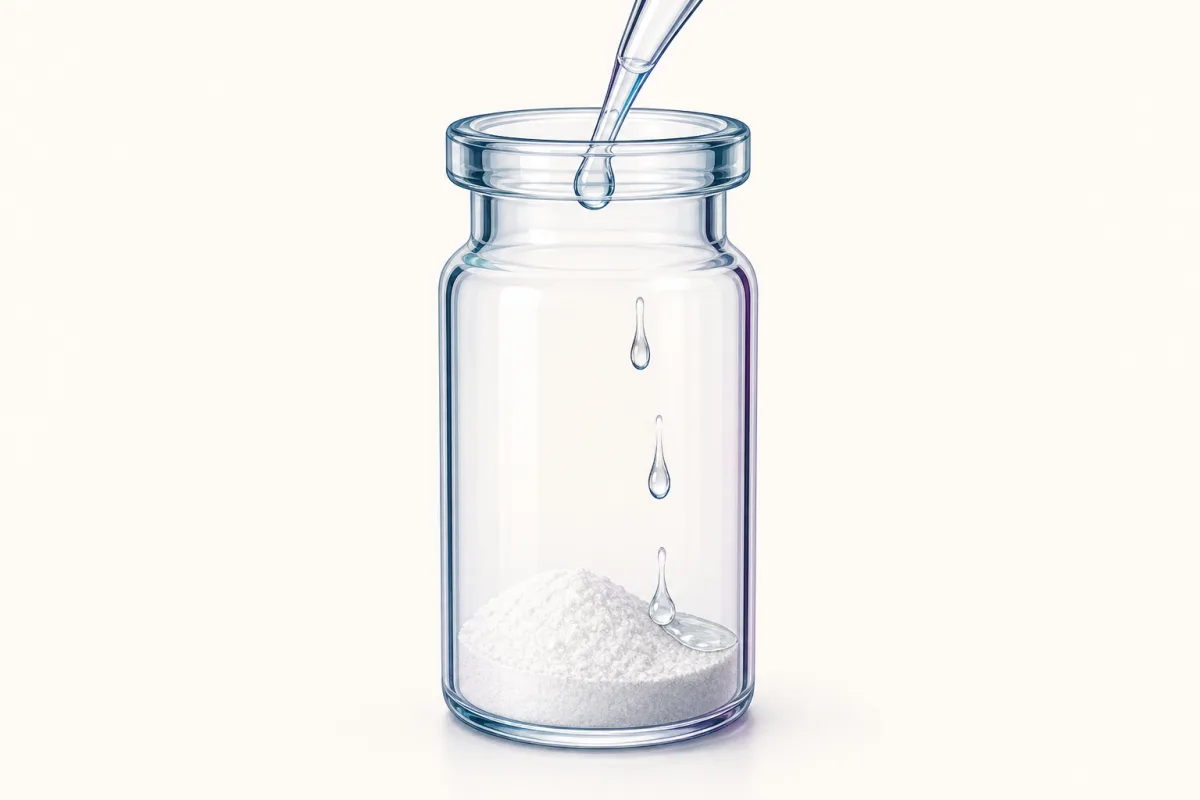
Reconstitution is the return of the freeze-dried solid to solution. The licensed tesamorelin products differ in the diluent they name: Bacteriostatic Water for Injection for one [13] and Sterile Water for Injection for the other [14].
Once the powder is dissolved, the chemistry of the previous section is no longer held back by the cake. The tesamorelin labels show how differently two formulations of one peptide are treated in solution. For the first, reconstituted solution is held at room temperature, 20°C to 25°C, unused solution is discarded 7 days after mixing, and the label states not to freeze or refrigerate it after mixing [13]. For the second, the label states that unused reconstituted solution is discarded if not used immediately, and again not to freeze or refrigerate it [14]. The first label describes a preservative-free lyophilised powder supplied with Bacteriostatic Water for Injection [13]; the second names Sterile Water for Injection [14]. Two labels for one peptide thus give two different in-use periods [13], [14].
A review of preservatives in protein and peptide formulations describes bacteriostatic water as 0.9% w·v⁻¹ (83.2 mM) benzyl alcohol [4]. The same review explains what the preservative class does: alcohols such as benzyl alcohol, chlorobutanol and phenoxyethanol show rapid antimicrobial efficacy against a broad range of vegetative bacteria, viruses and fungi, but are not active against spores [4]. Benzyl alcohol is most efficient at pH below 5 and has only little antimicrobial effect above pH 8 [4]. In that review the preservative's role is antimicrobial; none of its excerpts describes it as protecting the peptide from hydrolysis, oxidation or deamidation [4].
The same review also reports the cost side. Preservatives may decrease the stability of the biological compound tested, mainly through aggregation [4]. In one cited study a formulation containing 0.9% benzyl alcohol aggregated faster than the control, with a monomer reduction of almost 60% against approximately 10% for the control after two days of incubation at 37 °C [4]. The review reports that elevated temperature accelerated aggregation in the presence of preservatives [4]. These are findings about proteins; the review itself cautions that interactions between peptides and preservatives might differ from those found with proteins [4].
The review adds that the preservative cannot be added before lyophilisation because it is volatile during drying, and that its authors know of no licensed formulation with the preservative added before freeze-drying [4]. The tesamorelin label has the diluent bottle discarded 28 days after first use [13].
Shelf life in solution: the labelled in-use periods
The question of peptide stability after reconstitution has no general answer in the reviews gathered here, so the figures below are the only dated periods the evidence contains. Each is a labelled period for a specific licensed product, and none is a shelf life for a research vial.
| Ozempic semaglutide pen, EMA label [11] | 3 years | 6 weeks (four-dose presentation); 8 weeks (eight-dose presentation) | Refrigerator 2 °C to 8 °C, do not freeze; unrefrigerated up to 28 days not above 30 °C |
| Mounjaro tirzepatide single-dose presentations, EMA label [12] | 2 years | Not applicable | Refrigerator 2 °C to 8 °C, do not freeze; unrefrigerated up to 21 cumulative days below 30 °C |
| Mounjaro tirzepatide multi-dose KwikPen, EMA label [12] | 3 years | 30 days | Refrigerator 2 °C to 8 °C, or unrefrigerated below 30 °C |
| Egrifta WR tesamorelin powder, FDA label [13] | Vial at 20°C to 25°C in the original box | 7 days after mixing | Do not freeze or refrigerate after mixing; diluent bottle discarded 28 days after first use |
| Egrifta SV tesamorelin powder, FDA label [14] | Vial at 20°C to 25°C in the original box | Discard if not used immediately | Do not freeze or refrigerate the reconstituted solution |
Read side by side, the rows show labelled periods that differ from one product and presentation to the next. The semaglutide pen is labelled for 3 years before first use and 6 or 8 weeks after, depending on the pen [11]. The single-dose tirzepatide presentations carry 2 years before use [12]. The multi-dose tirzepatide pen carries 3 years before use and 30 days after first use, and its excipient list includes benzyl alcohol, which the single-dose presentations do not list [12].
One study of thymosin beta-4, in a manufacturing setting, gives a different kind of datum. In a paper on loading the peptide into dissolving microneedles, one fabrication protocol held the peptide at 4°C and 65% relative humidity for 48 hours, and after one week of storage at 4°C no significant alterations were detected in the HPLC chromatogram at the peptide's characteristic retention time, which the authors report as confirming its integrity [10]. A second protocol, at 37°C and 65% relative humidity for 48 hours, produced a broadened main peak and distinct impurity peaks after one week of storage at 37°C, which the authors report as indicating peptide degradation [10]. That study concerns a peptide processed inside a microneedle matrix and not a vial of powder or solution, and it shows temperature-dependent degradation for thymosin beta-4 in that system and no more [10].
Percentage degradation of tirzepatide and semaglutide in solution after exposure to acid at room temperature for 10 minutes, and to 10% hydrogen peroxide at room temperature for one hour (tirzepatide) or 20 minutes (semaglutide). This is a forced-degradation stress test used to validate an analytical method, not storage data.
The two peroxide exposures differed in duration (one hour for tirzepatide, 20 minutes for semaglutide), and the source states that harsher acid, base and temperature conditions caused precipitation and were not used; the source reports both peroxide figures, 15.91% for tirzepatide and 14.80% for semaglutide, as degradation 'up to' those values.
Source [5]
The forced-degradation study is the only direct measurement of semaglutide and tirzepatide breakdown in the evidence, and its purpose was analytical: the authors present it as the first stability-indicating HPLC method able to quantify the two peptides in the presence of their degradation products under acidic and basic hydrolysis, oxidative and photolytic stress [5]. They report that both peptides degraded in 0.1 M NaOH, 0.1 M HCl, 10% H2O2, and under thermal and photolytic conditions [5].
Compound by compound: what is and is not published
The table summarises, for the seven peptides in this guide's scope, what the gathered sources report about storage and stability and what they do not. An entry reading that nothing was found is a statement about the evidence collected for this guide, which is a limited set of fourteen sources, and is reported because the absence is itself the finding.
| Semaglutide | Licensed pen label with shelf life, in-use and temperature statements [11]; forced-degradation percentages [5]; GLP-1 analogue structure and aggregation review [6] | Any storage figure for a lyophilised research vial |
| Tirzepatide | Licensed pen and vial labels [12]; forced-degradation percentages [5]; a C20 fatty diacid moiety attached through a linker, described in the structural review [6] | Any storage figure for a lyophilised research vial |
| Retatrutide | Structural review noting careful lipid chain positioning among three agonist motifs [6]; development review stating that formulation must accommodate an amphiphilic peptide and that stability studies are needed [9] | A stability study; any labelled storage or in-use period |
| Cagrilintide | None found in the gathered sources | Any storage, stability or degradation data |
| BPC-157 | Sequence-based chemical analysis; physical stability described as uncharacterised [7] | Forced-degradation results; a validated formulation with stability data [7] |
| TB-500 / thymosin beta-4 | A microneedle-processing study at 4°C and 37°C for thymosin beta-4 [10] | Any study of a product sold as TB-500; vial or solution storage data |
| GHK-Cu | Coordination chemistry, degradation routes to be characterised, packaging and light influences [8] | Measured shelf-life figures |
Semaglutide and tirzepatide are the two with licensed, labelled products, and so the two with real numbers, all of them product-specific [11], [12]. The forced-degradation study treats the two as analytes and reports the percentages in the chart above [5]. None of this is a storage figure for a lyophilised vial sold for research.
Retatrutide has no licensed product among these sources. The structural review reports that integrating three receptor agonist motifs requires careful positioning of the lipid chain to avoid steric interference with receptor engagement [6]. A development review of the compound states that formulation must accommodate an amphiphilic peptide while maintaining chemical stability, acceptable particle levels and reproducible delivery and that stability studies are needed under relevant storage, transport and in-use conditions [9]. These statements describe what remains to be established. No retatrutide stability figure appears in any source gathered here.
Cagrilintide is the plain gap: none of the fourteen sources reports storage, stability or degradation data for it, and this guide states no figure for it.
BPC-157 is the best analysed on paper and the least measured in practice. A recent review argues from the sequence that the peptide is unusually favourable from a chemical-degradation standpoint: it has no methionine, cysteine, tryptophan, asparagine or glutamine, which removes the principal oxidative and deamidation pathways, leaving hydrolysis of an aspartyl bond as the primary chemical liability under acidic and neutral conditions [7]. The same review states that physical stability, meaning aggregation and adsorption, is uncharacterised, that the relevance of the usual degradation pathways to BPC-157 has not been investigated, and that forced-degradation studies under ICH Q1A stress conditions have not been reported [7]. It also reports that no peer-reviewed formulation development activity and no patent literature describes a validated formulation with defined composition and stability data [7].
TB-500 and thymosin beta-4. The only measurement in the evidence is the microneedle study of thymosin beta-4 described above, with its two temperatures and its single week [10]. The gathered sources contain no study of a product sold under the name TB-500, and this guide does not treat the two names as interchangeable.
GHK-Cu is a copper complex, which adds problems a plain peptide lacks. The review reports that GHK binds Cu(II) strongly but that the species present depend on pH, stoichiometry and competing ligands [8]. It says four degradation or transformation routes should be assumed and characterised: backbone hydrolysis under acidic and alkaline conditions, oxidation of the peptide and copper-catalysed oxidation of excipients, metal exchange with competing ligands, and physical aggregation or particle formation [8]. It notes that both the peptide and the metal-centred coordination environment may be light-sensitive [8]. These describe the work to be done; no measured shelf life is reported in the excerpts gathered here [8].
Why storage matters, and what is still unknown
A reagent is only as informative as its identity. The reviews connect instability directly to function: peptides that are unstable in solution suffer in stability and bioactivity [3], aggregates can have altered conformation, solubility and biological activity [3], and self-association is described as limiting the use of many therapeutic peptides [1]. On this guide's own reading of those findings, a degraded or aggregated vial is no longer the labelled compound, and an experiment run with it measures something else. The forced-degradation work makes the same point from the analytical side: its method was built to quantify the intact peptides without interference from degradants, which is only needed because degradants form [5].
The status of the material matters as much as the chemistry. Semaglutide and tirzepatide are the active substances of the licensed medicines Ozempic and Mounjaro, whose product information is published by the European Medicines Agency [11], [12]. A research vial is not those products, and their labelled periods do not transfer to it. The BPC-157 review states that preparations available through compounding pharmacies, grey-market suppliers and research chemical vendors exist outside any quality assurance framework and have not been subjected to the analytical characterisation, stability testing or manufacturing controls required of investigational medicinal products [7]. Retatrutide is the subject of a review framed around emerging phase 3 evidence, and BPC-157 of one framed as an investigational therapeutic [9], [7]. As the publisher's own framing, the research compounds discussed in this guide are research reagents, not approved for human use, and nothing here describes any use in people. Ozempic, Mounjaro and Egrifta are licensed medicines with their own formulations [11], [12], [13], [14].
Several things remain unknown, and the sources say so. No source gathered here reports a general months-at-temperature figure for any lyophilised research peptide, nor a measured shelf life for reconstituted retatrutide, cagrilintide, BPC-157, TB-500 or GHK-Cu. For BPC-157 the forced-degradation profile, physical stability and a validated formulation are all unreported [7]; for GHK-Cu the degradation routes are described as needing characterisation [8]; for GLP-1 analogues the initiation of irreversible aggregation is unresolved [6]; and for retatrutide stability studies under storage, transport and in-use conditions are stated as needed [9].
On our shelf
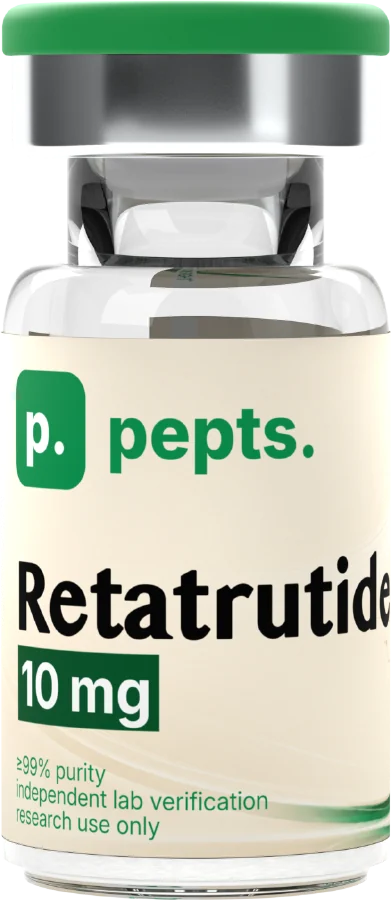
Research-grade Retatrutide, for laboratory use only.
View the listing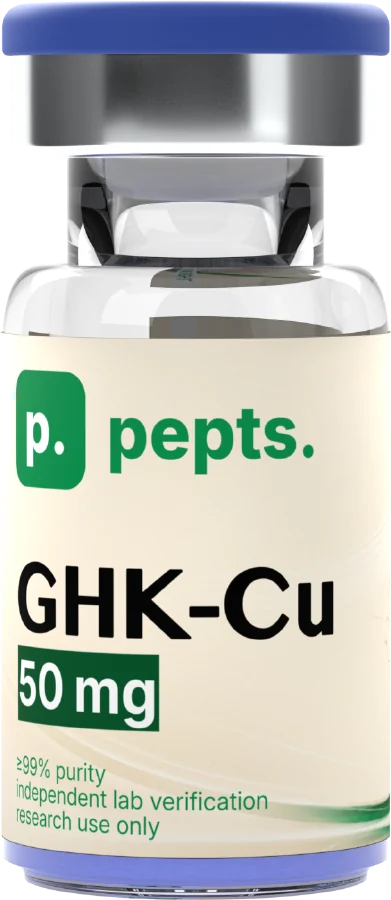
Research-grade GHK-Cu, for laboratory use only.
View the listing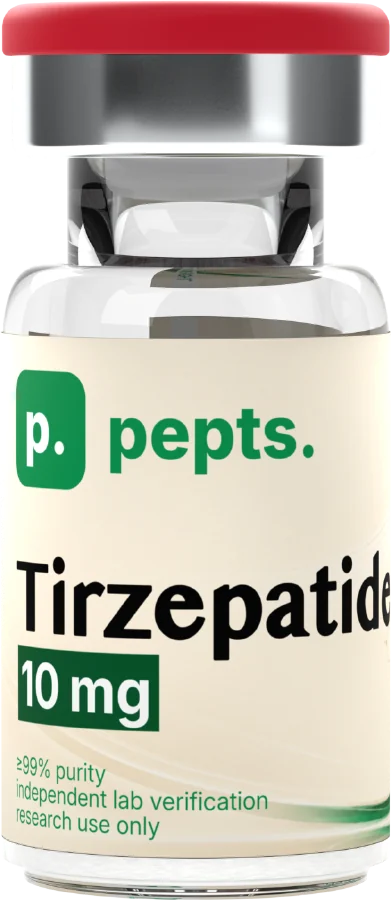
Research-grade Tirzepatide, for laboratory use only.
View the listing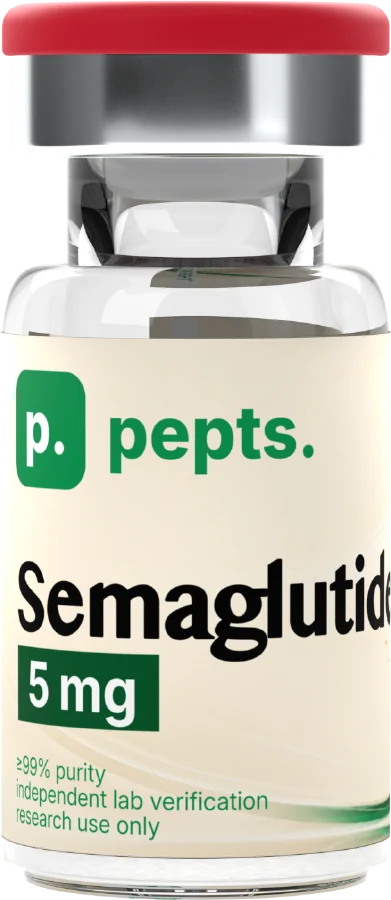
Research-grade Semaglutide, for laboratory use only.
View the listing
Research-grade Cagrilintide, for laboratory use only.
View the listing
Research-grade BPC-157 + TB-500, for laboratory use only.
View the listing
Research-grade BPC-157 + TB-500 + GHK-Cu, for laboratory use only.
View the listing
Research-grade Bacteriostatic Water, for laboratory use only.
View the listing
Research use only This guide summarises published research for laboratory use. It is not medical advice, it describes no use in people, and nothing sold on this site is for human or veterinary use.
References
Every figure in this guide points at one of the sources below; the number in brackets is the entry it came from.
- I
Zapadka KL, Becher FJ, Gomes Dos Santos AL, Jackson SE
ReviewInterface focus2017DOI 10.1098/rsfs.2017.0030PMID 29147559PMC5665799pmc.ncbi.nlm.nih.gov
- I
Wang W
ReviewInternational journal of pharmaceutics2000 - P
Nugrahadi PP, Hinrichs WLJ, Frijlink HW, Schöneich C, Avanti C.
ReviewPharmaceutics2023DOI 10.3390/pharmaceutics15030935PMID 36986796PMC10056213pmc.ncbi.nlm.nih.gov
- P
Stroppel L, Schultz-Fademrecht T, Cebulla M, Blech M, Marhöfer RJ, Selzer PM, Garidel P.
ReviewPharmaceutics2023DOI 10.3390/pharmaceutics15020563PMID 36839885PMC10217790pmc.ncbi.nlm.nih.gov
- B
Khalil HA, Hassanein NA, El-Yazbi AF, Mahgoub H.
PreclinicalBMC chemistry2026DOI 10.1186/s13065-025-01716-7PMID 41588418PMC12918740pmc.ncbi.nlm.nih.gov
- M
Santoro A, Macis M, D'Ursi AM, Ricci A.
ReviewMolecules (Basel, Switzerland)2026DOI 10.3390/molecules31152556PMID 42588408PMC13468180pmc.ncbi.nlm.nih.gov
- P
Mateescu DM, Gavrilescu DM, Constantinescu FE, Oancea C, Ilie AC, Folescu R, Popa MD, Iurciuc S, Muresan CO, Enache A.
ReviewPharmaceutics2026DOI 10.3390/pharmaceutics18050625PMID 42198317PMC13210877pmc.ncbi.nlm.nih.gov
- P
Mateescu DM, Gavrilescu DM, Mincioaga RI, Pah AM, Toma AO, Serban DV, Avram CA, Craciun ML, Enache B, Muresan CO.
ReviewPharmaceutics2026DOI 10.3390/pharmaceutics18091077PMID 42797253PMC13610439pmc.ncbi.nlm.nih.gov
- P
Mateescu DM, Capraru ID, Enache B, Enache A, Precup CV, Buhaș CL, Muresan CO.
ReviewPharmaceutics2026DOI 10.3390/pharmaceutics18101277PMID 42942810PMC13708278pmc.ncbi.nlm.nih.gov
- A
He S, Yuan M, Feng C, Zhang Y, Che J.
PreclinicalAdvanced healthcare materials2026DOI 10.1002/adhm.202504878PMID 41467542PMC13015770pmc.ncbi.nlm.nih.gov
- E
European Medicines Agency; Novo Nordisk A/S
Regulator or registryEuropean Medicines Agency2026ema.europa.eu
- E
European Medicines Agency; Eli Lilly Nederland B.V.
Regulator or registryEuropean Medicines Agency2026ema.europa.eu
- D
U.S. Food and Drug Administration; Theratechnologies Inc.
Regulator or registryDailyMed (U.S. National Library of Medicine)2026dailymed.nlm.nih.gov
- D
U.S. Food and Drug Administration; Theratechnologies Inc.
Regulator or registryDailyMed (U.S. National Library of Medicine)2026dailymed.nlm.nih.gov
Questions
What temperature is lyophilised peptide storage described at?
The reviews gathered here give no general temperature for a lyophilised peptide; the labelled examples are product-specific, with two licensed tesamorelin powders labelled at 20°C to 25°C in the original box [13], [14] and the licensed semaglutide and tirzepatide pens labelled for the refrigerator [11], [12].
What does the literature say about peptide stability after reconstitution?
Peptides are often unstable in aqueous solution, which affects stability and bioactivity [3]. The only dated periods in the evidence are labelled in-use periods of licensed products, ranging from immediate use to 7 days, 30 days, 6 weeks or 8 weeks depending on the product [11], [12], [13], [14].
What is known about peptide shelf life?
A shelf life belongs to a specific formulation: a licensed semaglutide pen is labelled for 3 years before first use and a single-dose tirzepatide presentation for 2 years [11], [12]. No source gathered here gives a shelf-life figure for a research vial of any compound in this guide.
How long do reconstituted peptides last?
The sources report no general answer. One licensed tesamorelin product is labelled for 7 days after mixing and another for immediate use only [13], [14], and the semaglutide and tirzepatide pens are labelled for 6 or 8 weeks and 30 days after first use respectively [11], [12].
What is a lyophilised peptide powder?
It is the solid form of a peptide made by freeze-drying, a process used because proteins are unstable in solution [2]. The process itself imposes freezing and drying stresses, so a solid can still show limited long-term storage stability [2].
How do peptides degrade, according to peptide degradation research?
Reviews list hydrolysis, deamidation, oxidation and aggregation among the main routes, with pH, temperature, light, trace metals and agitation influencing them [3], [1]. A forced-degradation study found semaglutide and tirzepatide degraded under acidic, basic, oxidative, thermal and photolytic stress [5].