
Research guides
What each compound is, what the studies measured and what is still open. Every figure carries its source. Written for the laboratory, not the clinic.
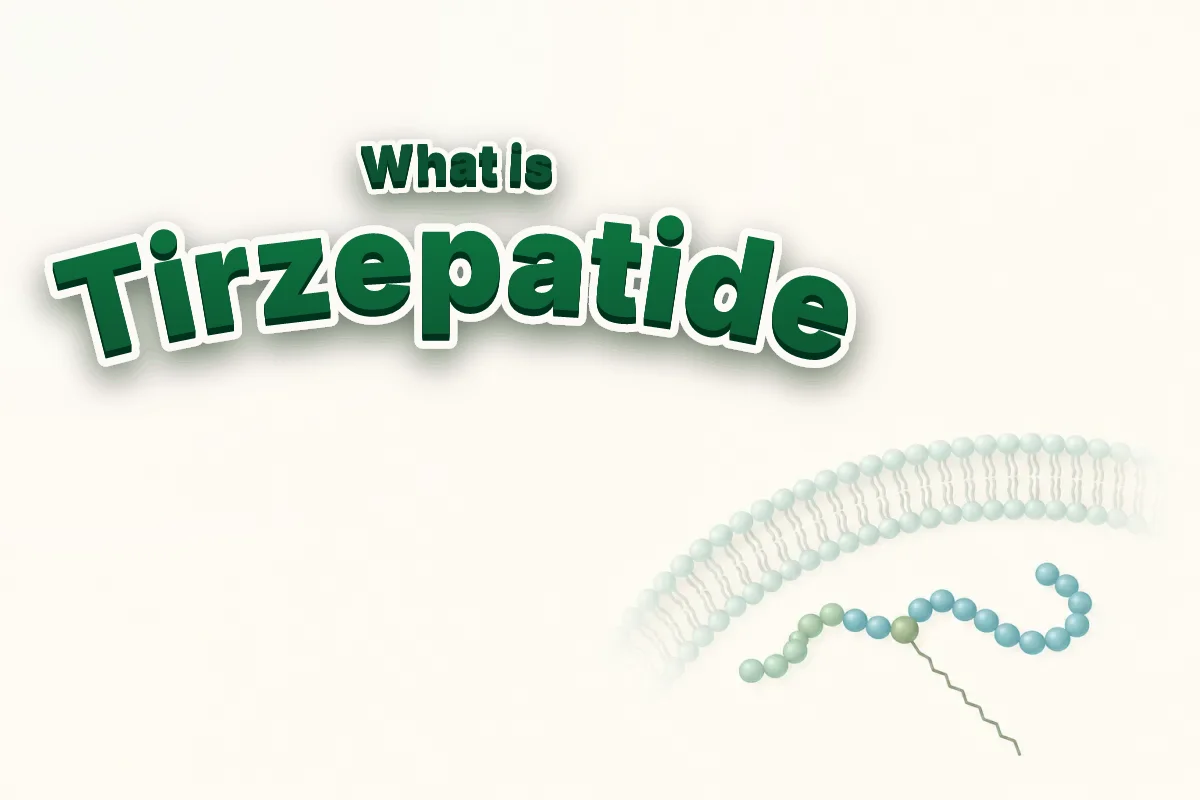
What is tirzepatide? The dual agonist and how it compares
Tirzepatide is a peptide that activates both the GIP and GLP-1 receptors. This guide covers how it works, what its trials measured and how it sits beside semaglutide, retatrutide and cagrilintide without ranking them.
21 October 2026 · 20 min read

Selank vs Semax: two Russian peptides compared
Selank and Semax are two short synthetic peptides that share a Pro-Gly-Pro tail but start from different natural fragments. The comparison covers what each is, what the studies propose and measured, and where each stands with regulators.
18 October 2026 · 20 min read

What is cagrilintide? The amylin analogue and its trials
A long-acting analogue of amylin, the pancreatic hormone that signals fullness, and still investigational: what amylin does, what the monotherapy trial measured, and how it is studied with semaglutide.
16 October 2026 · 19 min read
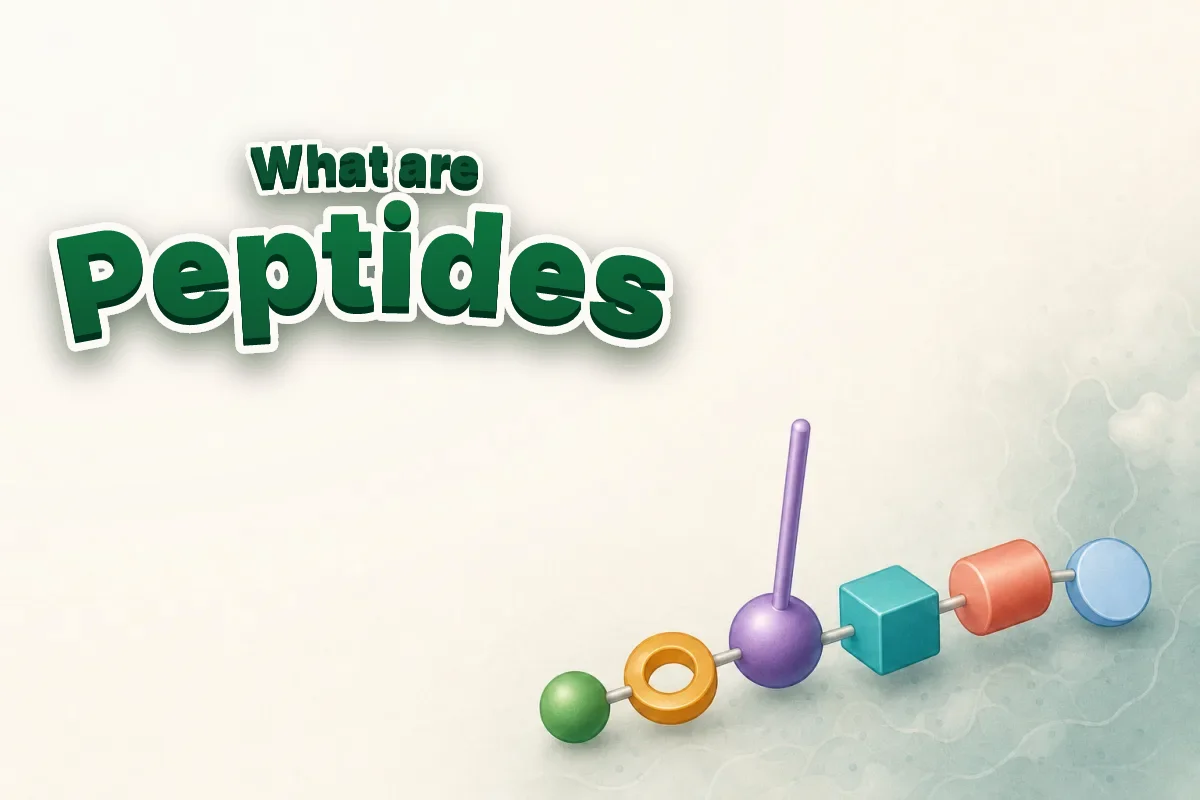
What are peptides, and why are they so popular?
A peptide is a short chain of amino acids, and the body makes many as hormones and signals. This guide covers how they differ from proteins, how chemistry learned to make them, why interest has grown, and where research peptides sit against approved medicines.
10 October 2026 · 16 min read
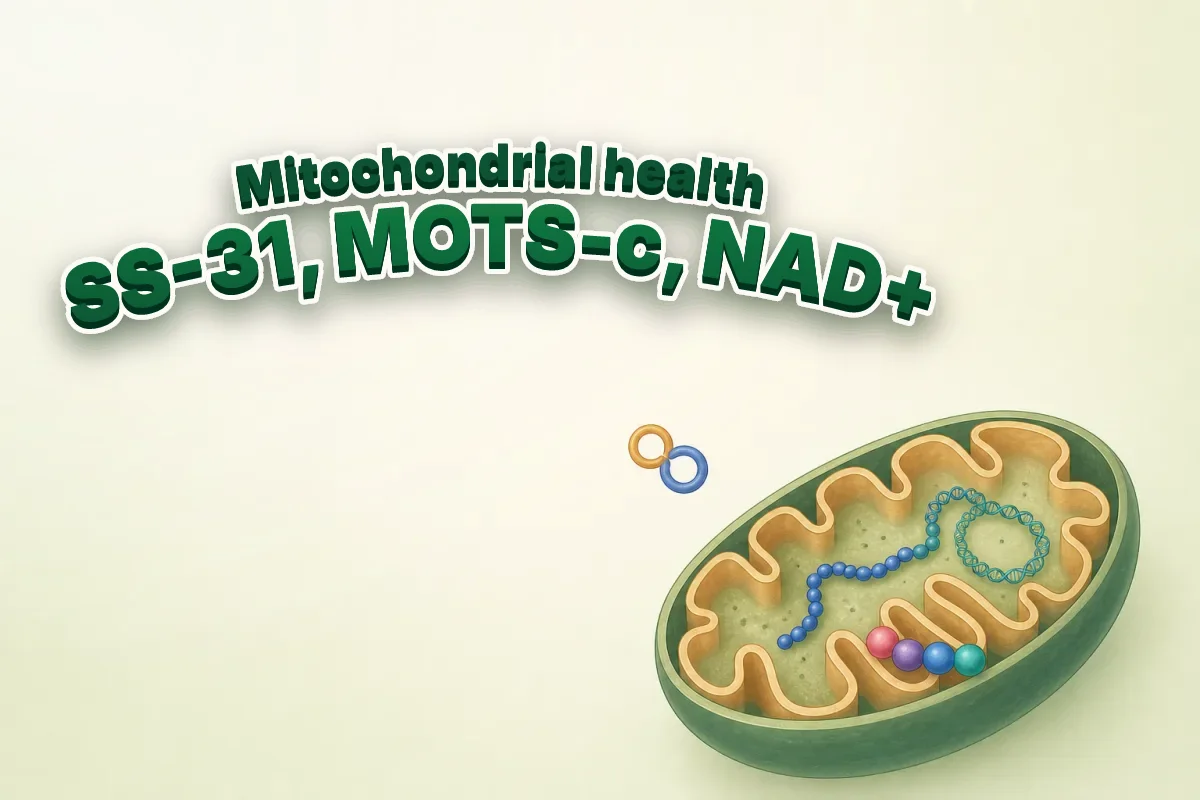
Mitochondrial health: SS-31, MOTS-c and NAD+ in the research on cellular energy
SS-31, MOTS-c and NAD+ each reach mitochondrial energy production by a different route: a peptide that binds a membrane lipid, a peptide encoded in mitochondrial DNA that signals through AMPK, and the coenzyme the respiratory chain runs on. This guide follows what their cell, animal and human studies measured, the positive results and the null ones alike.
28 September 2026 · 18 min read
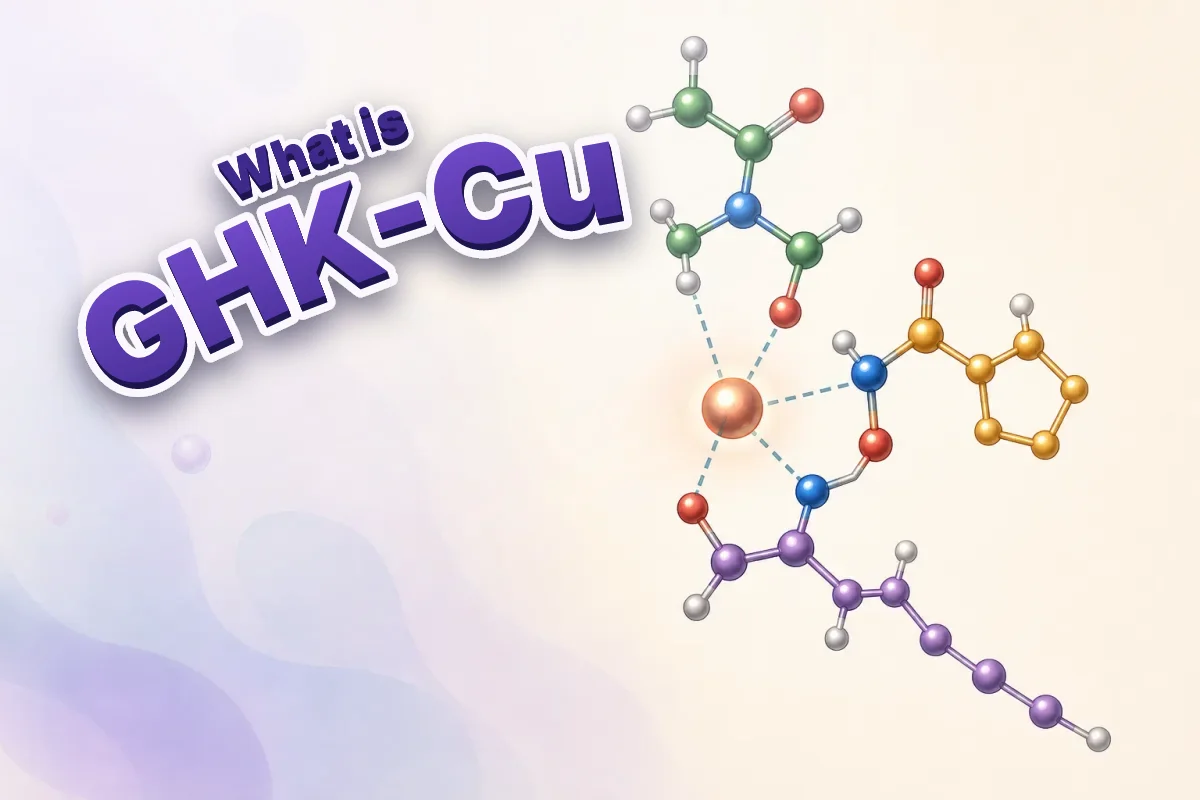
What is GHK-Cu? The copper peptide research so far
GHK-Cu is a copper-binding tripeptide identified in human plasma that has been studied in fibroblast cultures, animal wound models and a small number of human trials. This guide sets out what those gene-expression, skin-model and topical human studies measured, and what has not yet been shown.
23 September 2026 · 21 min read

Retatrutide reconstitution calculator: the arithmetic and the evidence
What reconstituting a lyophilised retatrutide vial involves: the arithmetic a reconstitution calculator performs, what bacteriostatic water and its preservative do in the formulation literature, and where retatrutide stands as an investigational compound.
14 September 2026 · 13 min read

What is MOTS-c? The AMPK and metabolic research so far
MOTS-c is a short peptide encoded within mitochondrial DNA that is reported to activate AMPK, chiefly in skeletal muscle. Mouse studies describe metabolic and physical-capacity effects, human observational studies of circulating MOTS-c report mixed and sometimes null findings, and two clinical registrations are testing MOTS-c and an analogue in people, with no published human interventional result yet.
11 September 2026 · 14 min read

What is retatrutide? What the trials have measured
A single peptide engineered to act on three receptors at once, funded through its trials by Eli Lilly and still investigational. What the trials in obesity, diabetes and liver fat have measured, and what they have not.
9 September 2026 · 20 min read