
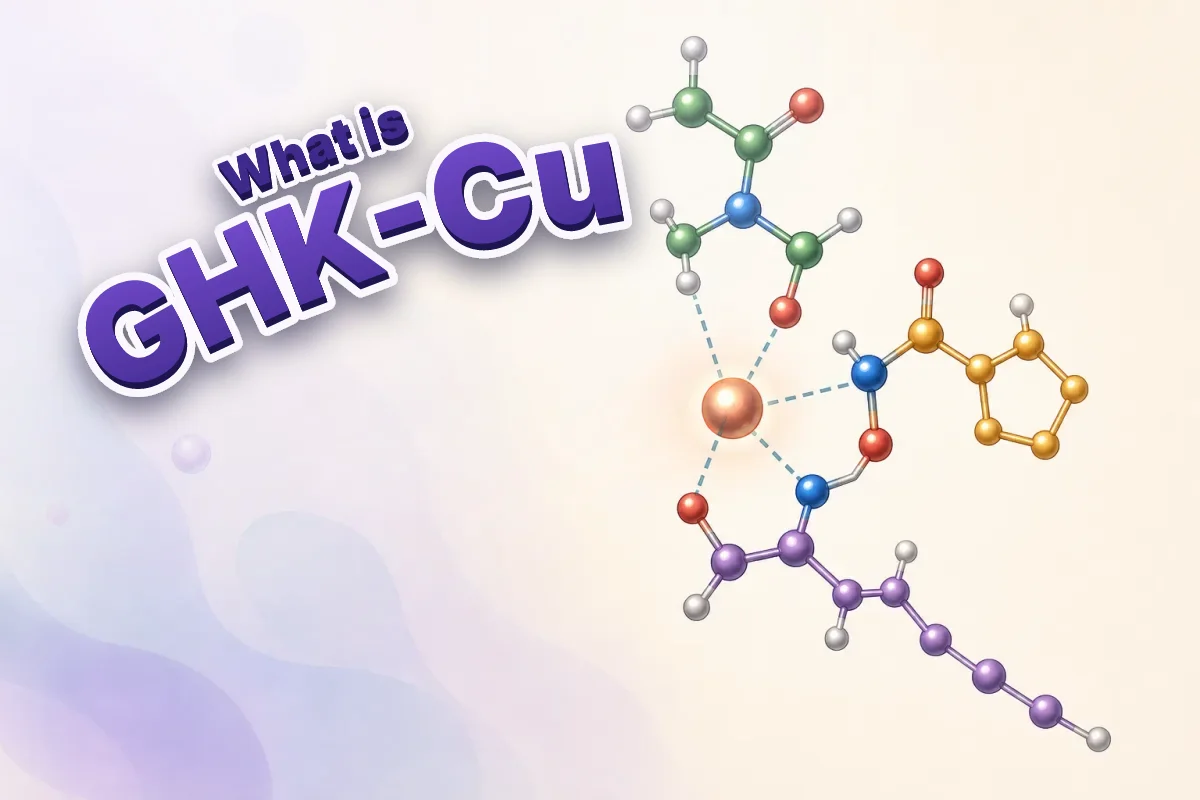
Key points
- GHK-Cu is the tripeptide glycyl-L-histidyl-L-lysine bound to copper, first isolated from human plasma in 1973, with a plasma level of about 200 ng/mL at age 20 that falls to 80 ng/mL by age 60 [1], [2].
- Using the Connectivity Map, researchers identified GHK as a compound that reverses the gene-expression signature of emphysema in COPD lung tissue, in an analysis of 127 genes across 64 samples from 8 lungs [3].
- In fibroblast, skin and animal wound models, GHK-Cu increased collagen synthesis and wound-area closure, though not every study found an effect: a 2013 study in irradiated rat skin flaps found no improvement in blood-vessel measures or VEGF expression compared with a control [5], [6], [7], [9].
- The clearest human intervention study, a 1994 randomised trial in diabetic ulcers, found median wound closure of 98.5% with a GHK-Cu gel against 60.8% with vehicle, and a newly registered 2026 trial is testing a topical gel on standardised acute wounds in healthy adults [13], [14].
- GHK-Cu is investigational: no source here records a marketing authorisation for it as a medicine, the one registered trial in people is a Phase 2 study still recruiting, and for injectable routes it sat in the FDA's compounding category for substances that may present significant safety risks until its nomination was withdrawn [14], [15].
Listen to the summary
A short two-voice summary of this guide.
Transcript
- Host
- GHK-Cu keeps coming up in skin research. What actually is it?
- Researcher
- It is a very small tripeptide, three amino acids, glycine, histidine and lysine, that occurs naturally in human plasma, saliva and urine. It was isolated back in nineteen seventy-three, and what makes it interesting is that it is proposed to work bound to copper, as a complex called GHK-Cu.
- Host
- Does the level in the body change with age?
- Researcher
- Yes. Reviews report it is around two hundred nanograms per millilitre in plasma at age twenty, and that it falls to about eighty nanograms per millilitre by age sixty, a decline that coincides with a fall in an organism's regenerative capacity.
- Host
- How was the copper connection first shown?
- Researcher
- A nineteen eighty paper in Nature reported that the tripeptide forms complexes with copper and increases how much copper gets taken up into cultured liver cancer cells. The same paper found the compound co-purified with roughly equal amounts of copper during isolation, and noted a resemblance to the copper-binding sites on two carrier proteins in blood.
- Host
- What about the gene-expression side people mention?
- Researcher
- Researchers used a tool called the Connectivity Map to look for compounds that reverse disease-related patterns of gene activity. One twenty twelve study profiled sixty-four lung tissue samples from eight lungs with emphysema, found one hundred and twenty-seven genes tied to how severe the damage was, and identified GHK as a compound that could reverse that pattern and switch on a repair pathway called TGF-beta. They confirmed that in fibroblasts taken from lungs with COPD, comparing them with fibroblasts from former smokers who did not have COPD.
- Host
- And the wound and skin studies?
- Researcher
- Mostly measured in cells and animals, and not all in one direction. In fibroblast cultures, collagen synthesis went up. In a rat wound model over thirteen days, a topical gel closed sixty-four and a half percent of the wound area against twenty-eight point two percent for an untreated control. But it was not always positive: one twenty thirteen study in irradiated rat skin flaps found no improvement in blood-vessel measures, and the treated group actually had a larger ischemic area than the control.
- Host
- Is there evidence in people?
- Researcher
- Not much, and what there is, is old or just starting. The strongest is a nineteen ninety-four randomised trial in diabetic foot ulcers: median wound closure of ninety-eight point five percent with the gel against sixty point eight percent with the inactive vehicle. Facial and cosmetic studies are described in a two thousand and fifteen review, but their own papers are not in our evidence. And a new Phase two trial registered in twenty twenty-six is testing a topical gel on small standardised wounds in sixty healthy adults; it is still recruiting.
- Host
- So where does that leave it, on the regulatory side?
- Researcher
- None of the sources shows it authorised as a medicine, and the only trial registered in people is still recruiting. On the American side, the FDA once held injectable GHK-Cu in a category of compounding ingredients that may carry significant safety risks, until the nomination was withdrawn; the agency's note mentions a risk of immunogenicity and limited data in people. So it remains investigational. Every figure I have mentioned here is in the guide itself, with the source it came from.
What is GHK-Cu?
What is GHK-Cu? It is a small tripeptide, the three amino acids glycine, histidine and lysine joined in that order, glycyl-L-histidyl-L-lysine or GHK, that occurs naturally in human plasma, saliva and urine [1]. In the FDA's substance register, GHK itself is named prezatide [16], and GHK-Cu prezatide copper, with GHK copper and copper tripeptide-1 among its synonyms [17]. It is proposed to function as a complex with copper 2+, which a 2015 review describes as accelerating wound healing and skin repair [1]. The peptide was isolated in 1973 by Pickart as an activity in human albumin that caused old human liver tissue to synthesise proteins like younger tissue [1]. In plasma its level is about 200 ng/mL at age 20 and declines to 80 ng/mL by age 60, a fall that reviews describe as coinciding with the noticeable decrease in the regenerative capacity of an organism [1], [2].
- Fibroblast cultures, where GHK-Cu's effect on collagen synthesis and growth factor production has been measured directly [5], [8], [10].
- Rat wound models, from implanted wound chambers to ischemic and irradiated skin flaps [6], [7], [9].
- Lung-tissue gene-expression profiles, in an analysis of emphysema severity in COPD [3].
- Human skin measured in vitro, for how much applied copper penetrates each layer [11].
- People, in a 1994 diabetic ulcer trial and a Phase 2 trial registered in 2026 [13], [14].
1973
Pickart isolates GHK from human plasma, as an activity in human albumin that causes old human liver tissue to synthesise proteins like younger tissue.[1]
1980
A Nature paper reports that the tripeptide forms complexes with copper(II) and enhances the uptake of the metal into cultured hepatoma cells.[4]
1988
Maquart and colleagues report that GHK-Cu stimulates collagen synthesis in fibroblast cultures, maximal at 10(-9) M.[5]
1993
The same group reports that GHK-Cu increases collagen and glycosaminoglycan accumulation in rat experimental wounds in vivo, in a concentration-dependent way.[6]
1994
A multicentre, randomised, evaluator-blinded, placebo-controlled trial reports that a GHK-Cu gel increases the closure of diabetic neuropathic plantar ulcers over standard wound care and vehicle.[13]
2011
An in vitro study measures how much copper applied as GHK-Cu passes through isolated human stratum corneum, epidermis and dermatomed skin over 48 hours.[11]
2012
Using the Connectivity Map, researchers identify GHK as a compound that reverses the gene-expression signature of emphysematous lung destruction in COPD.[3]
2026
A registered Phase 2 trial begins recruiting to test a topical GHK-Cu gel against a vehicle gel on standardised acute skin wounds in healthy adults.[14]
How GHK-Cu holds copper
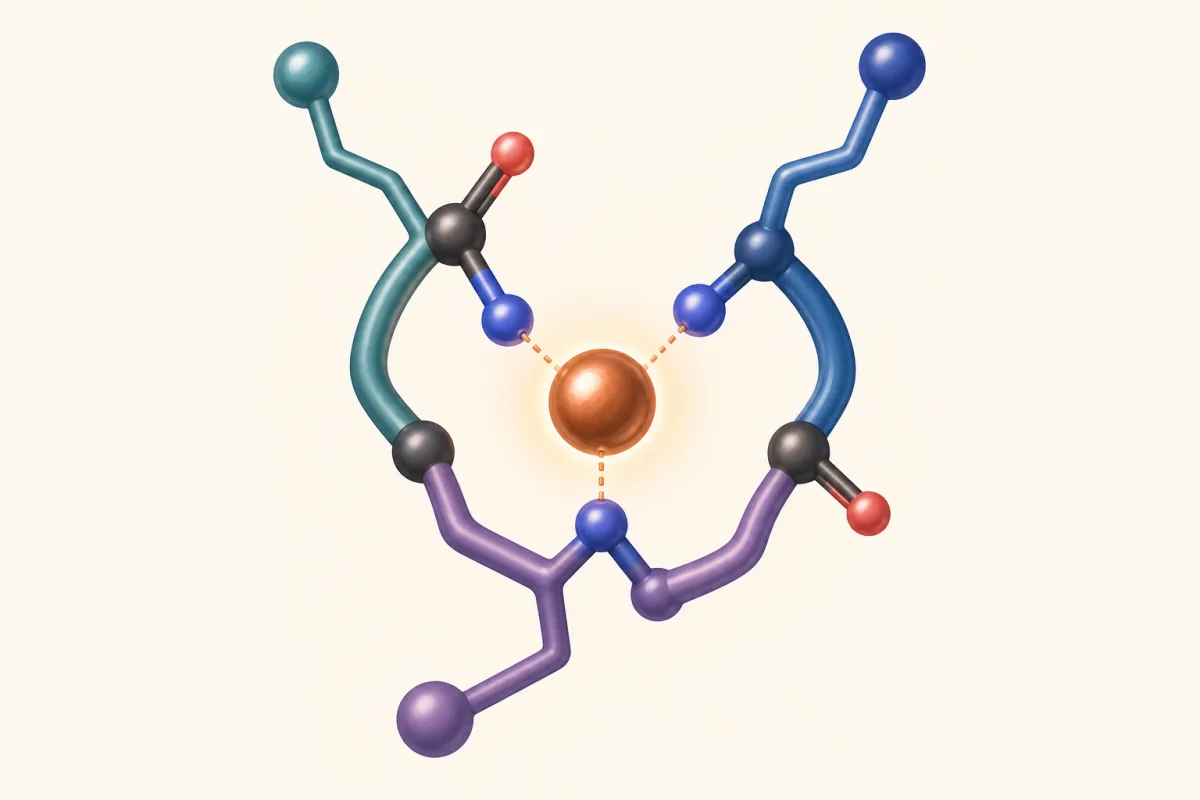
The 1980 Nature paper that first connected the peptide to copper describes it as GHL, glycyl-L-histidyl-lysine, added at nanomolar concentrations to a wide group of cultured cell systems, where it produced a disparate set of responses ranging from the stimulation of growth and differentiation to outright toxicity [4]. During its isolation the tripeptide co-purified with approximately equimolar copper and about one-fifth molar iron, and the authors report that the compound readily forms complexes with copper(II) and enhances the uptake of the metal into cultured hepatoma cells [4]. Maximal effects on those cells were seen when the peptide was added together with copper and iron to the growth medium [4].
The same paper reports that several tripeptides carrying a histidyl-lysyl linkage were nearly as active as GHL, and notes a homology between the tripeptide and the copper-transport sites on two carrier proteins, albumin and alpha-fetoprotein, where the cupric atom binds to a histidyl residue next to a basic residue; that resemblance is what suggested the tripeptide might act as a copper-transport factor [4]. Later reviews report that GHK stimulates both the synthesis and the breakdown of collagen and glycosaminoglycans while modulating the activity of metalloproteinases and their inhibitors [1]. A 2018 review lists blood-vessel and nerve outgrowth, increased collagen, elastin and glycosaminoglycan synthesis, and support for the function of dermal fibroblasts among the actions it attributes to GHK [2].
What the gene-expression studies measured
Several of the findings in this guide come from the Connectivity Map, a tool built by the Broad Institute of MIT and Harvard: a publicly available library of transcriptional responses to known perturbagens, substances that modulate gene expression [2]. Researchers use it to ask which of many catalogued compounds produces, or reverses, a given pattern of gene-expression change [2].
Using the Connectivity Map, researchers established that GHK-Cu is able to up- and downregulate a significant number of human genes: a 2018 review reports that the share of human genes stimulated or suppressed by GHK, at a change of 50% or more, is 31.2%, with 59% of those changed genes increased in expression and 41% suppressed [2]. A 2015 review states the broader figure as at least 4,000 human genes up- or downregulated, and reports that GHK significantly increased the expression of DNA-repair genes specifically, with 47 genes stimulated and 5 suppressed at that same 50%-or-more threshold [1]. Both reviews are co-written by Pickart, who first isolated the peptide in 1973 [1], [2].
| Genome-wide profile [2] | Connectivity Map library of transcriptional responses | Human genes changed by 50% or more | 31.2% of genes, 59% of those increased and 41% suppressed |
| DNA-repair genes [1] | Connectivity Map | DNA-repair genes changed by 50% or more | 47 stimulated, 5 suppressed |
| Emphysema signature [3] | 64 lung-tissue samples, 8 regions from each of 8 lungs from smokers with COPD | Genes associated with regional emphysema severity | 127 genes, with GHK identified through the Connectivity Map as reversing the signature |
The most detailed single study behind this picture is a 2012 gene-expression analysis of chronic obstructive pulmonary disease, COPD [3]. The researchers profiled gene expression in lung tissue taken from regions of varying emphysema severity within the same lung, in eight regions across eight lungs from smokers with COPD, 64 samples in total, with regional severity quantified from micro-CT scans [3]. They identified 127 genes whose expression was significantly associated with regional emphysema severity: genes involved in inflammation, such as the B-cell receptor signalling pathway, increased with worsening destruction, while genes enriched in tissue-repair processes, including the transforming growth factor beta, TGFβ, pathway, actin organisation and integrin signalling, decreased [3]. Using the Connectivity Map, the researchers then identified GHK as a compound that could reverse this gene-expression signature and induce patterns consistent with TGFβ pathway activation [3]. They tested that prediction directly: treating human fibroblasts with GHK reproduced the gene-expression pattern TGFβ itself produces, led to organisation of the actin cytoskeleton, and raised the expression of integrin β1 [3]. In fibroblasts taken from COPD lungs, which had an impaired ability to contract and remodel collagen, adding either GHK or TGFβ restored that function [3].
The fibroblast, skin and wound-model studies
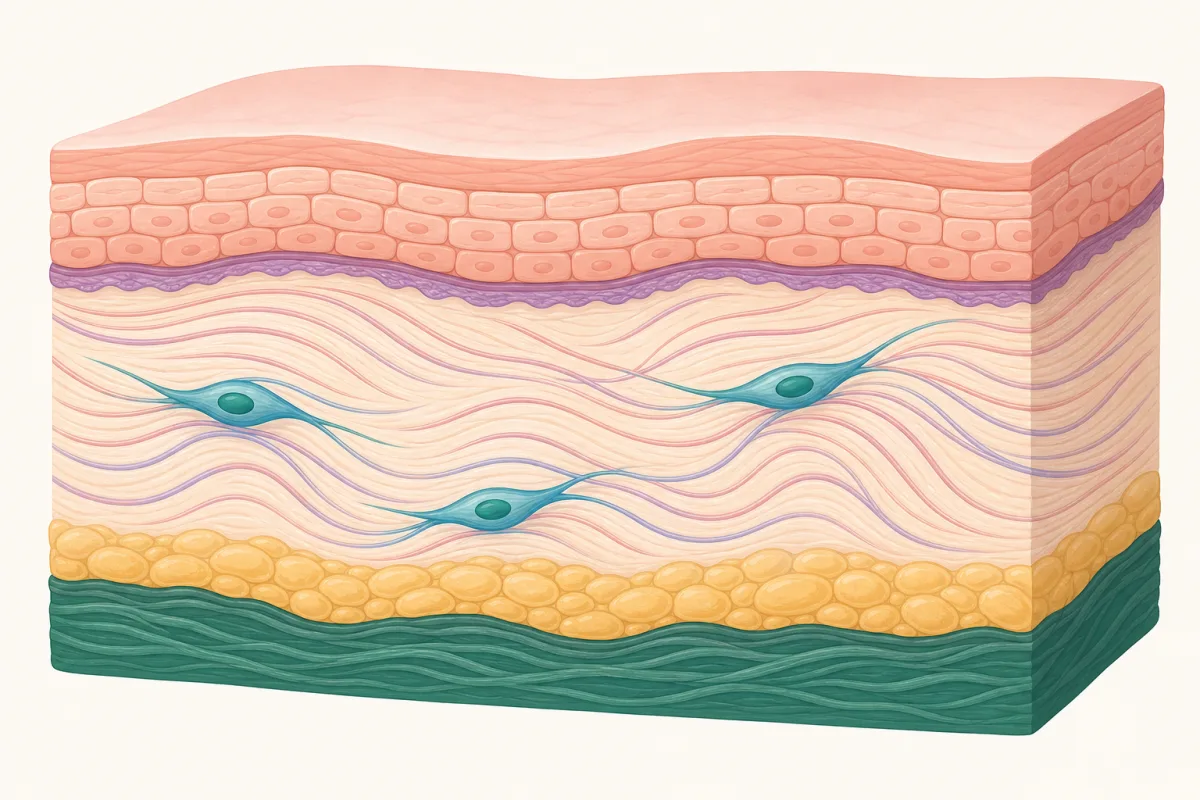
The earliest of these studies measured collagen production directly. In 1988, Maquart and colleagues reported that GHK-Cu stimulates collagen synthesis in fibroblast cultures: the effect began between 10(-12) and 10(-11) M and was maximal at 10(-9) M, independent of any change in cell number [5]. The same paper notes that the GHK sequence occurs as a natural triplet within the alpha 2(I) chain of type I collagen, and suggests the tripeptide might be released there by proteases at a wound site [5].
A follow-up study in 1993 moved from cultured cells to a living animal: stainless-steel wire-mesh cylinders were implanted subcutaneously on the backs of rats, and the wound chambers received sequential injections of saline or various concentrations of GHK-Cu [6]. The GHK-Cu chambers showed a concentration-dependent increase in dry weight, DNA, total protein, collagen and glycosaminoglycan content, with the stimulation of collagen synthesis twice that of non-collagen proteins; type I and type III collagen mRNAs increased, though TGF beta mRNA did not [6]. A control tripeptide, L-glutamyl-L-histidyl-L-proline, had no significant effect [6].
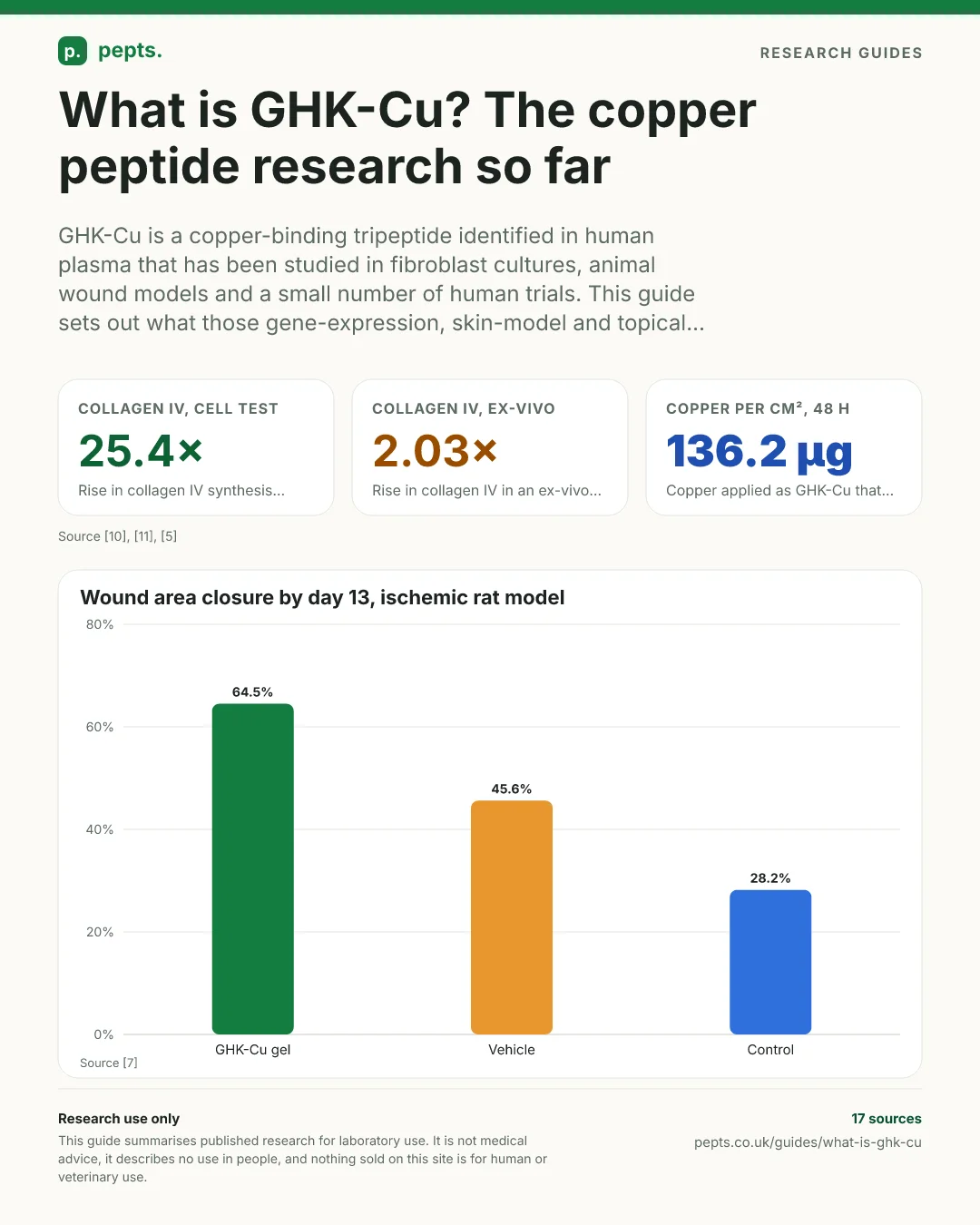
A 2003 study tested a topical GHK-Cu gel on ischemic wounds in 24 adult male Sprague-Dawley rats, divided into a treated group, a vehicle group and an untreated control, with 6-mm full-thickness wounds created within an ischemic skin flap and traced daily for 13 days [7]. Wound area fell significantly more in the treated group than in the control on days 3 to 5, 6 to 9 and 11 to 13, and more than in the vehicle group on days 3 and 9 [7]. By day 13, initial wound area had decreased by 64.5% in the treated group, 45.6% in the vehicle group and 28.2% in the untreated control, and biopsies on days 6, 10 and 13 showed the treated wounds carried significantly lower concentrations of tumour necrosis factor alpha, and of two matrix metalloproteinases, MMP-2 and MMP-9, than the control [7].
Percentage decrease in wound area from baseline by day 13, comparing topical GHK-Cu gel, its vehicle alone and an untreated control, in 24 adult male Sprague-Dawley rats.
The GHK-Cu group differed significantly from the untreated control on days 3 to 5, 6 to 9 and 11 to 13, and from the vehicle group on days 3 and 9.
Source [7]
A 2005 study looked at whether GHK-Cu changes how fibroblasts grow and what growth factors they produce, using human dermal fibroblasts, normal and irradiated, from patients previously treated with radiation for head and neck cancer, exposed to GHK-Cu at 1 x 10(-9) mol/L [8]. Both normal and irradiated fibroblasts treated with GHK-Cu doubled faster than untreated controls, and irradiated fibroblasts treated with GHK-Cu produced significantly more basic fibroblast growth factor and vascular endothelial growth factor than untreated controls early after exposure [8].
Not every study in this group found an effect. A 2013 study applied a topical GHK-Cu gel or an aquaphilic ointment control twice daily for 10 days to irradiated dorsal skin flaps in Sprague-Dawley rats, then stained the harvested tissue for a vascular-endothelium marker, caveolin-1, and for vascular endothelial growth factor [9]. By digital analysis, the GHK-Cu group showed a larger mean ischemic area than the control, 5.0 cm² against 3.8 cm² (P=.011), and there was no significant difference between the groups in blood-vessel number, vessel area or VEGF expression: the authors conclude that the treated flaps showed no difference in flap ischemia, blood-vessel number or area, or VEGF expression compared with controls [9].
A 2023 study asked whether GHK-Cu behaves differently alongside another common skincare ingredient, hyaluronic acid, HA, by treating cultured human dermal fibroblasts with a series of GHK-Cu and HA combinations and measuring collagen I, IV and VII expression [10]. The combination promoted the generation of all three, with a particular synergy on collagen IV: at a ratio of 1:9, GHK-Cu and low-molecular-weight HA raised collagen IV synthesis 25.4 times in the cell test and 2.03 times in a follow-up ex-vivo skin model [10].
How much of this reaches the skin at all is a separate question from what it does once there. A 2011 in vitro study applied copper as GHK-Cu to isolated human stratum corneum, epidermis and dermatomed skin, using flow-through diffusion cells over 48 hours [11]. Through dermatomed skin, the permeability coefficient was 2.43 ± 0.51 × 10⁻⁴ cm/h; 136.2 ± 17.5 μg of copper permeated each square centimetre over 48 hours, and 97 ± 6.6 μg/cm² was retained as a depot [11]. A 2025 review summarises the same study as retaining 0.6% to 2.8% of the applied dose across the three skin layers, and notes that GHK-Cu is fairly hydrophilic with limited permeation through the stratum corneum, prompting interest in liposome encapsulation to improve it [12].
Collagen IV, cell test
25.4×
Rise in collagen IV synthesis with GHK-Cu and hyaluronic acid combined at a 1:9 ratio, in cultured human dermal fibroblasts
Collagen IV, ex-vivo
2.03×
Rise in collagen IV in an ex-vivo skin model at the same 1:9 ratio of GHK-Cu to hyaluronic acid
Copper per cm², 48 h
136.2 μg
Copper applied as GHK-Cu that permeated each square centimetre of dermatomed human skin in vitro over 48 hours
Peak collagen synthesis
10(-9) M
Concentration at which collagen synthesis in fibroblast cultures was maximal
How the topical human studies were designed
Three kinds of study in this guide applied GHK-Cu to people rather than to cell cultures or animals: a randomised controlled trial in diabetic ulcers, a set of facial and cosmetic studies described in a review, and a newly registered trial in acute wounds [13], [1], [14].
The oldest and most rigorously designed is a 1994 multicentre, randomised, evaluator-blinded, placebo-controlled trial of a glycyl-L-histidyl-L-lysine:copper complex gel in diabetic neuropathic plantar ulcers [13]. Every patient followed the same aggressive standardised wound-care protocol: sharp debridement at study entry, a daily metered dose of the study drug or its vehicle, standardised pressure-relieving footwear, and education on diabetes control and activity [13]. Treatment significantly increased the percentage closure of plantar ulcers, a median of 98.5% of the area closed against 60.8% with vehicle, and increased the proportion of patients healing 98% or more; the rate of closure was three times faster with the gel than with standard care and vehicle alone [13]. The enhancement was more pronounced in the larger ulcers, those over 100 mm² at study entry, which had failed to respond adequately to standardised wound care without the gel: median closure there was 89.2% against -10.3% with vehicle, meaning the vehicle-treated larger ulcers grew rather than healed over the study period [13]. Treatment had to begin immediately after the initial debridement to obtain that enhancement, and the incidence of ulcer infection was significantly lower in the gel-treated ulcers, 7% against 34% with vehicle [13].
A separate set of findings comes from a 2015 review's own account of placebo-controlled clinical studies of skin quality in women around 50 years old, rather than from those studies' own papers, since none of them appear as a primary source in this guide's evidence [1]. The review describes a one-month thigh study of collagen production by skin-biopsy immunohistology, where increases were seen in 70% of women on GHK-Cu against 50% on a vitamin C cream and 40% on retinoic acid, and three further 12-week facial or eye-cream studies, in 71, 41 and 67 women respectively, each reporting reduced lines and wrinkles and increased skin density and thickness; the review names a comparator only for the 41-woman eye-cream study, a placebo control and a vitamin K eye cream, and opens by calling the group of studies placebo-controlled without naming one for the other two [1]. The table below sets out each study's population, duration and reported result.
| Thigh collagen cream [1] | Women, cream applied to the thighs | 1 month | Collagen production by skin-biopsy immunohistology | Increase in 70% (GHK-Cu) against 50% (vitamin C) and 40% (retinoic acid) |
| Facial cream [1] | 71 women, mild to advanced photoageing | 12 weeks | Skin laxity, clarity, fine lines, wrinkle depth, density and thickness | Improved on every measure reported |
| Eye cream [1] | 41 women, mild to advanced photodamage, against a placebo and a vitamin K cream | 12 weeks | Lines, wrinkles, overall appearance, skin density and thickness | GHK-Cu cream performed better than both comparators |
| Facial cream, older cohort [1] | 67 women aged 50 to 59, mild to advanced photodamage | 12 weeks | Laxity, clarity, firmness, fine lines, coarse wrinkles, pigmentation, density, thickness, keratinocyte proliferation | Improved on every measure; keratinocyte proliferation strongly stimulated on biopsy |
Source [1]
The newest and only currently active human study is a Phase 2 trial registered in 2026: a randomised, double-blind, vehicle-controlled, split-wound design testing whether a topical GHK-Cu gel speeds the re-epithelialisation of small, standardised acute skin wounds in healthy adults, against a matching vehicle gel [14]. Each of an estimated 60 participants will receive two 5-mm punch-biopsy wounds on the non-dominant upper arm, created under local anaesthetic, with each wound randomised 1:1 to GHK-Cu gel or vehicle gel and dressed identically so the two wounds on the same arm can be compared directly [14]. The gel is applied once daily for 14 days under standardised non-adherent dressings, with in-clinic assessment and standardised digital photography on days 3, 7, 10, 14 and 21, and a scar assessment at week 12 [14]. The primary outcome is the time to complete re-epithelialisation, defined as 100% epithelial coverage without drainage, confirmed by blinded clinical assessment and photography, over a 21-day time frame, and the trial's masking is quadruple, covering participants, care providers, investigators and outcomes assessors [14]. As of the registration's status verification in February 2026, the trial is listed as recruiting [14].
Median percentage area closure of diabetic neuropathic plantar ulcers at study end, comparing the GHK-Cu gel arm with the vehicle arm of the 1994 randomised trial.
The difference between arms was significant (p<0.05); ulcer infection was also less frequent with the gel, 7% against 34%.
Source [13]
Randomised trial · 1994Median ulcer closure 98.5% with the gel against 60.8% with vehicle, closure three times faster than standard care and vehicle, infection incidence 7% against 34% with vehicle
- Design
- Multicentre, randomised, evaluator-blinded, placebo-controlled trial
- Population
- Adults with diabetic neuropathic plantar ulcers, all on a standardised wound-care protocol with sharp debridement, pressure-relieving footwear and diabetes education
- Intervention
- Daily metered application of a glycyl-L-histidyl-L-lysine:copper complex gel or its vehicle, begun immediately after debridement
- Finding
- Median ulcer closure 98.5% with the gel against 60.8% with vehicle, closure three times faster than standard care and vehicle, infection incidence 7% against 34% with vehicle
Review · 2015Collagen production increased in 70% of women on GHK-Cu, against 50% on vitamin C and 40% on retinoic acid, by skin-biopsy immunohistology
- Design
- Comparative study described in a 2015 review; one month, biopsy-based
- Population
- Women, cream applied to the thighs
- Intervention
- Topical GHK-Cu cream compared with a vitamin C cream and a retinoic acid cream
- Finding
- Collagen production increased in 70% of women on GHK-Cu, against 50% on vitamin C and 40% on retinoic acid, by skin-biopsy immunohistology
Review · 2015Improved skin laxity, clarity and appearance; reduced fine lines and wrinkle depth; increased skin density and thickness
- Design
- Study described in a 2015 review; 12 weeks, no comparator named
- Population
- 71 women with mild to advanced photoageing of the facial skin
- Intervention
- Topical GHK-Cu facial cream
- Finding
- Improved skin laxity, clarity and appearance; reduced fine lines and wrinkle depth; increased skin density and thickness
Regulator or registry · 2026Primary outcome is time to complete re-epithelialisation over 21 days, with a week-12 scar assessment; status recruiting as of February 2026
- Design
- Phase 2, randomised, double-blind, vehicle-controlled, split-wound trial
- Population
- An estimated 60 healthy adults, each receiving two standardised 5-mm punch-biopsy wounds on the same arm
- Intervention
- Topical GHK-Cu gel on one wound and vehicle gel on the other, applied once daily for 14 days
- Finding
- Primary outcome is time to complete re-epithelialisation over 21 days, with a week-12 scar assessment; status recruiting as of February 2026
What is known about safety, and its regulatory status
The sources behind this guide report few adverse findings directly. The 1994 ulcer trial's abstract reports a lower incidence of ulcer infection with GHK-Cu gel than with vehicle, 7% against 34% [13]. The 2013 irradiated-rat study found no significant difference in blood-vessel number or VEGF expression between the GHK-Cu and control groups, alongside a larger mean ischemic area with GHK-Cu than with control, a difference the study's own authors report without attributing it to a specific adverse mechanism [9]. A 2018 review states that GHK has been used in anti-ageing and cosmetic products in humans for decades [2]. None of the sources report a dedicated safety trial of GHK-Cu of the kind a drug development programme would normally run.
GHK-Cu for injectable routes of administration was previously in category 2 of the FDA's interim compounding policies, the category for bulk drug substances that may present significant safety risks, and it now sits on the list of substances nominated but withdrawn, because the nominator withdrew it; the FDA's note against it says compounded injectable drugs containing GHK-Cu may pose a risk for immunogenicity due to the potential for aggregation and peptide-related impurities, and that there are limited data in humans to inform safety-related considerations [15]. That entry concerns injectable routes only, and the page is stated as current as of 22 April 2026 [15].
No source in this guide records a marketing authorisation for GHK-Cu as a medicine in the UK, the EU or the United States, and none of the sources here are a UK or EU regulator document; the only regulator sources are a US FDA compounding page and a ClinicalTrials.gov registration for the recruiting 2026 gel trial, the one registered trial in people [14], [15].
What is still open
Most of what this guide describes was measured in cells or animals: fibroblast cultures, rat wound chambers, irradiated rat skin flaps and lung-tissue gene-expression panels [3], [5], [6], [7], [8], [9], [10]. The clearest human intervention study, the 1994 diabetic ulcer trial, is three decades old, and its result sits alongside a single newly registered trial that has not yet reported [13], [14].
The facial and cosmetic studies most often mentioned for GHK-Cu are known to this guide only through a 2015 review's own description of them, not from their own published papers, which are not among this guide's sources; a reader who wants their full methods has to go to the primary papers the review itself cites [1].
Only one human trial of GHK-Cu is currently active in this guide's evidence, the 2026 split-wound Phase 2 study, and its registration listed it as recruiting as of February 2026, with an estimated 60 participants and no published result yet [14].
How much of a topically applied GHK-Cu reaches deeper skin also remains only partly measured: the 2011 study measured a single formulation on isolated skin from cadavers, and a 2025 review notes that the transport of GHK-Cu encapsulated in liposomes, a delivery route meant to improve on that, has received little attention in the literature so far [11], [12].
On our shelf
Research-grade GHK-Cu, for laboratory use only.
View the listing
Research-grade BPC-157 + TB-500 + GHK-Cu, for laboratory use only.
View the listing
Research use only This guide summarises published research for laboratory use. It is not medical advice, it describes no use in people, and nothing sold on this site is for human or veterinary use.
References
Every figure in this guide points at one of the sources below; the number in brackets is the entry it came from.
- B
Pickart L, Vasquez-Soltero JM, Margolina A.
ReviewBioMed Research International2015 - I
Pickart L, Margolina A.
ReviewInternational Journal of Molecular Sciences2018 - G
Campbell JD, McDonough JE, Zeskind JE, et al.
PreclinicalGenome Medicine2012 - N
Pickart L, Freedman JH, Loker WJ, et al.
PreclinicalNature1980 - F
Maquart FX, Pickart L, Laurent M, et al.
PreclinicalFEBS Letters1988 - T
Maquart FX, Bellon G, Chaqour B, et al.
PreclinicalThe Journal of Clinical Investigation1993 - V
Canapp SO, Farese JP, Schultz GS, et al.
PreclinicalVeterinary Surgery2003 - A
Pollard JD, Quan S, Kang T, Koch RJ.
PreclinicalArchives of Facial Plastic Surgery2005 - O
Parker NP, Ardeshirpour F, Schmechel SC, Lassig AA.
PreclinicalOtolaryngology-Head and Neck Surgery2013 - J
Jiang F, Wu Y, Liu Z, et al.
PreclinicalJournal of Cosmetic Dermatology2023 - I
Hostynek JJ, Dreher F, Maibach HI.
PreclinicalInflammation Research2011 - M
Ogórek K, Nowak K, Wadych E, et al.
ReviewMolecules2025DOI 10.3390/molecules30010136PMID 39795193PMC11721469doi.org
- W
Mulder GD, Patt LM, Sanders L, et al.
Randomised trialWound Repair and Regeneration1994 - C
- F
U.S. Food and Drug Administration.
Regulator or registryFDA.gov2026fda.gov
- F
U.S. Food and Drug Administration.
Regulator or registryFDA UNII Search Service2026precision.fda.gov
- F
U.S. Food and Drug Administration.
Regulator or registryFDA UNII Search Service2026precision.fda.gov
Questions
What is GHK-Cu, the copper peptide?
GHK-Cu is the tripeptide glycyl-L-histidyl-L-lysine bound to copper(II); it occurs naturally in human plasma, saliva and urine, and a 1980 study reported that it forms complexes with copper and enhances copper uptake into cultured cells [1], [4]. In the FDA's substance register GHK-Cu is named prezatide copper, and the peptide alone prezatide [16], [17].
What has copper tripeptide research measured in cells and animals?
Copper tripeptide research spans fibroblast cultures, rat wound chambers and irradiated animal models: studies report increased collagen synthesis, faster wound-area closure and, in one 2012 analysis, reversal of the gene-expression signature of emphysema, though a 2013 irradiated rat-flap study found no improvement over its control [3], [5], [6], [7], [9].
What do GHK-Cu studies say about human trials?
Only a small number of human studies are in this guide's evidence: a 1994 randomised trial in diabetic ulcers, facial and cosmetic studies known through a 2015 review's description of them, and a Phase 2 split-wound trial registered in 2026 that was still recruiting as of that February [1], [13], [14].
What has GHK-Cu skin research found about penetration?
A 2011 study measured GHK-Cu's penetration through isolated human stratum corneum, epidermis and dermatomed skin, finding a permeability coefficient of 2.43 × 10⁻⁴ cm/h through dermatomed skin, and a 2025 review's account of that same study gives 0.6% to 2.8% of the applied dose retained across the three layers; the review notes GHK-Cu is fairly hydrophilic with limited penetration through the stratum corneum [11], [12].
Is GHK-Cu an approved medicine?
None of the sources here describes a marketing authorisation for it as a medicine, and the only trial registered in people is still recruiting [14]. The FDA's compounding page lists injectable GHK-Cu among substances once held in category 2 for possible significant safety risks and later withdrawn by their nominators, with a note on immunogenicity and limited human data [15].