Key points
- Retatrutide, first published as LY3437943, is a single peptide with agonist activity at the GIP, GLP-1 and glucagon receptors [1], [6], and its phase 1b, phase 2 and phase 3 trials were funded by Eli Lilly [1], [2], [4].
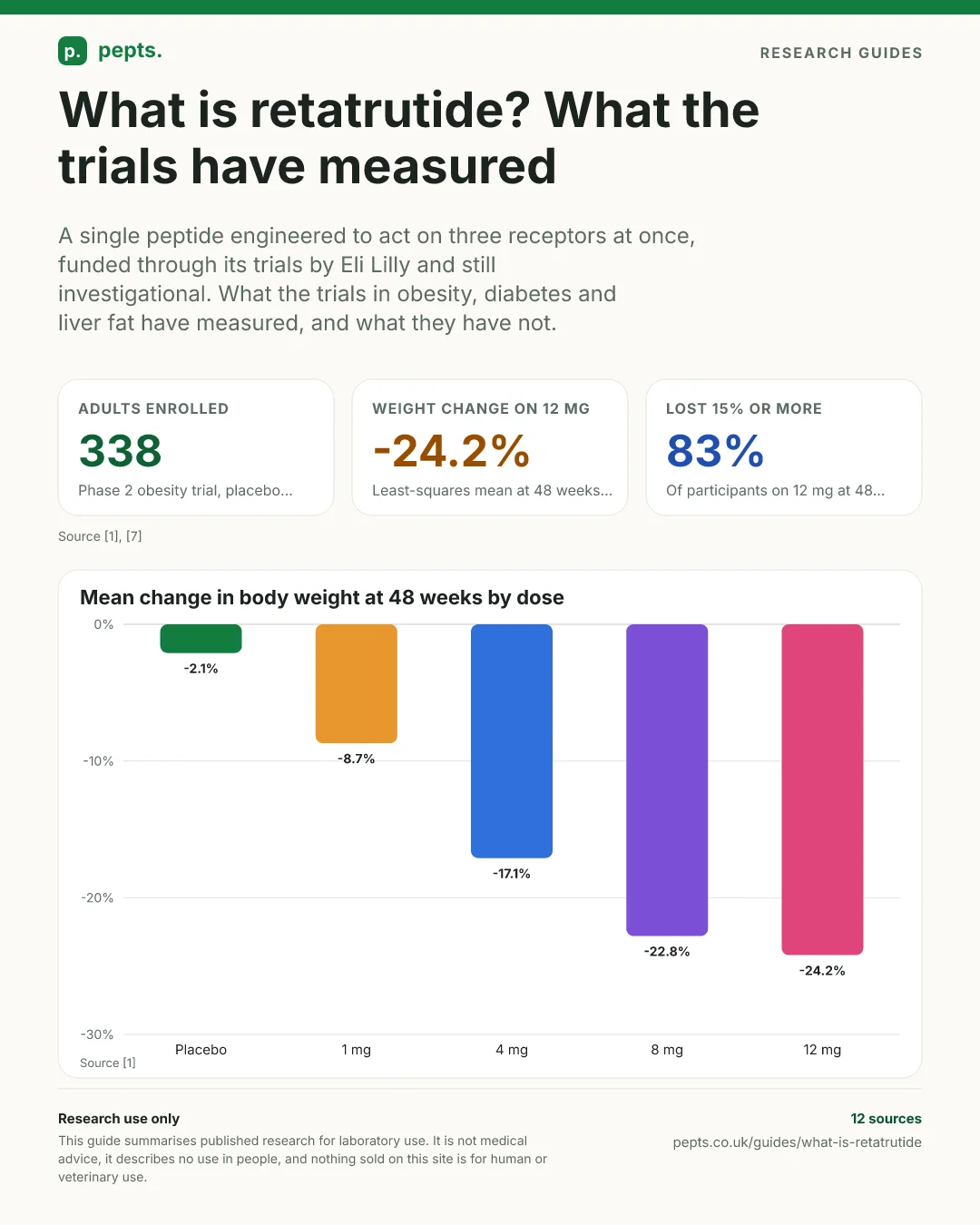
- In the phase 2 obesity trial, 338 adults received once-weekly injections for 48 weeks, and the mean change in body weight at 48 weeks was -24.2% on 12 mg against -2.1% on placebo [1].
- In type 2 diabetes, HbA1c fell by 2.02 percentage points on 12 mg at 24 weeks in the phase 2 trial, and by 1.94 percentage points at 40 weeks in the phase 3 trial TRANSCEND-T2D-1 [2], [4].
- In the liver fat substudy, the mean relative change in liver fat at 24 weeks was -82.4% on 12 mg against +0.3% on placebo, and 86% of that group reached normal liver fat [3].
- Gastrointestinal events were the most common adverse events in the obesity and phase 3 diabetes trials, mostly mild to moderate and dose related, and retatrutide remains under clinical development [1], [4].
Listen to the summary
A short two-voice summary of this guide.
Transcript
- Host
- Retatrutide has been in the headlines since its phase two results came out. Before the numbers, what is it?
- Researcher
- It is a single synthetic peptide, developed by Eli Lilly under a developer code, and it is built to act on three receptors at once: the GIP receptor, the GLP-1 receptor and the glucagon receptor. The trial papers call it a triple hormone receptor agonist.
- Host
- Why three receptors rather than one or two?
- Researcher
- The discovery paper attributes the reduction in calorie intake to the GIP and GLP-1 receptors, and says the glucagon receptor adds an increase in energy expenditure on top. A review of the mechanisms is more cautious: it says the extra benefit from the glucagon receptor was largely unexpected, and that how the three pathways interact when they are stimulated together is not yet known.
- Host
- And the phase two trial in obesity is the one everybody quotes.
- Researcher
- Yes. Three hundred and thirty-eight adults, forty-eight weeks, once-weekly injections at four doses or placebo. At the highest dose, twelve milligrams, the mean change in body weight at forty-eight weeks was minus twenty-four point two percent, against minus two point one percent on placebo, and eighty-three percent of that group had lost fifteen percent or more. Ninety-eight of those participants also had liver fat of ten percent or more, and in that substudy liver fat had fallen by eighty-two point four percent on twelve milligrams at twenty-four weeks, with eighty-six percent of the group reaching a normal level against none on placebo.
- Host
- What about people with type two diabetes?
- Researcher
- There the trials go back further. A phase one b study over twelve weeks measured a half-life of about six days, which is why the phase one b, phase two and phase three trials gave it once a week. A phase two trial in two hundred and eighty-one adults reported HbA1c down two point zero two percentage points at twenty-four weeks on the highest dose. And in twenty twenty-six a phase three trial, TRANSCEND-T2D-1, reported: five hundred and thirty-seven adults over forty weeks, HbA1c down one point nine four percentage points on twelve milligrams against zero point eight one on placebo, and body weight down fifteen point three percent against two point six.
- Host
- What did the trials report as adverse events?
- Researcher
- Gastrointestinal events in the trials: nausea, diarrhoea, vomiting and constipation in the phase two diabetes trial, and in the obesity trial mostly mild to moderate and dose related. Heart rate rose with dose in the obesity trial, peaked at twenty-four weeks and then declined. In the phase three trial, two to five percent of those on retatrutide stopped because of adverse events, against none on placebo, and two deaths occurred, both in the four milligram group, which the paper reports as unrelated to the study drug.
- Host
- And where does it stand today?
- Researcher
- It is investigational. The trial reports describe it as under clinical development, and the phase three programme is still reading out, including a head-to-head trial against tirzepatide; a separate phase two b kidney study has published its design and no results yet. Every figure I have given is in the guide with its source.
What is retatrutide?
What is retatrutide? A single peptide, first published under the developer code LY3437943, engineered to act as an agonist at three receptors at once: the glucose-dependent insulinotropic polypeptide (GIP) receptor, the glucagon-like peptide 1 (GLP-1) receptor and the glucagon receptor [1], [6]. The trial reports call it a triple hormone receptor agonist and describe it as under clinical development for type 2 diabetes, obesity and related complications [4]. Eli Lilly funded the phase 1b, phase 2 and phase 3 trials described in this guide and sponsors the studies registered under its name [1], [2], [4], [10].
The retatrutide peptide sits at the end of a sequence the islet-mechanisms review describes: the known actions of GLP-1 and of GIP alone, then unimolecular dual agonists that activate both incretin receptors, and now triple agonism with molecules that also bind the glucagon receptor [8]. The phase 2 diabetes trial places its safety profile beside those two earlier classes [2].
- Its developer code is LY3437943, the name the discovery paper and the phase 1b trial were published under [5], [6].
- In vitro it shows balanced glucagon and GLP-1 receptor activity and more GIP receptor activity, an imbalance the discovery paper reports [6].
- The phase 1b, phase 2 and phase 3 trials gave it by once-weekly subcutaneous injection, and each was funded by Eli Lilly [1], [2], [4].
How retatrutide works: the mechanism of action
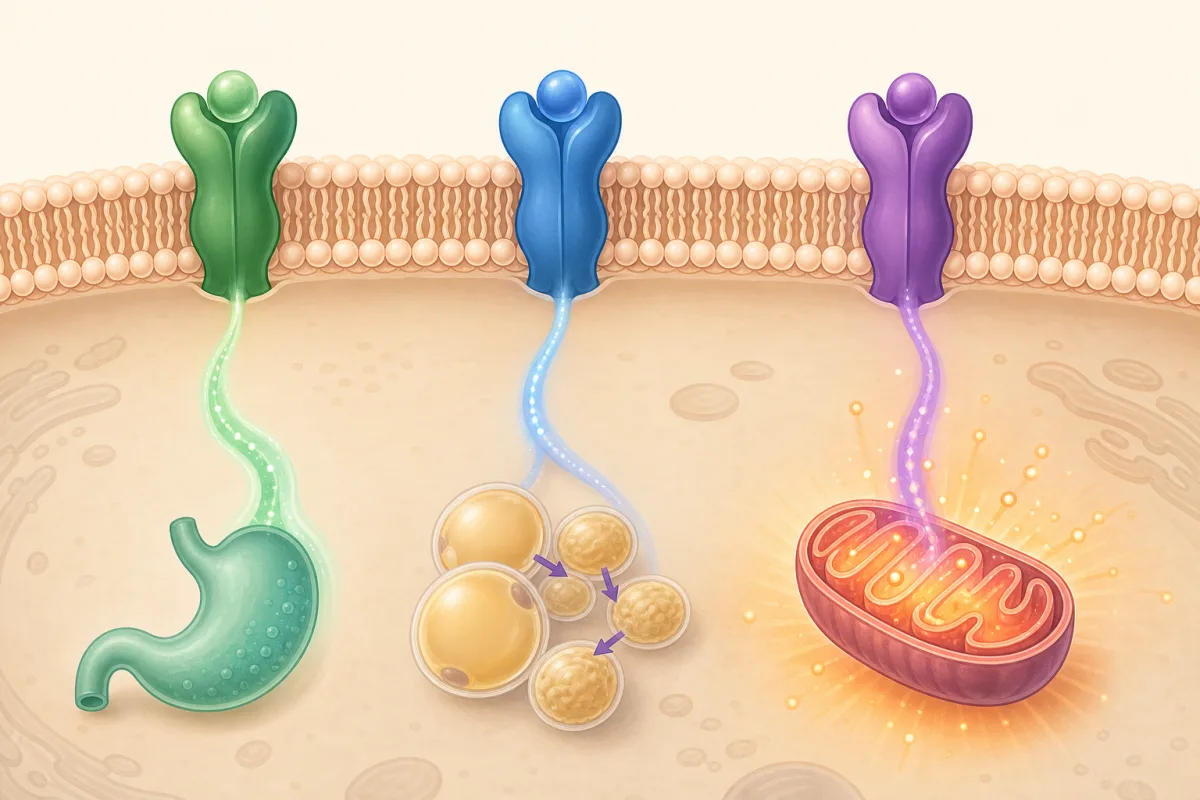
Each of the three receptors is credited with a different part of the effect. In obese mice, the discovery paper attributes the reduction in calorie intake to GIP and GLP-1 receptor activity and reports that body weight loss was augmented by glucagon receptor-mediated increases in energy expenditure on top of it [6]. The same paper reports that in vitro the molecule's activity at the glucagon and GLP-1 receptors is balanced while its GIP receptor activity is greater, and that in obese mice it decreased body weight and improved glycaemic control [6].
What each receptor does inside the pancreatic islet is less settled. A scoping review of dual and triple agonists reports that the additive insulin-releasing effects of GLP-1 and GIP receptor agonism were anticipated from the known actions of each hormone alone, while the additional benefit from the glucagon receptor was largely unexpected [8]. Whether the three signalling pathways interact synergistically or antagonistically when they are stimulated together is, in the review's own words, not known [8].
The pharmacokinetics are what allow a once-weekly injection in the trials. In the phase 1 single ascending dose study reported in the discovery paper, the pharmacokinetic profile supported once-weekly dosing and a reduction in body weight persisted up to day 43 after a single dose [6]. In the phase 1b trial in adults with type 2 diabetes, exposure was dose proportional and the half-life was approximately 6 days [5].
The trials in people, and the retatrutide phase 2 trial results
Five randomised trials of retatrutide in people have published results: a phase 1b trial in type 2 diabetes, phase 2 trials in obesity and in type 2 diabetes, a liver fat substudy of the obesity trial, and a phase 3 trial in type 2 diabetes [1], [2], [3], [4], [5]. A sixth, a phase 2b mechanistic study in adults with chronic kidney disease, has published its design and baseline characteristics and no results yet [9]. The table below lists them all, with their populations and lengths.
Adults enrolled
338
Phase 2 obesity trial, placebo controlled, once weekly for 48 weeks
Weight change on 12 mg
-24.2%
Least-squares mean at 48 weeks, against -2.1% on placebo
Lost 15% or more
83%
Of participants on 12 mg at 48 weeks, against 2% on placebo
Trials pooled
4
Placebo-controlled randomised trials in the 2025 meta-analysis
The phase 2 obesity trial is the one most people mean by the retatrutide phase 2 trial results. It enrolled adults with a body-mass index of 30 or higher, or of 27 to less than 30 with at least one weight-related condition, and randomised them to once-weekly subcutaneous retatrutide at 1 mg, 4 mg, 8 mg or 12 mg, or placebo, for 48 weeks, the 4 mg and 8 mg groups each split by initial dose, 2 mg or 4 mg [1]. Of the 338 adults enrolled, 51.8% were men [1]. The primary end point was the percentage change in body weight from baseline to 24 weeks, and at that point the least-squares mean change was -7.2% on 1 mg, -12.9% in the combined 4 mg group, -17.3% in the combined 8 mg group and -17.5% on 12 mg, against -1.6% on placebo [1].
At 48 weeks, a secondary end point, the figures were -8.7%, -17.1%, -22.8% and -24.2% by dose, against -2.1% on placebo [1]. A weight reduction of 5% or more, 10% or more and 15% or more had occurred by then in 92%, 75% and 60% of those on 4 mg; 100%, 91% and 75% of those on 8 mg; 100%, 93% and 83% of those on 12 mg; and 27%, 9% and 2% of those on placebo [1]. The authors conclude that 48 weeks of retatrutide in adults with obesity resulted in substantial reductions in body weight [1].
Least-squares mean percentage change in body weight from baseline to week 48 in the phase 2 obesity trial, 338 adults with obesity or overweight, placebo shown for comparison.
The 4 mg and 8 mg figures are the combined groups the paper reports, each pooling two arms that differed only in their initial dose.
Source [1]
A 2025 systematic review and meta-analysis pooled four randomised controlled trials of retatrutide against placebo and reports a dose-dependent relationship, with the 12 mg dose producing the largest reductions across every outcome considered, and a safety profile the authors found comparable to the control group [7]. The same authors describe the trials they pooled as preliminary and write that they await further trials for more robust results [7].
| Phase 1b, type 2 diabetes [5] | 72 adults aged 20 to 70 with type 2 diabetes, USA | 12 weeks | Half-life approximately 6 days; placebo-adjusted weight reduction up to 8.96 kg |
| Phase 2, obesity [1] | 338 adults with obesity or overweight | 48 weeks | Weight change -24.2% on 12 mg against -2.1% on placebo |
| Phase 2, type 2 diabetes [2] | 281 adults aged 18 to 75 with type 2 diabetes, USA | 36 weeks | HbA1c -2.02% on 12 mg at 24 weeks against -0.01% on placebo; bodyweight down 16.94% at 36 weeks |
| Phase 2a MASLD substudy [3] | 98 participants of the obesity trial with liver fat of 10% or more | 48 weeks | Liver fat -82.4% on 12 mg at 24 weeks against +0.3% on placebo |
| Phase 3, TRANSCEND-T2D-1 [4] | 537 adults with type 2 diabetes, USA, Mexico and India | 40 weeks | HbA1c -1.94% and bodyweight -15.3% on 12 mg against -0.81% and -2.6% on placebo |
| Phase 2b, TRANSCEND-CKD [9] | 146 adults with overweight or obesity and chronic kidney disease | 24 weeks to the primary end point | Design and baseline published; no results yet |
| Obesity with knee osteoarthritis [11] | Participants with obesity or overweight and knee osteoarthritis | About 77 weeks | Registered; listed as completed |
| Retatrutide against tirzepatide [12] | Adults with obesity | About 89 weeks | Registered; listed as active, not recruiting |
Randomised trial · 2023Mean change in body weight at 48 weeks of -8.7%, -17.1%, -22.8% and -24.2% by dose against -2.1% on placebo; gastrointestinal events the most common adverse events, dose related, mostly mild to moderate
- Design
- Phase 2, double-blind, randomised, placebo-controlled trial
- Population
- 338 adults with a body-mass index of 30 or higher, or 27 to less than 30 with a weight-related condition
- Intervention
- Once-weekly subcutaneous retatrutide at 1 mg, 4 mg, 8 mg or 12 mg, or placebo, for 48 weeks
- Finding
- Mean change in body weight at 48 weeks of -8.7%, -17.1%, -22.8% and -24.2% by dose against -2.1% on placebo; gastrointestinal events the most common adverse events, dose related, mostly mild to moderate
Randomised trial · 2023HbA1c change at 24 weeks of -2.02% on 12 mg against -0.01% on placebo and -1.41% on dulaglutide; bodyweight down 16.94% on 12 mg at 36 weeks
- Design
- Randomised, double-blind, placebo- and active-controlled, parallel-group phase 2 trial at 42 centres in the USA
- Population
- 281 adults aged 18 to 75 with type 2 diabetes and an HbA1c of 7.0% to 10.5%, on diet and exercise alone or stable metformin
- Intervention
- Once-weekly placebo, dulaglutide 1.5 mg, or retatrutide at 0.5 mg, 4 mg, 8 mg or 12 mg, for 36 weeks
- Finding
- HbA1c change at 24 weeks of -2.02% on 12 mg against -0.01% on placebo and -1.41% on dulaglutide; bodyweight down 16.94% on 12 mg at 36 weeks
Randomised trial · 2024Relative change in liver fat at 24 weeks of -42.9%, -57.0%, -81.4% and -82.4% by dose against +0.3% on placebo; normal liver fat reached by 86% on 12 mg
- Design
- Randomised, double-blind, placebo-controlled phase 2a substudy of the obesity trial
- Population
- 98 participants with MASLD and liver fat of 10% or more on MRI
- Intervention
- Once-weekly subcutaneous retatrutide at 1 mg, 4 mg, 8 mg or 12 mg, or placebo, for 48 weeks
- Finding
- Relative change in liver fat at 24 weeks of -42.9%, -57.0%, -81.4% and -82.4% by dose against +0.3% on placebo; normal liver fat reached by 86% on 12 mg
Randomised trial · 2026HbA1c change at week 40 of -1.69%, -1.86% and -1.94% by dose against -0.81% on placebo; bodyweight -11.5%, -13.9% and -15.3% against -2.6%
- Design
- Phase 3, randomised, double-blind, placebo-controlled trial at 48 sites in the USA, Mexico and India (TRANSCEND-T2D-1)
- Population
- 537 adults with type 2 diabetes inadequately controlled by diet and exercise, HbA1c 7.0% to 9.5%
- Intervention
- Once-weekly subcutaneous retatrutide at 4 mg, 9 mg or 12 mg, or placebo, for 40 weeks
- Finding
- HbA1c change at week 40 of -1.69%, -1.86% and -1.94% by dose against -0.81% on placebo; bodyweight -11.5%, -13.9% and -15.3% against -2.6%
Randomised trial · 2022Half-life approximately 6 days; placebo-adjusted HbA1c down 1.4%, 1.6% and 1.2% in the three highest dose groups; placebo-adjusted bodyweight reduction up to 8.96 kg
- Design
- Phase 1b, double-blind, placebo-controlled, randomised, multiple-ascending dose trial at four centres in the USA
- Population
- 72 adults aged 20 to 70 with type 2 diabetes and an HbA1c of 7.0% to 10.5%
- Intervention
- Once-weekly subcutaneous LY3437943 in five ascending dose cohorts up to 3/6/9/12 mg, placebo, or dulaglutide 1.5 mg, for 12 weeks
- Finding
- Half-life approximately 6 days; placebo-adjusted HbA1c down 1.4%, 1.6% and 1.2% in the three highest dose groups; placebo-adjusted bodyweight reduction up to 8.96 kg
Retatrutide in type 2 diabetes
The phase 1b trial enrolled 72 adults with type 2 diabetes at four centres in the USA between December 2019 and December 2020 and followed them for 12 weeks across five ascending dose cohorts [5]. Placebo-adjusted HbA1c fell significantly in the three highest dose groups, by 1.4% on 3 mg, 1.6% on 3/6 mg and 1.2% on 3/6/9/12 mg, placebo-adjusted mean daily plasma glucose fell by 2.8, 3.1 and 2.9 mmol/L in the same groups, and placebo-adjusted body weight reduction appeared dose dependent, up to 8.96 kg in the highest cohort [5].
The phase 2 trial that followed enrolled 281 adults aged 18 to 75 with type 2 diabetes and an HbA1c of 7.0% to 10.5% at 42 centres in the USA [2]. They were randomised to once-weekly placebo, dulaglutide 1.5 mg, or retatrutide at 0.5 mg, 4 mg, 8 mg or 12 mg, the 4 mg and 8 mg groups each split by escalation schedule, and the primary end point was the change in HbA1c from baseline to 24 weeks [2]. At 24 weeks that change was -0.43% on 0.5 mg, -1.39% and -1.30% in the two 4 mg groups, -1.99% and -1.88% in the two 8 mg groups and -2.02% on 12 mg, against -0.01% on placebo and -1.41% on dulaglutide [2]. The reductions were significantly greater than placebo in every group but 0.5 mg, greater than dulaglutide in the 8 mg slow-escalation and 12 mg groups, and consistent at 36 weeks [2].
Bodyweight decreased dose dependently at 36 weeks: by 3.19% on 0.5 mg, 7.92% and 10.37% in the two 4 mg groups, 16.81% and 16.34% in the two 8 mg groups and 16.94% on 12 mg, against 3.00% on placebo and 2.02% on dulaglutide [2]. The authors write that these phase 2 data informed dose selection for the phase 3 programme [2].
Least-squares mean change in HbA1c from baseline to week 24 in the phase 2 trial in 281 adults with type 2 diabetes, placebo and dulaglutide 1.5 mg shown for comparison.
The two 4 mg arms differed in whether the dose was escalated from 2 mg; the two 8 mg arms differed in how quickly it was escalated.
Source [2]
A phase 3 result, TRANSCEND-T2D-1, was published in 2026: a 40-week, randomised, double-blind, placebo-controlled trial at 48 sites in the USA, Mexico and India in adults with type 2 diabetes inadequately controlled by diet and exercise alone and an HbA1c between 7.0% and 9.5% [4]. Between April 2024 and April 2025, 537 adults were randomised to retatrutide 4 mg, 9 mg or 12 mg or placebo; their mean age was 48.8 years, mean HbA1c 7.9% and mean body-mass index 35.8 kg/m² [4]. The mean change in HbA1c from baseline to week 40 was -1.69%, -1.86% and -1.94% by dose against -0.81% on placebo, treatment differences of -0.88, -1.04 and -1.12 percentage points, and the mean change in bodyweight was -11.5%, -13.9% and -15.3% against -2.6% [4]. Of those randomised, 490 (91%) completed the treatment period on study drug and 504 (94%) completed the study [4].
Liver fat: the MASLD substudy
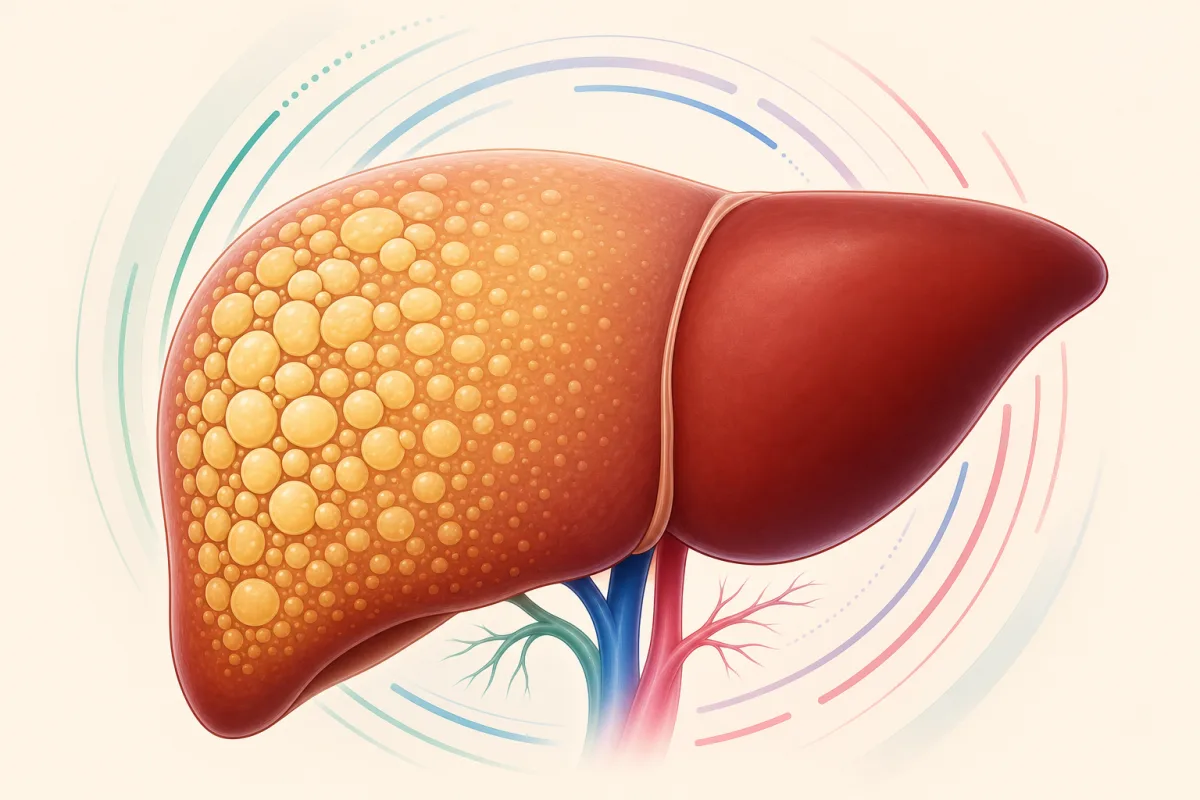
Of the 338 adults randomised in the phase 2 obesity trial, 98 (29.1%) had metabolic dysfunction-associated steatotic liver disease (MASLD) with liver fat of 10% or more on magnetic resonance imaging, and they formed a randomised, double-blind, placebo-controlled substudy of their own [3]. They were spread across placebo (19) and retatrutide 1 mg (20), 4 mg (19), 8 mg (22) and 12 mg (18), once weekly for 48 weeks, and the primary objective was the mean relative change in liver fat from baseline at 24 weeks [3].
At 24 weeks the mean relative change in liver fat was -42.9% on 1 mg, -57.0% on 4 mg, -81.4% on 8 mg and -82.4% on 12 mg, against +0.3% on placebo, every dose significant against placebo [3]. Normal liver fat, defined as less than 5%, was reached by 27%, 52%, 79% and 86% of participants by dose, and by 0% of those on placebo [3]. The reductions in liver fat were significantly related to changes in body weight, abdominal fat and metabolic measures associated with improved insulin sensitivity and lipid metabolism [3].
| Placebo [3] | 19 | +0.3% | 0% | 11 (58%) |
| 1 mg [3] | 20 | -42.9% | 27% | 18 (90%) |
| 4 mg [3] | 19 | -57.0% | 52% | 15 (80%) |
| 8 mg [3] | 22 | -81.4% | 79% | 17 (77%) |
| 12 mg [3] | 18 | -82.4% | 86% | 15 (83%) |
Source [3]
In their conclusion the authors report that at the two highest doses 80% or more of participants achieved a relative reduction in liver fat of 70% or more, that more than 85% achieved resolution of steatosis, and that near-maximal liver fat reduction was reached at approximately a 20% reduction in body weight [3]. The 86% relative reduction observed on 12 mg at 48 weeks is described as among the largest treatment effects reported so far, with the caveat that differences in populations and study design limit direct comparison [3]. The paper states its own limits: fewer participants had liver fat data at week 48 (43.9%) than at week 24 (78.6%), and 58% of the placebo group completed the substudy against 77% to 90% of the retatrutide groups [3].
What the trials reported as adverse events
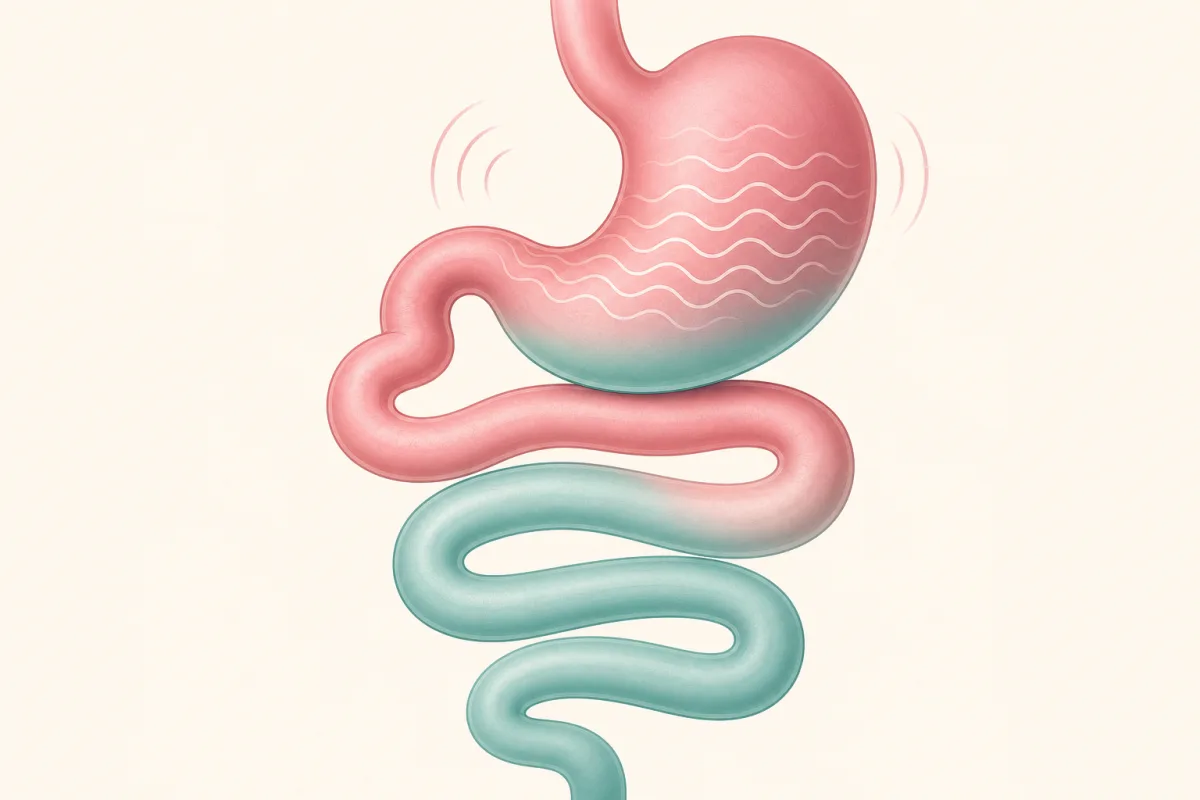
In the phase 1b, phase 2 obesity and phase 3 diabetes trials, gastrointestinal events were the most frequent adverse events [1], [4], [5]. In the phase 1b trial, treatment-emergent adverse events were reported by 33 (63%) of those on LY3437943, three (60%) of those on dulaglutide 1.5 mg and eight (54%) of those on placebo, gastrointestinal disorders being the most frequent, and 29 of the 72 participants discontinued the study prematurely [5].
In the phase 2 obesity trial the most common adverse events were gastrointestinal, dose related, mostly mild to moderate in severity, and partially mitigated in the arms whose first dose was 2 mg rather than 4 mg [1]. Heart rate rose in a dose-dependent way, peaked at 24 weeks and declined thereafter [1].
In the phase 2 diabetes trial, mild-to-moderate gastrointestinal adverse events, including nausea, diarrhoea, vomiting and constipation, were reported by 67 (35%) of the 190 participants on retatrutide, ranging from six (13%) of 47 on 0.5 mg to 12 (50%) of 24 in the 8 mg fast-escalation group, against six (13%) of 45 on placebo and 16 (35%) of 46 on dulaglutide [2]. There were no reports of severe hypoglycaemia and no deaths, and 237 (84%) of the 281 participants completed the study while 222 (79%) completed study treatment [2].
In the phase 3 trial the most frequent adverse events with retatrutide were again generally mild to moderate gastrointestinal events, which the authors report subsided over time [4]. Discontinuation of the study intervention because of adverse events was 2% to 5% with retatrutide and 0% with placebo, and no severe hypoglycaemia was reported [4]. Two deaths occurred during the study, both in the retatrutide 4 mg group, and the paper reports both as unrelated to the study drug [4].
The 2025 systematic review and meta-analysis of four placebo-controlled trials found the safety profile of retatrutide comparable to the control group [7].
What comes next, and where retatrutide stands
The authors of the phase 2 diabetes trial write that their data informed dose selection for the phase 3 programme, and TRANSCEND-T2D-1, published in 2026, is one trial of that programme [2], [4]. ClinicalTrials.gov lists further studies sponsored by Eli Lilly: one of about 77 weeks in participants with obesity or overweight and osteoarthritis of the knee, listed as completed, and one of about 89 weeks comparing retatrutide with tirzepatide in adults with obesity, listed as active and no longer recruiting [11], [12]. The phase 2 obesity trial's own registration, planned to last about 18 months with up to 18 visits, is listed as completed [10].
TRANSCEND-CKD, whose design and baseline characteristics were published in 2026, is a double-blind, placebo-controlled phase 2b mechanistic study in adults with overweight or obesity and chronic kidney disease, with and without type 2 diabetes [9]. Of 367 people screened, 146 were randomised 1:1 to once-weekly retatrutide at the maximum tolerated dose up to 12 mg or placebo; their mean age was 65.1 years, mean weight 101.1 kg and mean measured glomerular filtration rate 49.3 mL/min/1.73 m², and 37.7% had type 2 diabetes [9]. The primary objective is the change in measured glomerular filtration rate by iohexol clearance from baseline to week 24, and the authors say the study is designed to inform the ongoing cardio-kidney outcome trial TRIUMPH-Outcomes [9].
2019
The phase 1b trial in type 2 diabetes begins enrolling in December, at four centres in the USA.[5]
2020
Phase 1b enrolment closes in December with 72 participants given at least one dose.[5]
2021
The phase 2 obesity trial is registered and randomises its first participants; the phase 2 diabetes trial begins the same month.[2], [3], [10]
2022
The discovery paper and the phase 1b results are published under the code LY3437943; both phase 2 trials finish enrolling.[2], [3], [5], [6]
2023
The phase 2 results in obesity and in type 2 diabetes are published, the islet-mechanisms review appears, and a trial in obesity with knee osteoarthritis is registered.[1], [2], [8], [11]
2024
The MASLD substudy is published; TRANSCEND-T2D-1 begins randomising in April; a head-to-head trial against tirzepatide is registered.[3], [4], [12]
2025
A systematic review and meta-analysis pools four placebo-controlled trials; TRANSCEND-T2D-1 completes randomisation in April.[4], [7]
2026
The TRANSCEND-T2D-1 results and the TRANSCEND-CKD design paper are published.[4], [9]
Retatrutide is investigational. The phase 3 report describes it as under clinical development for type 2 diabetes, obesity and related complications, and the phase 1b report as in development for the same [4], [5]. The phase 3 trials that would support any licence application are still running, and nothing in this guide describes a use outside a registered trial [10], [11], [12].
On our shelf
Research-grade Retatrutide, for laboratory use only.
View the listing
Research use only This guide summarises published research for laboratory use. It is not medical advice, it describes no use in people, and nothing sold on this site is for human or veterinary use.
References
Every figure in this guide points at one of the sources below; the number in brackets is the entry it came from.
- T
Jastreboff AM, Kaplan LM, Frías JP, et al.
Randomised trialThe New England journal of medicine2023 - L
Rosenstock J, Frias J, Jastreboff AM, et al.
Randomised trialLancet (London, England)2023 - N
Sanyal AJ, Kaplan LM, Frias JP, et al.
Randomised trialNature medicine2024DOI 10.1038/s41591-024-03018-2PMID 38858523PMC11271400doi.org
- L
Bajaj HS, Welch M, Shah P, et al.
Randomised trialLancet (London, England)2026 - L
Urva S, Coskun T, Loh MT, et al.
Randomised trialLancet (London, England)2022 - C
Coskun T, Urva S, Roell WC, et al.
PreclinicalCell metabolism2022 - E
Tewari J, Qidwai KA, Tewari A, et al.
Meta-analysisExpert review of clinical pharmacology2025 - A
Folli F, Finzi G, Manfrini R, et al.
ReviewAmerican journal of physiology. Endocrinology and metabolism2023DOI 10.1152/ajpendo.00236.2023PMID 37729025PMC10874655doi.org
- N
Heerspink HJL, van Raalte DH, Bjornstad P, et al.
Clinical trialNephrology, dialysis, transplantation : official publication of the European Dialysis and Transplant Association - European Renal Association2026 - C
- C
- C[12]A Study of Retatrutide (LY3437943) Compared to Tirzepatide (LY3298176) in Adults Who Have Obesity
Eli Lilly and Company
Regulator or registryClinicalTrials.gov2024NCT06662383clinicaltrials.gov
Questions
What is retatrutide?
Retatrutide is a single peptide, first published as LY3437943, with agonist activity at the GIP, GLP-1 and glucagon receptors [1], [6]. Its trials, funded by Eli Lilly, span phase 1b, phase 2 and phase 3 in adults with type 2 diabetes or obesity, and it remains under clinical development [1], [4], [5].
Is retatrutide a triple agonist?
Yes. The discovery paper describes LY3437943 as a triple agonist at the glucagon, GIP and GLP-1 receptors, with balanced glucagon and GLP-1 receptor activity and more GIP receptor activity in vitro [6]. A review of dual and triple agonists notes that the added benefit from the glucagon receptor was largely unexpected and that how the three pathways interact is not yet known [8].
What did the retatrutide phase 2 trial show?
In 338 adults with obesity or overweight, once-weekly retatrutide for 48 weeks produced least-squares mean changes in body weight of -8.7%, -17.1%, -22.8% and -24.2% at 1 mg, 4 mg, 8 mg and 12 mg, against -2.1% on placebo, with gastrointestinal events the most common adverse events [1].
How does retatrutide differ from the earlier GLP-1 based agonists?
The trial reports place retatrutide beside two earlier classes, GLP-1 receptor agonists and dual GIP and GLP-1 receptor agonists, and it differs from both by adding agonist activity at the glucagon receptor [2], [8]. A registered trial of about 89 weeks is comparing it directly with tirzepatide in adults with obesity [12].
Is retatrutide approved?
No trial report in this guide describes a licensed product: all describe a compound under clinical development for type 2 diabetes, obesity and related complications [4], [5], with the phase 3 trials that would support any application still running [11], [12]. The phase 2 obesity trial that produced the headline figures is registered and listed as completed [10].
What is the half-life of retatrutide?
Approximately 6 days, measured in the phase 1b trial in adults with type 2 diabetes, where the pharmacokinetics were dose proportional and the authors concluded that they suited once-weekly dosing [5]. In the single-dose phase 1 study, a reduction in body weight persisted up to day 43 after one dose [6].