Key points
- SS-31 (elamipretide) binds cardiolipin, a phospholipid required for cristae formation on the inner mitochondrial membrane, and a single dose raised ATPmax in older adults with poorly functioning mitochondria [2], [4].
- Elamipretide improved walking distance and symptom scores in an open-label extension for Barth syndrome, but its Phase 3 trial in a broader primary mitochondrial myopathy population, MMPOWER-3, missed both primary endpoints in 218 participants [5], [6].
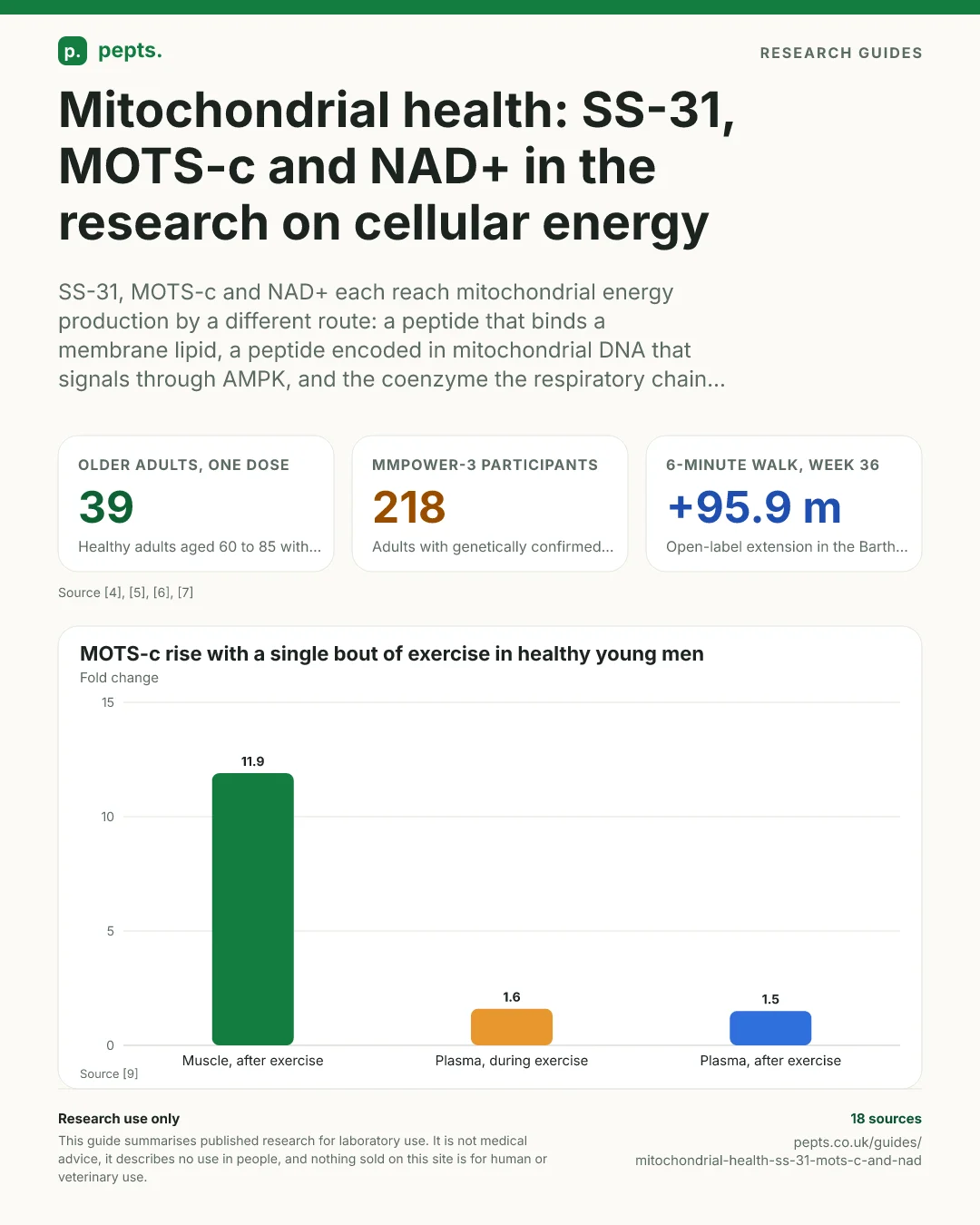
- MOTS-c is a 16-amino-acid peptide encoded within mitochondrial DNA that is reported to activate AMPK; in humans, muscle MOTS-c rose 11.9-fold and circulating MOTS-c rose up to 1.6-fold after a bout of exercise, and two clinical registrations are testing it or an analogue [18] without a published human efficacy result yet [8], [9], [10], [11].
- NAD+ is the redox coenzyme central to energy metabolism, and every human trial in this guide's evidence gave a precursor, nicotinamide riboside, nicotinamide mononucleotide or niacin, rather than NAD+ itself [12], [13], [14], [15], [16].
- Nicotinamide riboside raised a related muscle metabolite two-fold in aged men without raising muscle NAD+ itself or changing mitochondrial respiration, while niacin raised blood NAD+ by up to 8-fold in adults with mitochondrial myopathy [14], [16].
- Elamipretide is approved only for Barth syndrome in the USA, granted accelerated approval in September 2025; MOTS-c and the NAD+ precursors described here remain investigational for this use [7], [10], [11].
Listen to the summary
A short two-voice summary of this guide.
Transcript
- Host
- Mitochondrial health keeps coming up, but this time with three compounds at once: SS-31, MOTS-c and NAD+. What connects them?
- Researcher
- They meet the same organelle from three different angles. SS-31 is a small peptide that binds a fat molecule on the mitochondrion's inner membrane. MOTS-c is a peptide encoded right inside mitochondrial DNA. And NAD+ is a coenzyme at the heart of energy metabolism, whose reduced form feeds electrons into the chain that makes ATP.
- Host
- Start with SS-31. What does binding that fat molecule do?
- Researcher
- The fat molecule is cardiolipin, and it is needed to fold the inner membrane into ridges called cristae, where ATP gets made. In rats with a cut-off blood supply to the kidney, SS-31 protected those folds and helped ATP recover faster once blood flow returned. In aged mice, a single dose restored mitochondrial ATP production to young levels within just one hour.
- Host
- Has that reached human trials?
- Researcher
- Several. A single dose raised ATP production in the muscles of thirty-nine older adults with poorly performing mitochondria. In Barth syndrome, a genetic disorder of cardiolipin, an open-label extension found people walking ninety-five point nine metres further on a six-minute test after thirty-six weeks. But the largest trial, in two hundred and eighteen adults with a broader mitochondrial myopathy, missed both of its main goals.
- Host
- So it is approved, but narrowly?
- Researcher
- Narrowly is right. It has been approved in the United States since September twenty twenty-five, but only for Barth syndrome, in patients weighing thirty kilograms or more.
- Host
- Now MOTS-c. What is unusual about it?
- Researcher
- It is only sixteen amino acids long, and instead of coming from the cell's main genome, it is encoded in a short stretch of mitochondrial DNA itself. It is reported to switch on AMPK, the cell's energy-sensing enzyme, mostly in skeletal muscle.
- Host
- What has that shown in people?
- Researcher
- Mostly that exercise raises the body's own MOTS-c. In one study, muscle levels rose almost twelve-fold after a bout of cycling, and blood levels rose by about one point six-fold during exercise and one point five-fold afterwards. But there is no finished efficacy trial yet. An analogue completed early safety testing, and a trial of MOTS-c itself is still recruiting.
- Host
- And NAD+, the third one?
- Researcher
- NAD+, in its reduced form NADH, donates electrons into the energy-making chain at its first stop, and it is reported to fall with age. The interesting part is that none of the four human trials here gave NAD+ directly. All four gave a precursor instead: nicotinamide riboside, nicotinamide mononucleotide, or niacin.
- Host
- Did raising those precursors help?
- Researcher
- It is mixed. One trial in aged men doubled a related muscle metabolite but did not raise muscle NAD+ itself, and mitochondrial respiration in the muscle did not change. Niacin, in a mitochondrial muscle disease, raised blood NAD+ by up to eightfold and improved muscle strength. And in women with prediabetes, nicotinamide mononucleotide improved muscle insulin sensitivity.
- Host
- So across all three, where does that leave things?
- Researcher
- Only elamipretide, the SS-31 compound, carries any approval, and that is for one rare disease. MOTS-c and the NAD+ precursors remain investigational. Every figure given here, the ninety-five point nine metres, the two hundred and eighteen participants, the eightfold rise, is in the guide with its source.
How mitochondria make energy
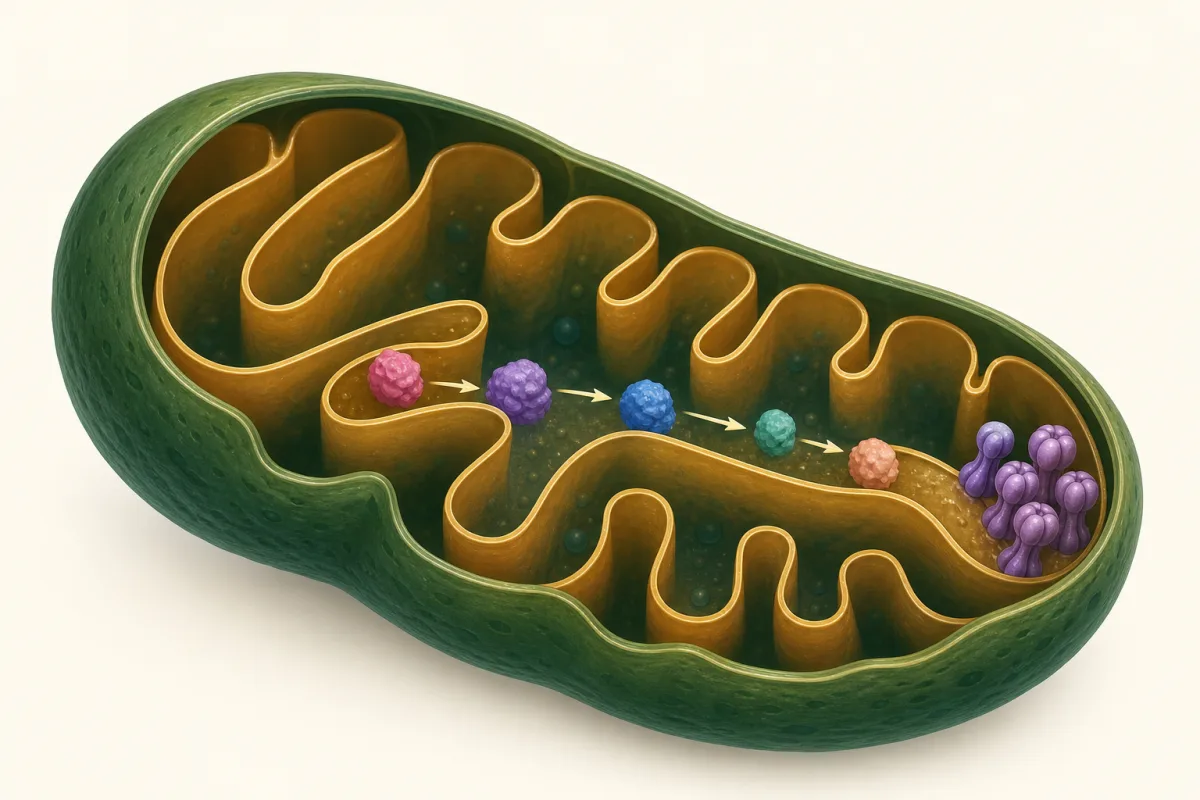
Three compounds studied in mitochondrial health research reach the same organelle at three separate points: SS-31, a tetrapeptide that binds a phospholipid on the inner mitochondrial membrane; MOTS-c, a short peptide encoded within mitochondrial DNA itself; and NAD+, the coenzyme whose reduced form, NADH, donates electrons into the respiratory chain at Complex I [2], [5], [8], [12], [17].
That chain sits in the inner mitochondrial membrane. NADH and FADH2, both generated by the TCA cycle, donate electrons into it at Complex I or Complex II; from Complex I, those electrons pass through a chain of cofactors to ubiquinone, and that transfer pumps protons out of the mitochondrial matrix into the intermembrane space. The resulting protonmotive force couples electron transport to Complex V, ATP synthase, which turns under a rotational mechanism to make ATP [17].
Although mitochondria are known as the cell's powerhouse, a 2026 review describes their role as reaching well beyond energy generation: they regulate cellular metabolism while maintaining a tightly controlled level of reactive oxygen species and redox state, and they mediate physiological and pathological processes including calcium balance, apoptosis and mitophagy [1]. The same review describes mitochondrial dysfunction as arising through several routes, including genetic mutations, increased production of reactive oxygen species, metabolic failure from impaired electron transport chain activity, and dysregulated mitochondrial dynamics or mitophagy, with the resulting damage implicated in ageing, metabolic syndrome, cancer, neurodegeneration and reproductive disorders [1].
NAD+ (nicotinamide adenine dinucleotide) is a coenzyme for redox reactions, which makes it central to energy metabolism, and it is also an essential cofactor for non-redox enzymes including sirtuins, CD38 and poly(ADP-ribose) polymerases [12]. A 2021 review reports that ageing is accompanied by a gradual decline in tissue and cellular NAD+ levels across multiple model organisms, including rodents and humans, a decline linked causally to numerous ageing-associated diseases such as cognitive decline, cancer, metabolic disease, sarcopenia and frailty [12].
Cardiolipin is an anionic phospholipid on the inner mitochondrial membrane, and it is required for cristae, the membrane's inward folds, to form; those folds are in turn required for mitochondrial ATP synthesis [2]. When blood flow is cut off and then restored, as in kidney injury from ischaemia, the cristae membranes are destroyed, and it is that damage, one study reports, which delays how quickly ATP recovers [2].
SS-31 and cardiolipin
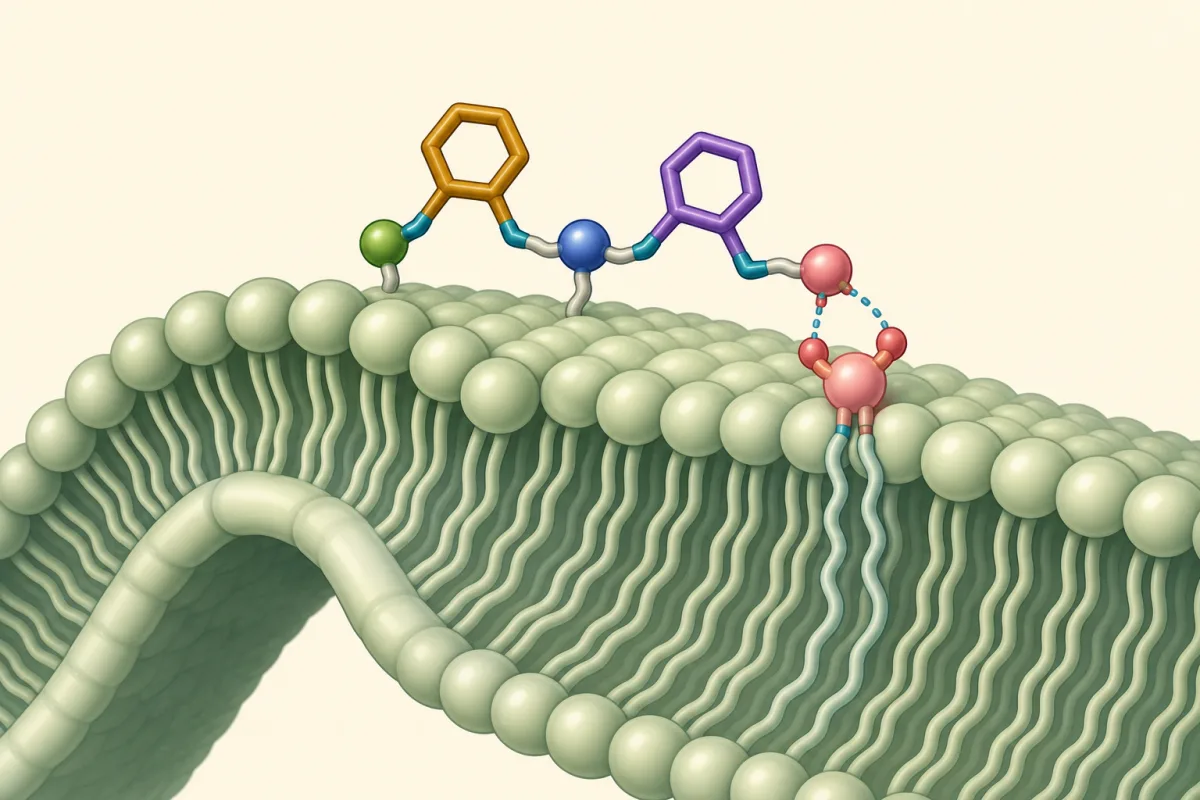
SS-31, also known by its clinical name elamipretide, is described by one trial as a mitochondrial tetrapeptide that interacts with cardiolipin [5]. Using a polarity-sensitive fluorescent version of the compound, researchers demonstrated that SS-31 binds with high affinity to cardiolipin on the inner mitochondrial membrane [2].
In rats, pretreatment with SS-31 protected cristae membranes during renal ischaemia and prevented mitochondrial swelling; the SS-31/cardiolipin complex also inhibited cytochrome c peroxidase activity, the reaction that catalyses cardiolipin peroxidation and mitochondrial damage during ischaemia, by protecting the enzyme's heme iron [2]. Prompt ATP recovery on reperfusion led to rapid repair of ATP-dependent processes such as the actin cytoskeleton and cell polarity, inhibited apoptosis, protected tubular barrier function and mitigated renal dysfunction [2].
A single treatment with SS-31 was reported to restore in vivo mitochondrial energetics to young levels in aged mice within one hour. Young (5-month-old) and old (27-month-old) mice were injected intraperitoneally with either saline or 3 mg per kg of SS-31, and skeletal muscle mitochondrial energetics were measured in vivo using a combination of optical and 31P magnetic resonance spectroscopy [3]. Age-related declines in resting and maximal mitochondrial ATP production, in the coupling of oxidative phosphorylation, and in cell energy state were rapidly reversed after treatment, while SS-31 had no observable effect on young muscle; aged muscle was also more fatigue resistant one hour after treatment, and eight days of treatment increased whole-animal endurance capacity [3].
Older adults, one dose
39
Healthy adults aged 60 to 85 with poorly functioning mitochondria, first dorsal interosseous muscle studied
MMPOWER-3 participants
218
Adults with genetically confirmed primary mitochondrial myopathy, randomised 1:1 to elamipretide or placebo
6-minute walk, week 36
+95.9 m
Open-label extension in the Barth syndrome trial, part 2 (p=0.024)
Minimum weight, approval
≥ 30 kg
FDA accelerated approval, September 2025, for muscle strength in Barth syndrome
The same compound was then tested in a randomised, double-blind, placebo-controlled trial in people. Non-invasive magnetic resonance and optical spectroscopy measured mitochondrial capacity (ATPmax) with exercise and mitochondrial coupling at rest in the first dorsal interosseous muscle of 39 healthy older adults aged 60 to 85, enrolled for having poorly functioning mitochondria [4]. A single dose elevated ATPmax relative to placebo immediately after a 2-hour infusion, but the difference was gone by day 7, consistent with the compound's half-life in human blood, and there was no significant effect on fatigue resistance despite the rise in ATPmax [4].
In Barth syndrome, a genetic disorder of mitochondrial cardiolipin metabolism, a randomised, double-blind, placebo-controlled crossover trial gave 12 subjects 40 mg per day of elamipretide or placebo for 12 weeks, with a 4-week washout before crossing over; neither of the trial's two primary endpoints, the 6-minute walk test and a Barth syndrome symptom assessment, was met in that first part [5]. Ten of the twelve continued into an open-label extension of the same 40 mg daily dose, with eight reaching 36 weeks, and at that point the group showed a 95.9-metre improvement on the 6-minute walk test and a 2.1-point improvement on the symptom assessment, alongside gains in secondary endpoints including knee extensor strength, patient global impression of symptoms and some cardiac parameters [5].
The largest trial of elamipretide to date, MMPOWER-3, randomised 218 adults with genetically confirmed primary mitochondrial myopathy, 109 to elamipretide and 109 to placebo, to 40 mg per day subcutaneously or placebo for 24 weeks [6]. The trial did not meet either primary endpoint: the difference in 6-minute walk distance was -3.2 metres (p=0.69) and the difference in the trial's fatigue score was -0.07 points (p=0.37), though elamipretide was reported as well tolerated, with most adverse events mild to moderate [6].
| Roshanravan et al, 2021 [4] | 39 healthy older adults, 60 to 85 years, with poorly functioning mitochondria | Randomised, double-blind, placebo-controlled; a single dose, measured after a 2-hour infusion and again at day 7 | ATPmax rose versus placebo immediately after infusion (%ΔATPmax p=0.045); no difference at day 7; no significant effect on fatigue resistance |
| Thompson et al, 2021 [5] | 12 subjects with Barth syndrome (part 1); 10 continued into an open-label extension (part 2), 8 reaching 36 weeks | Randomised, double-blind, placebo-controlled crossover, 12 weeks per arm with a 4-week washout, then an open-label extension of 40 mg per day to 36 weeks | Part 1: neither primary endpoint met. Part 2, 36 weeks: 6MWT +95.9 m (p=0.024), BTHS-SA -2.1 points (p=0.031) |
| Karaa et al, 2023 [6] | 218 adults with genetically confirmed primary mitochondrial myopathy (109 elamipretide, 109 placebo) | Randomised 1:1, double-blind, placebo-controlled, 40 mg per day subcutaneously for 24 weeks | Did not meet either primary endpoint: 6MWT difference -3.2 m (p=0.69); PMMSA total fatigue score difference -0.07 (p=0.37) |
Randomised trial · 2021ATPmax rose versus placebo immediately after infusion (ΔATPmax p=0.055, %ΔATPmax p=0.045); no difference remained at day 7; no significant change in resting mitochondrial coupling; despite the ATPmax rise, no significant effect on fatigue resistance
- Design
- Randomised, double-blind, placebo-controlled trial, single dose
- Population
- 39 healthy older adults aged 60 to 85 (46% female) with poorly functioning mitochondria; first dorsal interosseous muscle studied
- Intervention
- A single dose of elamipretide infused over 2 hours, versus placebo; mitochondrial capacity (ATPmax) and coupling (P/O) measured non-invasively by magnetic resonance and optical spectroscopy
- Finding
- ATPmax rose versus placebo immediately after infusion (ΔATPmax p=0.055, %ΔATPmax p=0.045); no difference remained at day 7; no significant change in resting mitochondrial coupling; despite the ATPmax rise, no significant effect on fatigue resistance
Randomised trial · 2021Part 1 met neither primary endpoint (6-minute walk test, BTHS Symptom Assessment). At 36 weeks in part 2, the 6MWT improved by 95.9 m (p=0.024) and BTHS-SA improved by 2.1 points (p=0.031); knee extensor strength, patient global impression and some cardiac parameters also improved
- Design
- Randomised, double-blind, placebo-controlled crossover trial (part 1), followed by an open-label extension (part 2)
- Population
- 12 subjects with Barth syndrome (part 1); 10 continued into part 2, 8 reaching 36 weeks
- Intervention
- 40 mg per day of elamipretide (part 1: 12 weeks per arm with a 4-week washout; part 2: continuous open-label dosing)
- Finding
- Part 1 met neither primary endpoint (6-minute walk test, BTHS Symptom Assessment). At 36 weeks in part 2, the 6MWT improved by 95.9 m (p=0.024) and BTHS-SA improved by 2.1 points (p=0.031); knee extensor strength, patient global impression and some cardiac parameters also improved
Randomised trial · 2023Neither primary endpoint was met: the 6-minute walk test difference was -3.2 m (95% CI -18.7 to 12.3, p=0.69) and the PMMSA total fatigue score difference was -0.07 (95% CI -0.10 to 0.26, p=0.37); elamipretide was well tolerated, with most adverse events mild to moderate
- Design
- Phase 3, randomised 1:1, double-blind, placebo-controlled trial (MMPOWER-3)
- Population
- 218 adults with genetically confirmed primary mitochondrial myopathy (109 elamipretide, 109 placebo); mean age 45.6 years, 64% women, 94% White
- Intervention
- 40 mg per day of elamipretide subcutaneously for 24 weeks, versus placebo
- Finding
- Neither primary endpoint was met: the 6-minute walk test difference was -3.2 m (95% CI -18.7 to 12.3, p=0.69) and the PMMSA total fatigue score difference was -0.07 (95% CI -0.10 to 0.26, p=0.37); elamipretide was well tolerated, with most adverse events mild to moderate
In September 2025, elamipretide was granted accelerated approval in the United States, to improve muscle strength in adult and paediatric patients with Barth syndrome weighing 30 kg or more, becoming the first disease-specific treatment approved for that ultra-rare, X-linked recessive genetic disorder [7]. The same review describes elamipretide as also under Phase III clinical development for dry age-related macular degeneration and for mitochondrial myopathies [7].
MOTS-c and AMPK
MOTS-c is a 16-amino-acid peptide encoded not in the cell's main genome but within a short open reading frame inside the mitochondrial 12S rRNA gene, part of mitochondrial DNA itself, first reported in 2015 [8]. Its discovery paper describes it as regulating insulin sensitivity and metabolic homeostasis, with skeletal muscle as its primary target organ [8].
The same paper describes MOTS-c's cellular action as inhibiting the folate cycle and its tethered de novo purine biosynthesis, a route that leads to activation of AMPK, the cell's central energy-sensing enzyme [8]. In mice, MOTS-c treatment was reported to prevent age-dependent and high-fat-diet-induced insulin resistance, as well as diet-induced obesity [8].
A 2021 study extended this into mice of three ages, 2 months, 12 months and 22 months, and reported that MOTS-c significantly enhanced physical performance in all three groups; treatment begun late in life, at 23.5 months, and given intermittently three times a week, still increased physical capacity [9]. The same paper reports that MOTS-c regulates nuclear genes related to metabolism and proteostasis, skeletal muscle metabolism, and how myoblasts, the precursor cells of muscle fibres, adapt to metabolic stress [9].
The same study also measured MOTS-c directly in people. In sedentary healthy young male volunteers exercising on a stationary bicycle, skeletal muscle and plasma MOTS-c were measured before, during (plasma only) and after exercise, and again after a 4-hour rest [9].
Relative change in muscle and circulating MOTS-c during and after a bout of stationary cycling, measured against pre-exercise values.
Muscle levels stayed elevated through a 4-hour rest; circulating levels returned to their starting value within that same rest.
Source [9]
Preclinical · 2021Skeletal muscle MOTS-c rose 11.9-fold after exercise and stayed elevated through the 4-hour rest; circulating MOTS-c rose 1.6-fold during exercise and 1.5-fold afterwards, returning to baseline within the 4-hour rest
- Design
- Human exercise sub-study within a mouse ageing paper
- Population
- Sedentary healthy young male volunteers (mean age 24.5 ± 3.7 years, BMI 24.1 ± 2.1)
- Intervention
- One bout of exercise on a stationary bicycle; skeletal muscle and plasma MOTS-c measured before, during (plasma only), after exercise and following a 4-hour rest
- Finding
- Skeletal muscle MOTS-c rose 11.9-fold after exercise and stayed elevated through the 4-hour rest; circulating MOTS-c rose 1.6-fold during exercise and 1.5-fold afterwards, returning to baseline within the 4-hour rest
Two clinical programmes touching MOTS-c are registered on ClinicalTrials.gov. The first tested CB4211, an analogue of MOTS-c [18], in a three-part, randomised, double-blind, placebo-controlled Phase 1a/1b study of single and multiple ascending subcutaneous doses in healthy non-obese subjects and in subjects with nonalcoholic fatty liver disease; its registration lists the study as completed [10]. The second is testing MOTS-c itself in a Phase 2a study: adults with prediabetes and overweight or obesity are randomised 1:1 to investigational MOTS-c or placebo for 12 weeks of treatment alongside standardised lifestyle counselling, to evaluate whether it improves insulin sensitivity compared with placebo, with safety followed through week 16; its registration lists the study as recruiting [11].
NAD+ and the respiratory chain
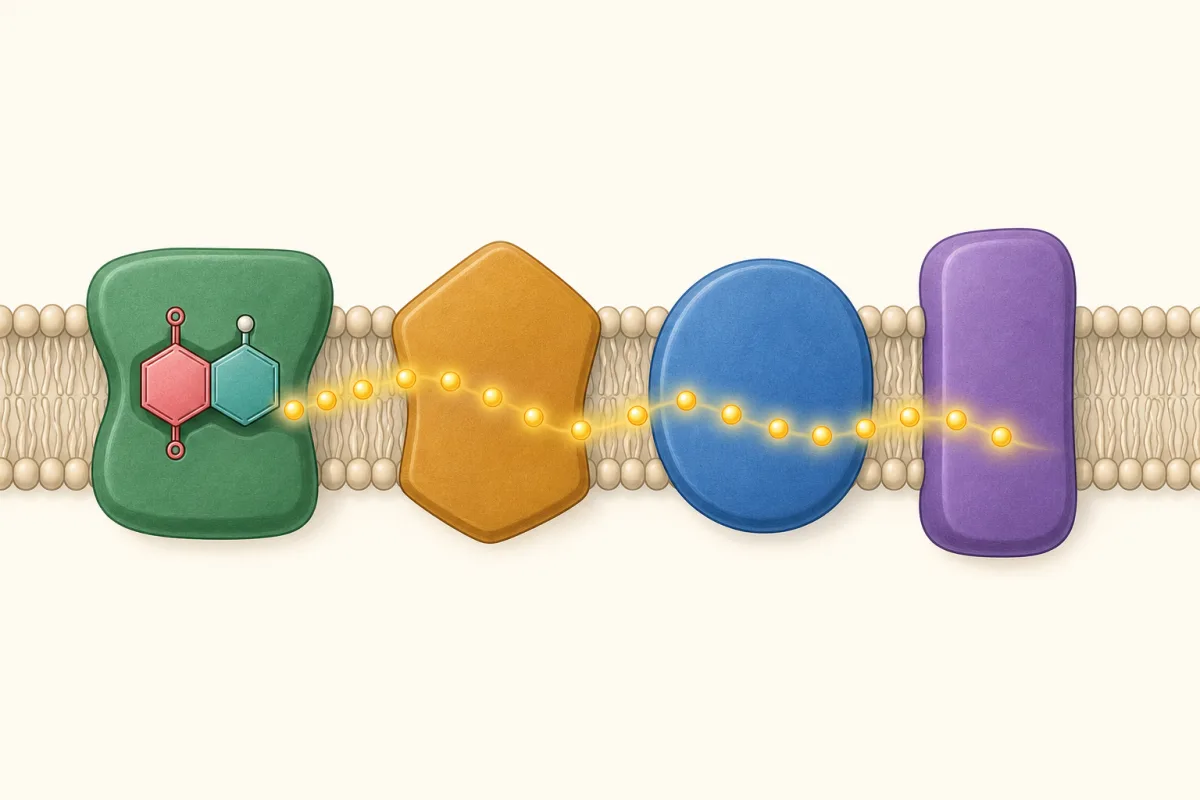
NAD+ (nicotinamide adenine dinucleotide) is the coenzyme for the redox reactions of energy metabolism, and it is also a cofactor for non-redox enzymes including sirtuins, CD38 and poly(ADP-ribose) polymerases, influencing metabolic pathways, DNA repair, chromatin remodelling, cellular senescence and immune cell function [12].
A 2021 review reports that ageing brings a gradual decline in tissue and cellular NAD+ levels across multiple model organisms, including rodents and humans, and links that decline causally to numerous ageing-associated diseases [12]. None of the four human trials in this guide's evidence gave people NAD+ itself directly; each instead gave a precursor compound the body converts into NAD+.
Randomised trial · 2018Nicotinamide riboside raised NAD+ in peripheral blood mononuclear cells by approximately 60% relative to placebo (mean change 6.2 pmol per mg protein); well tolerated, with 14 adverse events in 7 of 30 participants, all mild (nausea, flushing, leg cramps and increased bruising on nicotinamide riboside; headache, skin rash, flushing, fainting and drowsiness on placebo)
- Design
- Randomised, double-blind, placebo-controlled, crossover trial (two 6-week arms)
- Population
- Healthy middle-aged and older adults (n=30)
- Intervention
- Oral nicotinamide riboside, a NAD+ precursor vitamin, against placebo
- Finding
- Nicotinamide riboside raised NAD+ in peripheral blood mononuclear cells by approximately 60% relative to placebo (mean change 6.2 pmol per mg protein); well tolerated, with 14 adverse events in 7 of 30 participants, all mild (nausea, flushing, leg cramps and increased bruising on nicotinamide riboside; headache, skin rash, flushing, fainting and drowsiness on placebo)
Randomised trial · 2019Muscle NAAD rose 2-fold (0.73 vs 0.35 pmol/mg, p=0.004) without an increase in muscle NAD+ itself (210 vs 197 pmol/mg, p=0.22); no difference in complex I- or complex II-mediated oxidative phosphorylation or maximal respiratory capacity, and citrate synthase activity and mitochondrial DNA copy number were unchanged; circulating inflammatory cytokines fell
- Design
- Randomised, double-blind, placebo-controlled, crossover trial
- Population
- 12 aged men
- Intervention
- 1 g of nicotinamide riboside per day for 21 days, against placebo
- Finding
- Muscle NAAD rose 2-fold (0.73 vs 0.35 pmol/mg, p=0.004) without an increase in muscle NAD+ itself (210 vs 197 pmol/mg, p=0.22); no difference in complex I- or complex II-mediated oxidative phosphorylation or maximal respiratory capacity, and citrate synthase activity and mitochondrial DNA copy number were unchanged; circulating inflammatory cytokines fell
Randomised trial · 2021Insulin-stimulated glucose disposal (by hyperinsulinaemic-euglycaemic clamp) and skeletal muscle insulin signalling (AKT and mTOR phosphorylation) increased after nicotinamide mononucleotide but not after placebo; nicotinamide mononucleotide also up-regulated platelet-derived growth factor receptor β and other muscle-remodelling genes
- Design
- Randomised, double-blind, placebo-controlled trial, 10 weeks
- Population
- Postmenopausal women with prediabetes who were overweight or obese
- Intervention
- Oral nicotinamide mononucleotide, a NAD+ precursor, against placebo
- Finding
- Insulin-stimulated glucose disposal (by hyperinsulinaemic-euglycaemic clamp) and skeletal muscle insulin signalling (AKT and mTOR phosphorylation) increased after nicotinamide mononucleotide but not after placebo; nicotinamide mononucleotide also up-regulated platelet-derived growth factor receptor β and other muscle-remodelling genes
Clinical trial · 2020Blood NAD+ rose in all subjects, by up to 8-fold, and muscle NAD+ in patients reached the level of controls; muscle strength and mitochondrial biogenesis increased in all subjects, some patients showed an anaemia tendency, and patients' liver fat fell by as much as 50%
- Design
- Dose-escalation trial with matched controls
- Population
- Adults with adult-onset mitochondrial myopathy and their matched controls
- Intervention
- Niacin, a NAD+-boosting precursor, escalated to 750 to 1,000 mg per day, for 10 months in patients and 4 months in controls
- Finding
- Blood NAD+ rose in all subjects, by up to 8-fold, and muscle NAD+ in patients reached the level of controls; muscle strength and mitochondrial biogenesis increased in all subjects, some patients showed an anaemia tendency, and patients' liver fat fell by as much as 50%
Read together, the four trials point in different directions: a rise in blood-cell NAD+ [13]; in aged men, a metabolite rise without a change in muscle NAD+ or mitochondrial respiration, alongside an anti-inflammatory effect [14]; an improvement in muscle insulin sensitivity [15]; and, at a higher and longer niacin dose, a rise in muscle strength alongside the largest reported rise in blood NAD+ [16].
Three routes compared
Set side by side, the three approaches differ in where they touch the mitochondrion, how much has been measured directly in people, and how far any of them has reached an approved use.
| SS-31 (elamipretide) | Cardiolipin, an anionic phospholipid on the inner mitochondrial membrane [2] | Preclinical in rat and mouse, then three placebo-controlled human trials, of 39, 12 and 218 participants [2], [3], [4], [5], [6] | Yes: ATPmax rose after a single infused dose in older adults [4] | FDA accelerated approval, September 2025, for Barth syndrome patients weighing ≥ 30 kg [7] |
| MOTS-c | AMPK, reached by inhibiting the folate cycle; encoded within mitochondrial DNA itself [8] | Preclinical in mouse, plus a human measurement of the body's own MOTS-c rising with exercise [8], [9] | No completed human interventional trial with a published efficacy result in this guide's evidence [10], [11] | Two trials registered: an analogue's [18] Phase 1a/1b completed, MOTS-c's own Phase 2a recruiting; neither is approved for human use [10], [11] |
| NAD+ precursors (nicotinamide riboside, nicotinamide mononucleotide, niacin) | NAD+ itself, the coenzyme whose reduced form, NADH, donates electrons into the respiratory chain at Complex I [12], [17] | Three human randomised, placebo-controlled trials, plus a dose-escalation trial with matched controls [13], [14], [15], [16] | Measured once, in aged men's muscle, and found unchanged despite a rise in a related metabolite [14] | No trial in this guide's evidence establishes regulatory approval for this use [13], [14], [15], [16] |
Source [2], [3], [4], [5], [6], [7], [8], [9], [10], [11], [12], [13], [14], [15], [16], [17], [18]
What is still open
Elamipretide's approval, set out in the SS-31 section, is confined to Barth syndrome [7]. Beyond that condition the picture is less settled: MMPOWER-3 did not meet either primary endpoint in 218 adults with primary mitochondrial myopathy [6], and the review that records the approval still describes the compound's work in mitochondrial myopathies and dry age-related macular degeneration as Phase III development [7].
MOTS-c has no completed human efficacy trial in this guide's evidence. CB4211, an analogue of MOTS-c [18], completed a Phase 1a/1b safety study, and MOTS-c itself is being tested in a Phase 2a trial for insulin sensitivity that is still recruiting; neither carries a published human result here [10], [11].
The NAD+ precursor trials in this guide's evidence are small and short by comparison. The two nicotinamide riboside trials enrolled 30 and 12 participants, over six weeks and 21 days respectively, and neither administered NAD+ itself: both gave a precursor and measured what the body did with it [13], [14].
Where adverse events were reported, most were mild to moderate. In the Barth syndrome trial's first part, 12 of 12 participants on elamipretide and 10 of 12 on placebo had at least one treatment-emergent adverse event, most of them injection site reactions: erythema in 12 of 12 on elamipretide against 3 of 12 on placebo, pain in 9 of 12 against 4 of 12, and induration in 8 of 12 against 2 of 12; most events were mild to moderate, and the one serious event was judged unrelated to elamipretide [5]. MMPOWER-3 described elamipretide as well tolerated, with most adverse events mild to moderate [6]. The nicotinamide riboside trial in middle-aged and older adults recorded 14 treatment-emergent adverse events in 7 of 30 participants, all mild, including nausea, flushing, leg cramps and increased bruising on nicotinamide riboside, against headache, skin rash, flushing, fainting and drowsiness on placebo [13]. In the niacin trial, some patients showed an anaemia tendency [16].
On our shelf
Research-grade MOTS-c, for laboratory use only.
View the listing
Research-grade SS-31, for laboratory use only.
View the listing
Research-grade NAD+, for laboratory use only.
View the listing
Research use only This guide summarises published research for laboratory use. It is not medical advice, it describes no use in people, and nothing sold on this site is for human or veterinary use.
References
Every figure in this guide points at one of the sources below; the number in brackets is the entry it came from.
- F
Akinkunmi OA, Araba FF, Chukwudebelu JA, et al.
ReviewFrontiers in cell and developmental biology2026DOI 10.3389/fcell.2026.1929130PMID 42707544PMC13547535doi.org
- J
Birk AV, Liu S, Soong Y, et al.
PreclinicalJournal of the American Society of Nephrology : JASN2013 - A
Siegel MP, Kruse SE, Percival JM, et al.
PreclinicalAging cell2013 - P
Roshanravan B, Liu SZ, Ali AS, et al.
Randomised trialPloS one2021DOI 10.1371/journal.pone.0253849PMID 34264994PMC8282018doi.org
- G
Thompson WR, Hornby B, Manuel R, et al.
Randomised trialGenetics in medicine : official journal of the American College of Medical Genetics2021DOI 10.1038/s41436-020-01006-8PMID 33077895PMC7935714doi.org
- N
Karaa A, Bertini E, Carelli V, et al.
Randomised trialNeurology2023DOI 10.1212/wnl.0000000000207402PMID 37268435PMC10382259doi.org
- D
Shirley M.
ReviewDrugs2026 - C
Lee C, Zeng J, Drew BG, et al.
PreclinicalCell metabolism2015DOI 10.1016/j.cmet.2015.02.009PMID 25738459PMC4350682doi.org
- N
Reynolds JC, Lai RW, Woodhead JST, et al.
PreclinicalNature communications2021DOI 10.1038/s41467-020-20790-0PMID 33473109PMC7817689doi.org
- C
- C
- N
Covarrubias AJ, Perrone R, Grozio A, et al.
ReviewNature reviews. Molecular cell biology2021DOI 10.1038/s41580-020-00313-xPMID 33353981PMC7963035doi.org
- N
Martens CR, Denman BA, Mazzo MR, et al.
Randomised trialNature communications2018DOI 10.1038/s41467-018-03421-7PMID 29599478PMC5876407doi.org
- C
Elhassan YS, Kluckova K, Fletcher RS, et al.
Randomised trialCell reports2019DOI 10.1016/j.celrep.2019.07.043PMID 31412242PMC6702140doi.org
- S
Yoshino M, Yoshino J, Kayser BD, et al.
Randomised trialScience (New York, N.Y.)2021 - C
Pirinen E, Auranen M, Khan NA, et al.
Clinical trialCell metabolism2020 - R
Nolfi-Donegan D, Braganza A, Shiva S.
ReviewRedox biology2020DOI 10.1016/j.redox.2020.101674PMID 32811789PMC7767752doi.org
- T
Miller B, Kim SJ, Kumagai H, et al.
ReviewThe Journal of clinical investigation2022
Questions
What is mitochondrial energy production?
Mitochondria generate ATP through oxidative phosphorylation along the electron transport chain, a process reliant on the redox coenzyme NAD+ and on cristae, the folded inner-membrane structures cardiolipin helps form [1], [2], [12].
How does SS-31 relate to cardiolipin?
SS-31, also called elamipretide, binds with high affinity to cardiolipin on the inner mitochondrial membrane, and the complex it forms was reported to protect cardiolipin from peroxidation and to protect cristae membranes during ischaemia in rats [2].
How does MOTS-c relate to AMPK?
MOTS-c's discovery paper describes it as inhibiting the folate cycle and its tethered purine biosynthesis, a route that leads to activation of AMPK, chiefly in skeletal muscle [8].
How is NAD+ connected to mitochondria?
NAD+ is a coenzyme for redox reactions, central to energy metabolism, and its reduced form, NADH, donates electrons into the respiratory chain at Complex I [12], [17]. It is also a cofactor for enzymes including sirtuins, CD38 and poly(ADP-ribose) polymerases, and it is reported to decline with age in rodents and humans [12].
Is mitochondria-targeted compounds research close to a treatment?
Only for one compound and one condition: elamipretide holds accelerated approval in the USA for Barth syndrome alone. MOTS-c and the NAD+ precursors described in this guide remain investigational, with no approved use for the conditions their trials studied [7], [10], [11].