Key points
- Tirzepatide is a 39 amino acid peptide with a C20 fatty diacid on lysine 20, a dual agonist of the GIP and GLP-1 receptors, with a mean half-life of about 5 days that its authors wrote supports a once-weekly regimen [1].
- A 2020 paper describes it as imbalanced, engaging the GIP receptor more than the GLP-1 receptor, and biased, favouring cAMP over β-arrestin recruitment at the GLP-1 receptor [2].
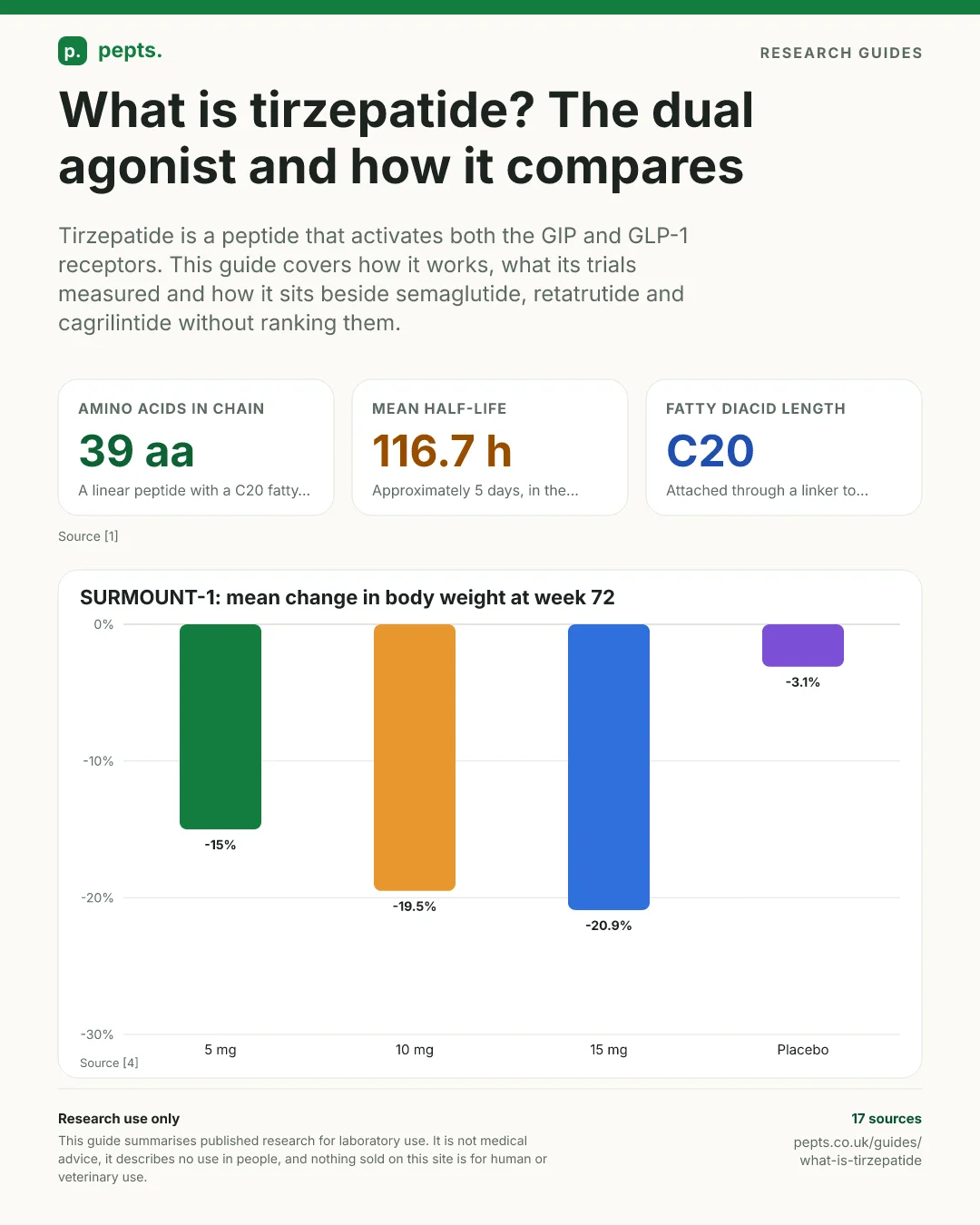
- In SURMOUNT-1, mean weight change at 72 weeks was -15.0%, -19.5% and -20.9% on 5, 10 and 15 mg against -3.1% on placebo in adults with obesity and without diabetes [4].
- SURMOUNT-5 and SURPASS-2 are the trials that put tirzepatide beside semaglutide; the figures for retatrutide and cagrilintide come from other trials and cannot be ranked against them [3], [5], [10], [13].
- Mounjaro received an EU marketing authorisation on 15 September 2022, while retatrutide and cagrilintide are described as investigational [7], [11], [13].
Listen to the summary
A short two-voice summary of this guide.
Transcript
- Host
- Tirzepatide keeps coming up next to semaglutide and retatrutide. Start with what it is.
- Researcher
- It is a dual agonist peptide: a thirty-nine amino acid chain with a fatty diacid attached, which activates both the GIP receptor and the GLP-1 receptor. Its mean half-life in the first human trial was about five days, which the authors wrote supports a once-weekly dosing regimen.
- Host
- What does dual agonist mean in practice?
- Researcher
- A twenty twenty paper describes it as imbalanced, because it engages the GIP receptor more than the GLP-1 receptor, and biased, because at the GLP-1 receptor it favours one signalling pathway over another. The authors say that this may account for its efficacy, which is a hypothesis, not a proven cause.
- Host
- What did the big obesity trials find?
- Researcher
- SURMOUNT-1 followed two thousand five hundred and thirty-nine adults with obesity and no diabetes for seventy-two weeks. Mean weight change was minus fifteen percent, minus nineteen point five and minus twenty point nine on three weekly arms, against minus three point one on placebo. SURMOUNT-5 then put tirzepatide against semaglutide in seven hundred and fifty-one adults and found minus twenty point two percent against minus thirteen point seven.
- Host
- So how does it compare with retatrutide and cagrilintide?
- Researcher
- They are different molecules. Retatrutide adds a glucagon receptor to the GIP and GLP-1 receptors. Cagrilintide is a long-acting analogue of amylin, a different hormone. The sources describe how each lasts in its own terms, and they are not the same for all four.
- Host
- Can their trial results be lined up and ranked?
- Researcher
- No. They come from different trials, with different populations, lengths and ways of counting, and no trial in the guide compares tirzepatide directly with retatrutide or cagrilintide. Only the trials against semaglutide are head to head.
- Host
- And where do they stand with regulators?
- Researcher
- Tirzepatide is authorised in the European Union as Mounjaro, and a 2026 review describes semaglutide as FDA-approved. Retatrutide and cagrilintide are still described as investigational. A research vial of tirzepatide is not Mounjaro, and research reagents are not approved for human use.
- Host
- Where can people see the figures?
- Researcher
- Every figure given here is in the guide, with its source.
What is tirzepatide?
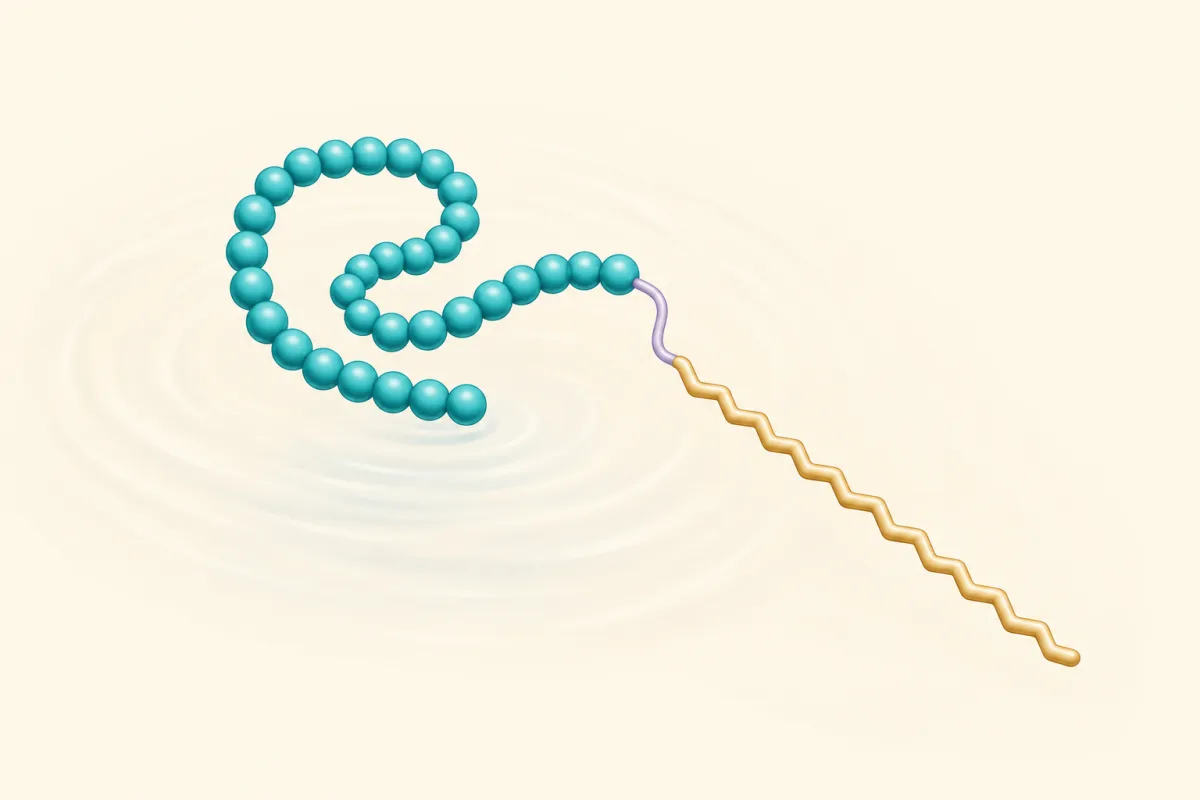
What is tirzepatide? It is a dual agonist peptide: a molecule that activates both the glucose-dependent insulinotropic polypeptide (GIP) receptor and the glucagon-like peptide-1 (GLP-1) receptor [1]. Its developers first called it LY3298176 and describe it as a fatty acid modified peptide with dual GIP and GLP-1 receptor agonist activity, which they wrote was designed for once-weekly subcutaneous administration [1]. The question the work set out to answer was whether the metabolic action of GIP adds to the established clinical benefits of selective GLP-1 receptor agonists in type 2 diabetes [1].
Chemically, it is a 39 amino acid linear peptide conjugated to a C20 fatty diacid moiety through a linker connected to the lysine residue at position 20 [1]. In the phase 1 trial its mean half-life was approximately 5 days (116.7 h), which the authors say supports a once-weekly dosing regimen [1]. The natural hormone it draws on is much shorter lived: GLP-1 is a 30 amino acid peptide with a half-life of 1.5 minutes after intravenous dosing and 1.5 hours following subcutaneous dosing in humans [9].
Amino acids in chain
39 aa
A linear peptide with a C20 fatty diacid on the lysine at position 20
Mean half-life
116.7 h
Approximately 5 days, in the phase 1 trial
Fatty diacid length
C20
Attached through a linker to lysine 20
Source [1]
The paper that introduced the molecule followed it from cell assays and mice to a phase 1 programme in healthy volunteers and in people with type 2 diabetes, and concluded that its pharmacology translated from preclinical to clinical studies [1]. The phase 3 trials described below were funded or supported by Eli Lilly [3], [4], [5], [6]. The timeline shows how the evidence in this guide accumulated.
2018
The discovery paper describes LY3298176 from in vitro assays and mice to a phase 1 proof-of-concept trial.[1]
2020
A pharmacology paper describes tirzepatide as an imbalanced and biased dual agonist.[2]
2021
SURPASS-2 reports tirzepatide against semaglutide 1 mg in type 2 diabetes over 40 weeks.[3]
2022
SURMOUNT-1 reports 72 weeks of tirzepatide in adults with obesity; Mounjaro receives an EU marketing authorisation on 15 September.[4], [7]
2025
SURMOUNT-5 compares tirzepatide with semaglutide in obesity, and SURPASS-CVOT compares it with dulaglutide on cardiovascular events.[5], [6]
How tirzepatide works: the mechanism of a dual agonist
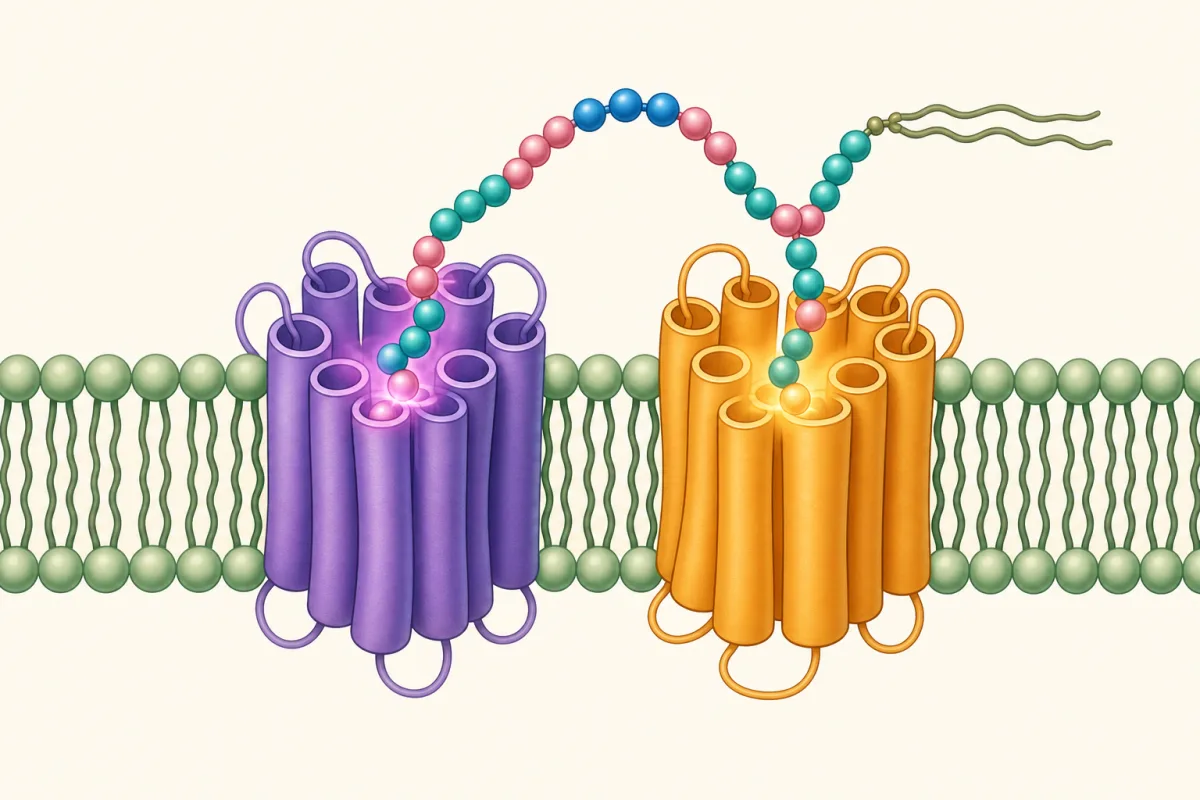
GLP-1 is an incretin hormone with important effects on glycaemic control and body weight regulation, and long-acting GLP-1 receptor agonists were developed to extend its short life [9]. Tirzepatide's mechanism starts from the same receptor but adds a second one. In cell assays it activated both GIP and GLP-1 receptor signalling, and in mice it produced glucose-dependent insulin secretion and improved glucose tolerance by acting on both receptors [1]. With chronic administration to mice it decreased body weight and food intake, effects the authors report as significantly greater than those of a GLP-1 receptor agonist [1].
A 2020 pharmacology paper asked what kind of dual agonist it is and answered with two words, imbalanced and biased [2]. Imbalanced refers to occupancy: calculating how much of each receptor is engaged at clinically efficacious doses showed a greater degree of engagement of the GIP receptor than of the GLP-1 receptor [2]. The paper estimated GLP-1 receptor occupancy at 3% for 5 mg of tirzepatide and 6% for 1 mg of semaglutide, and observed that tirzepatide appeared to need lower GLP-1 receptor engagement to deliver equivalent glucose and weight control in the trials it compared [2].
Biased refers to signalling. At the GIP receptor, tirzepatide mimics the actions of native GIP; at the GLP-1 receptor it favours cAMP generation over β-arrestin recruitment, alongside a weaker ability than GLP-1 itself to drive receptor internalisation [2]. In primary islets, β-arrestin1 limited the insulin response to GLP-1 but not to GIP or tirzepatide, which the authors read as suggesting that the biased agonism of tirzepatide enhances insulin secretion [2].
SURPASS: tirzepatide in type 2 diabetes
SURPASS-2 is the trial that put tirzepatide beside another drug in people with type 2 diabetes. It was an open-label, 40-week, phase 3 trial that randomly assigned 1879 patients in a 1:1:1:1 ratio to tirzepatide at 5 mg, 10 mg or 15 mg or to semaglutide at 1 mg [3]. At baseline the mean glycated haemoglobin level was 8.28%, the mean age 56.6 years and the mean weight 93.7 kg [3]. The primary end point was the change in glycated haemoglobin from baseline to 40 weeks [3].
| Tirzepatide 5 mg [3] | -2.01 | -0.15 | -1.9 |
| Tirzepatide 10 mg [3] | -2.24 | -0.39 | -3.6 |
| Tirzepatide 15 mg [3] | -2.30 | -0.45 | -5.5 |
| Semaglutide 1 mg [3] | -1.86 | reference | reference |
Source [3]
The authors report tirzepatide at all three doses as noninferior and superior to semaglutide on the primary end point, with reductions in body weight that were greater with tirzepatide, least-squares mean estimated treatment differences of -1.9 kg, -3.6 kg and -5.5 kg [3]. The trial was open-label, so participants and investigators knew which drug was given [3].
The second type 2 diabetes trial in this guide asked a different question: cardiovascular events. SURPASS-CVOT was an active-comparator-controlled, double-blind, noninferiority trial in patients with type 2 diabetes and atherosclerotic cardiovascular disease, comparing tirzepatide (up to 15 mg) with dulaglutide (1.5 mg), an agent shown to reduce cardiovascular events [6]. The primary end point was a composite of death from cardiovascular causes, myocardial infarction or stroke [6]. It occurred in 801 patients (12.2%) in the tirzepatide group and 862 (13.1%) in the dulaglutide group, a hazard ratio of 0.92 (95.3% confidence interval 0.83 to 1.01), meeting the noninferiority test (P = 0.003) but not the test for superiority (P = 0.09) [6].
Preclinical · 2018The 10 mg and 15 mg doses significantly reduced fasting serum glucose against placebo in type 2 diabetes. The most frequent side effects were gastrointestinal, dose-dependent and considered mild to moderate.
- Design
- Phase 1, randomised, placebo-controlled, double-blind; single and multiple ascending doses, then a 4-week proof-of-concept part (NCT02759107)
- Population
- 142 people who received at least one dose of tirzepatide, dulaglutide or placebo: healthy subjects and patients with type 2 diabetes
- Intervention
- Tirzepatide at 0.25 to 15 mg across parts, with doses above 5 mg reached by titration; dulaglutide as a positive control
- Finding
- The 10 mg and 15 mg doses significantly reduced fasting serum glucose against placebo in type 2 diabetes. The most frequent side effects were gastrointestinal, dose-dependent and considered mild to moderate.
Randomised trial · 2021Change in HbA1c of -2.01, -2.24 and -2.30 percentage points with tirzepatide and -1.86 with semaglutide; tirzepatide noninferior and superior at all doses.
- Design
- SURPASS-2: phase 3, open-label, 40 weeks, randomised 1:1:1:1
- Population
- 1879 patients with type 2 diabetes; mean HbA1c 8.28%, mean age 56.6 years, mean weight 93.7 kg
- Intervention
- Tirzepatide 5 mg, 10 mg or 15 mg, or semaglutide 1 mg, once weekly
- Finding
- Change in HbA1c of -2.01, -2.24 and -2.30 percentage points with tirzepatide and -1.86 with semaglutide; tirzepatide noninferior and superior at all doses.
Clinical trial · 2025Primary composite end point in 12.2% against 13.1%; hazard ratio 0.92 (95.3% CI 0.83 to 1.01); noninferiority met, superiority not shown.
- Design
- SURPASS-CVOT: active-comparator-controlled, double-blind, noninferiority
- Population
- 13,299 patients randomised, 6586 and 6579 in the analysed groups, with type 2 diabetes and atherosclerotic cardiovascular disease; mean age 64.1 years
- Intervention
- Weekly tirzepatide (up to 15 mg) or dulaglutide (1.5 mg)
- Finding
- Primary composite end point in 12.2% against 13.1%; hazard ratio 0.92 (95.3% CI 0.83 to 1.01); noninferiority met, superiority not shown.
SURMOUNT trial results in obesity
SURMOUNT-1 is the central SURMOUNT trial result for the compound in obesity. It was a phase 3, double-blind, randomised, controlled trial that assigned 2539 adults with a body-mass index of 30 or more, or 27 or more with at least one weight-related complication, and without diabetes, in a 1:1:1:1 ratio to once-weekly subcutaneous tirzepatide (5 mg, 10 mg or 15 mg) or placebo for 72 weeks, including a 20-week dose-escalation period [4]. At baseline the mean body weight was 104.8 kg and the mean BMI 38.0 [4]. The coprimary end points were the percentage change in weight and a weight reduction of 5% or more, assessed with the treatment-regimen estimand, which counts effects regardless of treatment discontinuation [4].
Weight change, 15 mg arm
-20.9%
Mean change at week 72, SURMOUNT-1
Weight change, placebo
-3.1%
Mean change at week 72, SURMOUNT-1
Lost 20% or more
57%
Share of the 15 mg arm
Adults randomised
2539
Without diabetes, 72 weeks
Source [4]
2539 adults with obesity or overweight and a weight-related complication, without diabetes; treatment-regimen estimand, once-weekly tirzepatide or placebo.
Arm values are the mean percentage change at week 72 as reported; the 95% confidence intervals are in the paper.
Source [4]
The mean percentage change in weight at week 72 was -15.0% (95% confidence interval -15.9 to -14.2) with 5 mg, -19.5% (-20.4 to -18.5) with 10 mg and -20.9% (-21.8 to -19.9) with 15 mg, against -3.1% (-4.3 to -1.9) with placebo [4]. A weight reduction of 5% or more occurred in 85%, 89% and 91% of the three tirzepatide arms and 35% of the placebo arm, and a reduction of 20% or more in 50% of the 10 mg arm, 57% of the 15 mg arm and 3% of the placebo arm [4].
SURMOUNT-5 is the head-to-head. It was a phase 3b, open-label, controlled trial in adults with obesity but without type 2 diabetes, who were randomly assigned 1:1 to the maximum tolerated dose of tirzepatide (10 mg or 15 mg) or of semaglutide (1.7 mg or 2.4 mg) once weekly for 72 weeks [5]. A total of 751 participants underwent randomisation [5]. The least-squares mean percent change in weight at week 72 was -20.2% (95% confidence interval -21.4 to -19.1) with tirzepatide and -13.7% (-14.9 to -12.6) with semaglutide (P<0.001), and waist circumference changed by -18.4 cm and -13.0 cm [5]. The authors concluded that, among participants with obesity but without diabetes, tirzepatide was superior to semaglutide for reduction in body weight and waist circumference at week 72 [5].
751 adults with obesity but without type 2 diabetes, open-label; each arm given the maximum tolerated dose, tirzepatide 10 mg or 15 mg or semaglutide 1.7 mg or 2.4 mg once weekly.
Least-squares mean percent change. Arms are maximum tolerated doses, so they do not map onto the fixed arms of SURMOUNT-1.
Source [5]
Randomised trial · 2022Mean weight change at week 72 of -15.0%, -19.5% and -20.9% with tirzepatide and -3.1% with placebo.
- Design
- SURMOUNT-1: phase 3, double-blind, randomised, controlled, 72 weeks including 20 weeks of dose escalation (NCT04184622)
- Population
- 2539 adults with BMI of 30 or more, or 27 or more with a weight-related complication, excluding diabetes; mean weight 104.8 kg
- Intervention
- Tirzepatide 5 mg, 10 mg or 15 mg, or placebo, once weekly
- Finding
- Mean weight change at week 72 of -15.0%, -19.5% and -20.9% with tirzepatide and -3.1% with placebo.
Clinical trial · 2025Mean weight change at week 72 of -20.2% with tirzepatide and -13.7% with semaglutide; waist circumference -18.4 cm and -13.0 cm.
- Design
- SURMOUNT-5: phase 3b, open-label, controlled, 72 weeks (NCT05822830)
- Population
- 751 adults with obesity, without type 2 diabetes
- Intervention
- Maximum tolerated dose of tirzepatide (10 mg or 15 mg) or semaglutide (1.7 mg or 2.4 mg) once weekly
- Finding
- Mean weight change at week 72 of -20.2% with tirzepatide and -13.7% with semaglutide; waist circumference -18.4 cm and -13.0 cm.
What the trials recorded as adverse events
In SURMOUNT-1 the most common adverse events with tirzepatide were gastrointestinal, mostly mild to moderate and occurring primarily during dose escalation, and adverse events caused treatment discontinuation in 4.3%, 7.1% and 6.2% of the 5 mg, 10 mg and 15 mg arms against 2.6% on placebo [4]. In SURMOUNT-5 the most common adverse events in both treatment groups were gastrointestinal, mostly mild to moderate and primarily during dose escalation [5].
SURPASS-2 gives the fullest list for a head-to-head comparison in type 2 diabetes. Nausea occurred in 17 to 22% of the tirzepatide arms and 18% of the semaglutide arm, diarrhoea in 13 to 16% and 12%, and vomiting in 6 to 10% and 8% [3]. Hypoglycaemia (blood glucose below 54 mg per decilitre) was reported in 0.6% of the 5 mg arm, 0.2% of the 10 mg arm and 1.7% of the 15 mg arm, and in 0.4% of the semaglutide arm, while serious adverse events were reported in 5 to 7% of tirzepatide recipients and 3% of semaglutide recipients [3].
- In the phase 1 programme the most frequent side effects were vomiting, nausea, decreased appetite, diarrhoea and abdominal distension, all dose-dependent and considered mild to moderate in severity [1].
- In SURPASS-CVOT the incidence of adverse events appeared similar in the two groups, although more gastrointestinal adverse events were observed in the tirzepatide group [6].
- In the retatrutide and cagrilintide trials the same class of event led the lists, so gastrointestinal events are not peculiar to one molecule [10], [13].
Tirzepatide vs semaglutide, retatrutide and cagrilintide
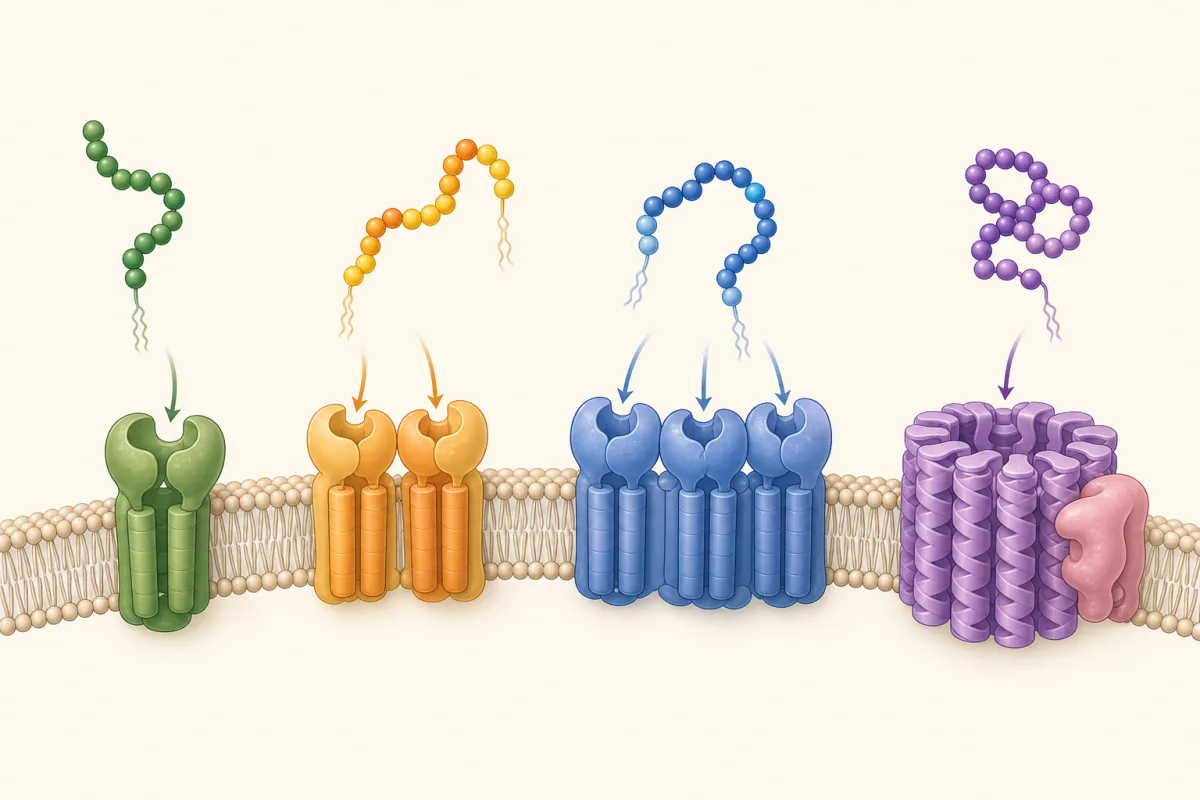
Four names recur whenever this research area is discussed: semaglutide, tirzepatide, retatrutide and cagrilintide. They are often spoken of as one family, but they act on different receptors, one of them on a different hormone system altogether, their sources describe how each lasts a week in different terms, and the trials that measured them asked different questions of different people. This section sets those differences out and stops short of ranking, because the evidence will not support a ranking.
Which receptors. Semaglutide acts on the GLP-1 receptor; the SURPASS-2 authors call it a selective GLP-1 receptor agonist, and GLP-1 is an incretin hormone with effects on glycaemic control and body weight regulation [3], [9]. Tirzepatide adds the GIP receptor, which is what makes it a dual agonist, with greater engagement of the GIP receptor than of the GLP-1 receptor at efficacious doses [1], [2]. Retatrutide adds a third, the glucagon receptor, and is an agonist of the GIP, GLP-1 and glucagon receptors [10]. In vitro it shows balanced glucagon and GLP-1 receptor activity but more GIP receptor activity, and in obese mice weight loss was augmented by glucagon-receptor-mediated increases in energy expenditure added to the calorie-intake reduction driven by the GIP and GLP-1 receptors [12].
Which hormone system. Cagrilintide belongs to neither of those families. It is a long-acting analogue of amylin, a pancreatic hormone that induces satiety, rather than an analogue of GIP, GLP-1 or glucagon [13]. Amylin is co-secreted with insulin from β pancreatic cells as a satiety signal, acts on sub-cortical homeostatic and hedonic brain regions, slows gastric emptying and suppresses post-prandial glucagon responses to meals [17]. Cagrilintide is described as a non-selective agonist of the amylin receptors and the calcitonin receptor, very similar in sequence to pramlintide, differing by lipidation of the N-terminal lysine and three amino acid substitutions (N14E, V17R and P37Y) [17]. Its developers describe a stable, lipidated analogue, and contrast it with the amylin analogue pramlintide, which requires three daily injections because its half-life is short [14]. Its developers report weight loss when it was dosed alone or in combination with the GLP-1 analogue semaglutide [14], and REDEFINE 1 randomised adults to the combination, to each alone, or to placebo [15].
How each was built to last a week. A peptide hormone is cleared quickly: GLP-1 has a half-life of 1.5 minutes after intravenous dosing and 1.5 hours following subcutaneous dosing in humans [9]. What the sources say of each compound differs. For semaglutide, reversible binding to albumin was used for systemic protraction [9], and STEP 1 reports it given once weekly [8]. Tirzepatide carries a C20 fatty diacid on lysine 20 through a linker, and its mean half-life was approximately 5 days, which its authors wrote supports a once-weekly dosing regimen [1]. For retatrutide, its authors reported a pharmacokinetic profile that supported once-weekly dosing in a phase 1 single ascending dose study; the evidence collected here describes no modification of the molecule [12]. Cagrilintide is a stable, lipidated, long-acting analogue, developed against the background of pramlintide, which requires three daily injections, and its phase 2 trial gave it once weekly [13], [14].
What each programme measured, and in whom. Each compound's trials are summarised on their own terms below, with the placebo figure where the source gives one.
Semaglutide: STEP 1 enrolled 1961 adults with a BMI of 30 or greater (27 or greater with a weight-related condition) who did not have diabetes, for 68 weeks of 2.4 mg or placebo with lifestyle intervention; weight changed by -14.9% against -2.4% [8].
Tirzepatide: SURMOUNT-1 ran 72 weeks in 2539 adults without diabetes, with the arm-by-arm results given above [4].
Retatrutide: the phase 2 trial ran 48 weeks in 338 adults, with a primary end point at 24 weeks, and found -8.7% in the 1 mg group up to -24.2% in the 12 mg group against -2.1% on placebo at 48 weeks [10]. Its phase 3 trial TRIUMPH-2 enrolled 1152 adults with obesity and type 2 diabetes, a different population, and measured weight at week 80: -11.9%, -16.8% and -18.8% with 4 mg, 9 mg and 12 mg against -5.1% with placebo [11].
Cagrilintide: the phase 2 trial ran 26 weeks and found mean reductions of 6.0% to 10.8% across five doses against 3.0% on placebo, under an estimand that assumed everyone stayed on treatment [13]. REDEFINE 1 randomised 3417 adults for 68 weeks to cagrilintide with semaglutide, semaglutide alone, cagrilintide alone or placebo, and reported -20.4% for the combination against -3.0% on placebo; the abstract gives no figure for the single-agent arms, so none appears here [15].
| Semaglutide [3], [9] | GLP-1 receptor; a selective GLP-1 receptor agonist [3] | Reversible albumin binding for systemic protraction [9] | STEP 1 [8]: 1961 adults with overweight or obesity, no diabetes, 68 weeks, 2.4 mg: -14.9% against -2.4% with placebo | FDA-approved, per a 2026 review [16] |
| Tirzepatide [1], [2] | GIP and GLP-1 receptors, with more engagement of the GIP receptor [2] | C20 fatty diacid on lysine 20; mean half-life about 5 days (116.7 h), which its authors wrote supports once-weekly dosing [1] | SURMOUNT-1 [4]: 2539 adults without diabetes, 72 weeks: -15.0%, -19.5% and -20.9% on 5, 10 and 15 mg against -3.1% with placebo | EU marketing authorisation on 15 September 2022, as Mounjaro [7]; FDA-approved, per a 2026 review [16] |
| Retatrutide [10], [12] | GIP, GLP-1 and glucagon receptors; more GIP receptor activity in vitro [12] | Pharmacokinetic profile its authors say supported once-weekly dosing in a phase 1 study [12] | Phase 2 [10]: 338 adults with obesity, 48 weeks: -8.7% (1 mg) to -24.2% (12 mg) against -2.1% with placebo. TRIUMPH-2 [11]: 1152 adults with obesity and type 2 diabetes, 80 weeks: -11.9%, -16.8% and -18.8% on 4, 9 and 12 mg against -5.1% with placebo | Investigational [11], [16] |
| Cagrilintide [13], [14], [17] | Amylin analogue, a different hormone from GIP or GLP-1, co-secreted with insulin from β pancreatic cells; non-selective agonist of the amylin and calcitonin receptors [13], [17] | Stable, lipidated, long-acting analogue [14]; lipidated N-terminal lysine and three substitutions relative to pramlintide [17] | Phase 2 [13]: 706 adults given cagrilintide, 26 weeks, assuming adherence: 6.0% to 10.8% against 3.0% with placebo. REDEFINE 1 [15]: 3417 adults, 68 weeks: -20.4% for the combination with semaglutide against -3.0% with placebo | Under investigation for weight management [13] |
Source [1], [2], [3], [4], [7], [8], [9], [10], [11], [12], [13], [14], [15], [16], [17]
What does permit a comparison is a trial that puts two compounds in the same people on the same schedule. SURMOUNT-5 is the one such trial in obesity, tirzepatide against semaglutide in adults without diabetes over 72 weeks, with the result reported above [5]. SURPASS-2 is the equivalent in type 2 diabetes, tirzepatide against semaglutide 1 mg over 40 weeks [3]. Both were open-label, both were funded by Eli Lilly, and each speaks only for its own population and doses [3], [5]. Cagrilintide's phase 2 trial included a once-daily liraglutide arm, and the 4.5 mg arm's 10.8% compared with 9.0% for liraglutide 3.0 mg, which says nothing about the other three compounds [13]. Where each stands with regulators is set out in the next section, without ranking any of them.
Where it stands with regulators, and what is still open
Mounjaro contains the active substance tirzepatide and received a marketing authorisation valid throughout the EU on 15 September 2022, for type 2 diabetes and for weight management [7].
A 2026 review in a medical journal describes semaglutide and tirzepatide as FDA-approved and lists retatrutide among investigational triple-agonists [16]. TRIUMPH-2 likewise describes retatrutide as currently under investigation for obesity, type 2 diabetes and other conditions [11]. Cagrilintide is described as a long-acting amylin analogue under investigation for weight management, in clinical trial alone and with semaglutide [13], [14].
Several things remain open in the evidence collected here. SURPASS-2 and SURMOUNT-5 were open-label, so neither participants nor investigators were masked to the drug [3], [5]. SURPASS-CVOT showed noninferiority to dulaglutide on its composite end point but did not show superiority (P = 0.09) [6]. The mechanism paper presents imbalance and bias as something that 'may account for' efficacy, which is a hypothesis about pharmacology rather than a finding about outcomes [2]. And the trials of the molecules compared above were run by different sponsors, Eli Lilly for tirzepatide and retatrutide and Novo Nordisk for semaglutide and cagrilintide, in different populations, so the question of how the four stand against each other is mostly unanswered by direct evidence [3], [8], [10], [13].
On our shelf
Research-grade Retatrutide, for laboratory use only.
View the listing
Research-grade Tirzepatide, for laboratory use only.
View the listing
Research-grade Semaglutide, for laboratory use only.
View the listing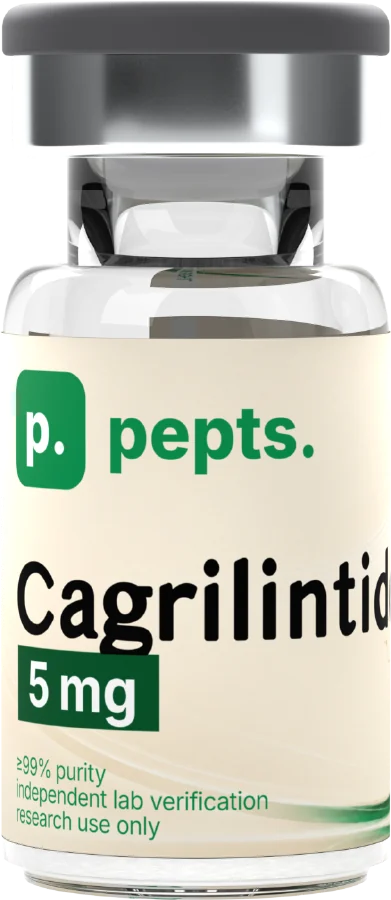
Research-grade Cagrilintide, for laboratory use only.
View the listing
Research use only This guide summarises published research for laboratory use. It is not medical advice, it describes no use in people, and nothing sold on this site is for human or veterinary use.
References
Every figure in this guide points at one of the sources below; the number in brackets is the entry it came from.
- M
Coskun T, Sloop KW, Loghin C, et al.
PreclinicalMolecular metabolism2018DOI 10.1016/j.molmet.2018.09.009PMID 30473097PMC6308032doi.org
- J
Willard FS, Douros JD, Gabe MB, et al.
PreclinicalJCI insight2020DOI 10.1172/jci.insight.140532PMID 32730231PMC7526454doi.org
- T
Frías JP, Davies MJ, Rosenstock J, et al.
Randomised trialThe New England journal of medicine2021 - T
Jastreboff AM, Aronne LJ, Ahmad NN, Wharton S, Connery L, Alves B, Kiyosue A, Zhang S, Liu B, Bunck MC, Stefanski A, SURMOUNT-1 Investigators.
Randomised trialThe New England journal of medicine2022 - T
Aronne LJ, Horn DB, le Roux CW, et al.
Clinical trialThe New England journal of medicine2025 - T
Nicholls SJ, Pavo I, Bhatt DL, et al.
Clinical trialThe New England journal of medicine2025 - E
European Medicines Agency
Regulator or registryEuropean Medicines Agency2022ema.europa.eu
- T
Wilding JPH, Batterham RL, Calanna S, Davies M, Van Gaal LF, Lingvay I, McGowan BM, Rosenstock J, Tran MTD, Wadden TA, Wharton S, Yokote K, Zeuthen N, Kushner RF, STEP 1 Study Group.
Randomised trialThe New England journal of medicine2021 - F
Knudsen LB, Lau J.
ReviewFrontiers in endocrinology2019 - T
Jastreboff AM, Kaplan LM, Frías JP, et al.
Randomised trialThe New England journal of medicine2023 - L
Bellido V, le Roux CW, Ekinci EI, et al.
Randomised trialLancet (London, England)2026 - C
Coskun T, Urva S, Roell WC, et al.
PreclinicalCell metabolism2022 - L
Lau DCW, Erichsen L, Francisco AM, et al.
Randomised trialLancet (London, England)2021 - J
Kruse T, Hansen JL, Dahl K, et al.
PreclinicalJournal of medicinal chemistry2021 - T
Garvey WT, Blüher M, Osorto Contreras CK, et al.
Randomised trialThe New England journal of medicine2025 - M
Moiz A, O'Keefe EL, O'Keefe JH.
ReviewMissouri medicine2026PMID 42757290PMC13585006pubmed.ncbi.nlm.nih.gov
- J
Dehestani B, Stratford NR, le Roux CW.
ReviewJournal of obesity & metabolic syndrome2021
Questions
Is tirzepatide a peptide?
Yes: it is a 39 amino acid linear peptide with a C20 fatty diacid attached to the lysine at position 20 through a linker [1]. Its authors describe it as a fatty acid modified peptide that they wrote was designed for once-weekly subcutaneous administration, with a mean half-life of about 5 days in the phase 1 trial [1].
What does 'dual agonist' mean for tirzepatide?
It activates two receptors, the GIP receptor and the GLP-1 receptor [1]. A 2020 paper describes the pairing as imbalanced, with greater engagement of the GIP receptor than of the GLP-1 receptor, and biased, favouring cAMP generation over β-arrestin recruitment at the GLP-1 receptor [2].
What did the SURMOUNT trials measure?
SURMOUNT-1 measured percentage change in body weight at 72 weeks in 2539 adults with obesity and without diabetes, with means of -15.0%, -19.5% and -20.9% on 5 mg, 10 mg and 15 mg against -3.1% on placebo [4]. SURMOUNT-5 compared tirzepatide with semaglutide in 751 adults over 72 weeks and reported -20.2% against -13.7% [5].
How does tirzepatide differ from semaglutide, retatrutide and cagrilintide?
Semaglutide acts on the GLP-1 receptor, tirzepatide on the GIP and GLP-1 receptors, and retatrutide on the GIP, GLP-1 and glucagon receptors, while cagrilintide is an amylin analogue [1], [3], [10], [13]. Their trials differ in population, length and estimand, so the figures cannot be ranked; only SURMOUNT-5 and SURPASS-2 compare tirzepatide with another of the four directly, and both pair it with semaglutide [3], [5].
Is tirzepatide approved?
Mounjaro, which contains tirzepatide, received an EU marketing authorisation on 15 September 2022; the EU entry is the one cited here [7]. Retatrutide and cagrilintide are described as investigational [11], [13]. A research-grade vial of tirzepatide is not Mounjaro, and research reagents are not approved for human use.