Key points
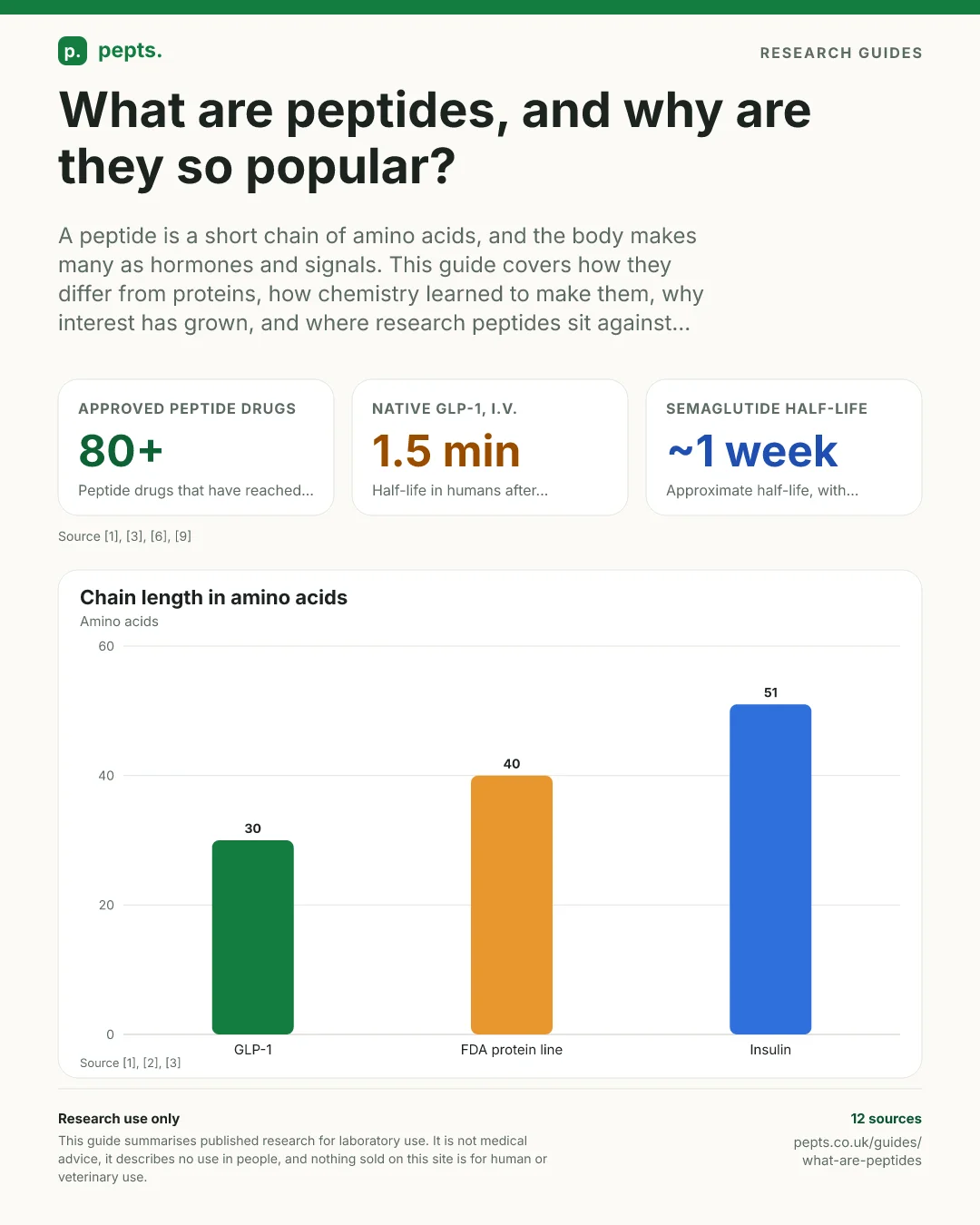
- A peptide is a chain of amino acids joined by amide bonds, usually 500 to 5000 Da, and the FDA defines a protein as more than 40 amino acids [1], [2].
- Insulin, a peptide of 51 amino acids, is one the body makes [1]; GLP-1 is another, released from the gut, and the GLP-1 receptor is found in tissues including the pancreas and brain [3], [4].
- Insulin was first isolated in 1921 and became the first commercial peptide drug in 1923; solid-phase synthesis followed in 1963 [1].
- More than 80 peptide drugs have reached the market, helped by engineering that lengthened half-lives, such as albumin-binding fatty acids [1], [3], [6].
- Peptides are limited by short half-lives, oral bioavailability of under 1% and manufacturing challenges; retatrutide is investigational, not an approved medicine [9], [10], [11], [12].
Listen to the summary
A short two-voice summary of this guide.
Transcript
- Host
- Let's start simply. What are peptides?
- Researcher
- A peptide is a short chain of amino acids joined by amide bonds. The therapeutic ones are usually five hundred to five thousand daltons. A protein is built from the same parts but longer. The United States regulator draws its line at forty amino acids: more than forty is a protein, forty or fewer is a peptide in its terms. In the scientific literature the word is used more loosely, and insulin, at fifty-one amino acids, is still called a peptide.
- Host
- So where do they come from in the body?
- Researcher
- The body makes many of them as hormones. Insulin is one. Another is glucagon-like peptide-one, or GLP-1, released from the gut. It acts through a receptor found in the pancreas, the brain and other tissues, and it raises insulin while lowering glucagon secretion. The catch is that the native hormone lasts about one and a half minutes in the blood after an intravenous dose.
- Host
- That sounds hopeless as a medicine. How did chemistry get around it?
- Researcher
- In steps. Insulin was first isolated in nineteen twenty-one and became the first commercial peptide drug in nineteen twenty-three. Merrifield developed solid-phase synthesis in nineteen sixty-three, which made peptides practical to build. Then chemists attached fatty acids so the peptide binds albumin in the blood. Semaglutide ends up with a half-life of roughly one week.
- Host
- And that is why interest has grown?
- Researcher
- It is part of it. Reviews count more than eighty peptide drugs on the market, and the same review says worldwide sales more than doubled between twenty thirteen and twenty nineteen. Then large placebo-controlled trials of two GLP-1 receptor agonists, STEP one and SURMOUNT-one, drew wide attention. They are separate studies in adults without diabetes, and they say nothing about research compounds.
- Host
- What are the limits?
- Researcher
- Short half-lives, for one. Oral delivery is another: typically under one percent of an oral peptide reaches the circulation, and oral semaglutide manages about point four to one percent. Manufacturing is a third, with sustainability concerns still unresolved.
- Host
- Where do research peptides fit, then?
- Researcher
- They sit apart from approved medicines. Semaglutide and tirzepatide are approved. Retatrutide is investigational and is not an approved medicine, and BPC-157 and TB-500 are unapproved, with no established human safety profile. The trial results describe the specific products tested in those populations, not research compounds.
- Host
- Anything to remember before we finish?
- Researcher
- Peptides as a class have real limits, and an approved peptide medicine and an unapproved research compound are not the same thing. Every figure I gave is in the guide, with its source.
What a peptide is, and where the line with proteins falls
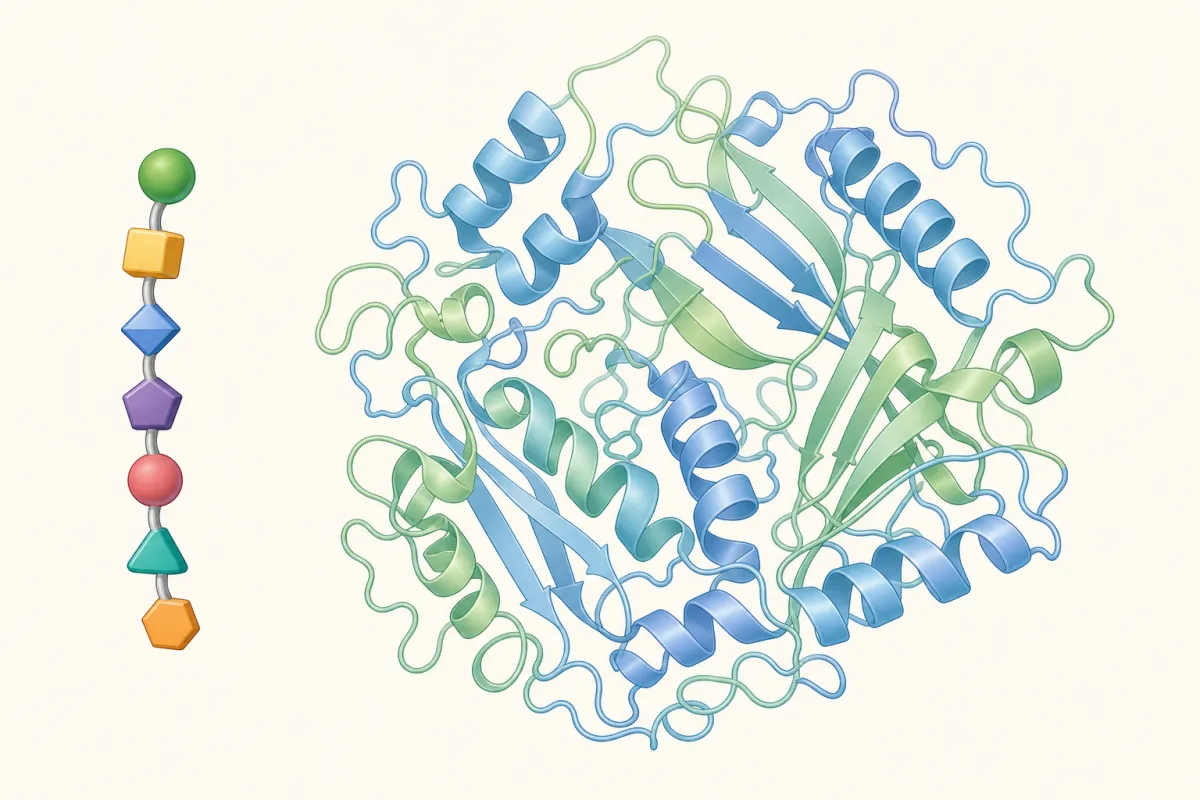
So, what are peptides? A peptide is a chain of amino acids joined by amide bonds [1], the links usually known as peptide bonds. The therapeutic peptides that dominate the literature are usually described as having molecular weights of 500 to 5000 Da [1]. A protein is built from the same amino acids and the same bonds, only longer, and so the question of what separates the two is partly a question of where someone chooses to draw a line.
One line is written into United States federal regulations. For the purposes of that rule, a protein is any alpha amino acid polymer with a specific, defined sequence that is greater than 40 amino acids in size [2]. Where two or more chains are associated with each other in the way they are in nature, the size is based on the total number of amino acids in those chains rather than on any one contiguous sequence [2]. In that regulator's terms, then, a chain of 40 amino acids or fewer is a peptide and a longer one is a protein.
Number of amino acids in two peptide hormones, beside the length above which the US FDA defines a molecule as a protein.
GLP-1 at 30 amino acids as given in [3]; a 2022 review gives 37 [1]. The FDA line is a definition: a protein is a chain of more than 40 amino acids [2].
The practical contrast is about structure. Natural peptides consist of chains of amino acids joined by amide bonds, but they lack the stability that secondary or tertiary structures give a folded protein [1]. Without that folded shape, the amide bonds can be hydrolysed or destroyed by enzymes in the body, which makes a natural peptide chemically and physically unstable, with a short half-life and fast elimination [1]. That one property, a short life in the body, explains a large share of what the rest of this guide describes: why the body uses peptides as brief signals, and why chemists have spent a century trying to lengthen them.
This guide treats peptides as a class of molecules. It describes what a peptide is, the ones the body already makes, how they came to be made in a laboratory, why so many have become approved medicines, and what limits them. It also says where an investigational research peptide sits against an approved medicine, because the two are often discussed as if they were the same thing and they are not.
The peptides the body already makes, and how they work as signals
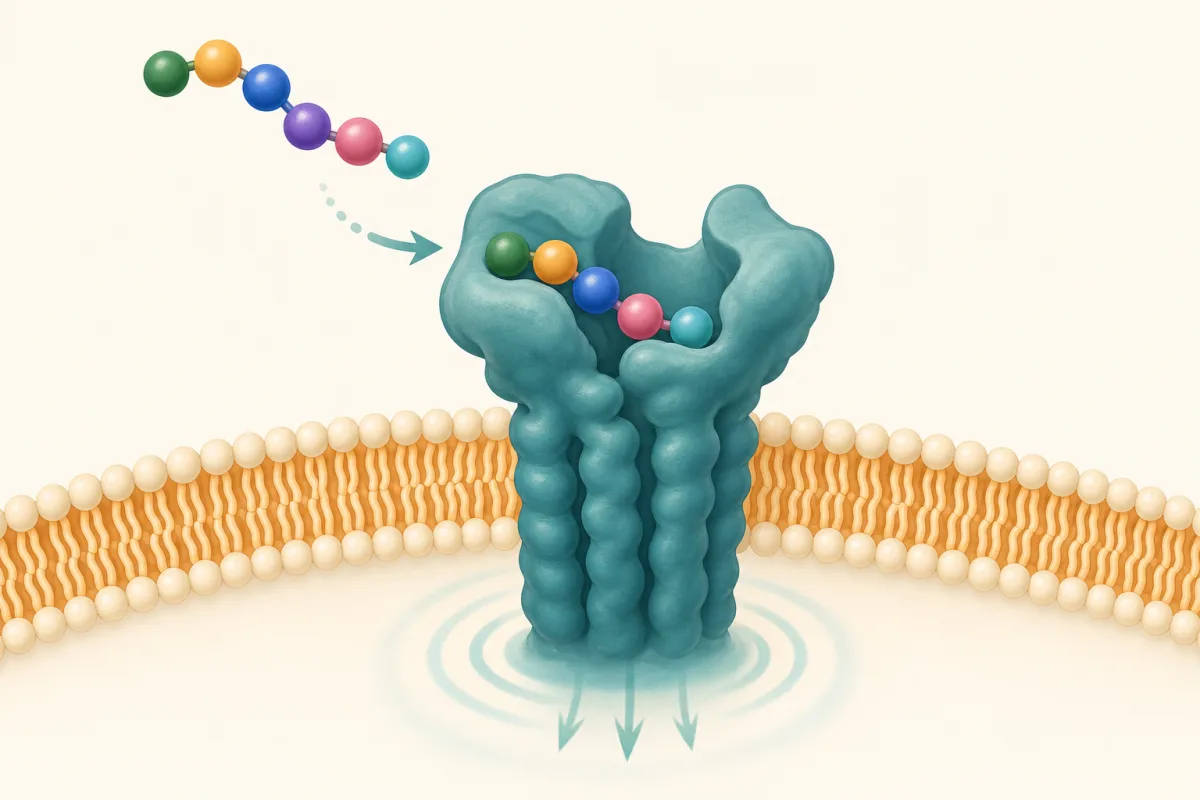
Long before anyone synthesised one, the body was making peptides and using them as messengers. Insulin is the best known: a peptide of 51 amino acids [1]. Another is glucagon-like peptide-1, or GLP-1, an incretin hormone with important effects on glycaemic control and body weight regulation [3]. A peptide hormone of this kind is released from one tissue, reaches cells carrying a matching receptor, and changes what those cells do.
GLP-1 is released from enteroendocrine cells in the gut and controls meal-related glycaemic excursions by augmenting insulin and inhibiting glucagon secretion [4]. It also inhibits gastric emptying and food intake [4]. Drugs that act on it, the GLP-1 receptor agonists, mediate their effects through the GLP-1 receptor (GLP-1R), which is expressed in the pancreas, the gastrointestinal tract, the heart, the lungs, the kidneys and the brain [3]. Studies of liraglutide and semaglutide found that GLP-1 receptors in the pancreas and in the brain account for the improvements in glycaemic control and in body weight respectively [3].
The reviews disagree slightly on the size of the native hormone. One describes GLP-1 as a 30-amino-acid peptide hormone [3]; another calls it a 37-amino-acid peptide [1]. Both agree on the property that matters most for medicine: its half-life is very short [1], measured in human studies at 1.5 minutes after intravenous dosing and 1.5 hours after subcutaneous dosing [3].
Early peptide medicines followed this pattern closely. Peptide drug discovery began with endogenous human peptides [5], and the first efforts were focused on human hormones, before widening to peptides derived from nature and to structures found through medicinal chemistry [5], [6]. The shape of the field today, in which a short natural signal is redesigned to last longer, is the continuation of that first idea.
How chemistry learned to make peptides
The history of peptide medicine starts with insulin. It was first isolated by Frederick Banting in 1921 and was available to people with diabetes mellitus a year later [1]. In 1923 it became the first commercial peptide drug [1]. A 2018 review dates peptide therapeutics as a notable part of medical practice from the advent of insulin therapy in the 1920s [5].
Making peptides on demand, rather than extracting them, depended on chemical synthesis. The chemical synthesis of peptides is well developed, particularly solid-phase peptide synthesis, which Merrifield developed in 1963 [1]. The method has been improved since 1963 and plays a crucial role in modern peptide production [1]. Peptides are now produced and modified by both chemical and biological methods, together with newer design and delivery strategies that have helped to overcome the inherent drawbacks of peptides [1].
The medicinal chemistry that followed is described in a 2021 Perspective in Nature Reviews Drug Discovery, which traces early efforts focused on human hormones, rational design, peptide drugs derived from nature, and breakthroughs in molecular biology and peptide chemistry [6]. It also names emerging strategies such as integrated venomics and peptide-display libraries [6]. The common thread is that chemists learned to make peptides, and then learned to change them.
The clearest case of changing one is GLP-1. Its discovery led to efforts to extend its half-life, and the development of short-acting and then long-acting GLP-1 receptor agonists followed [3]. For liraglutide and semaglutide, reversible binding to albumin was used to prolong action in the circulation [3]. A systematic test of fatty acid derivatives from C12 to C20 found that a C18 di-acid with a γGlu-2xOEG linker gave the highest albumin affinity combined with GLP-1 receptor potency [3]. More broadly, approved peptide drugs such as liraglutide, semaglutide and insulin degludec carry C14, C16 or C18 fatty acids, which increased their time in the plasma and reduced degradation during elimination by the kidney [1].
1921
Insulin, a peptide of 51 amino acids, is first isolated by Frederick Banting.[1]
1923
Insulin becomes the first commercial peptide drug.[1]
1963
Merrifield develops solid-phase peptide synthesis, now central to modern peptide production.[1]
After GLP-1's discovery
Efforts to extend the half-life of GLP-1 lead to short-acting and then long-acting GLP-1 receptor agonists, among them liraglutide and then semaglutide.[3]
Why interest in peptides has grown so fast
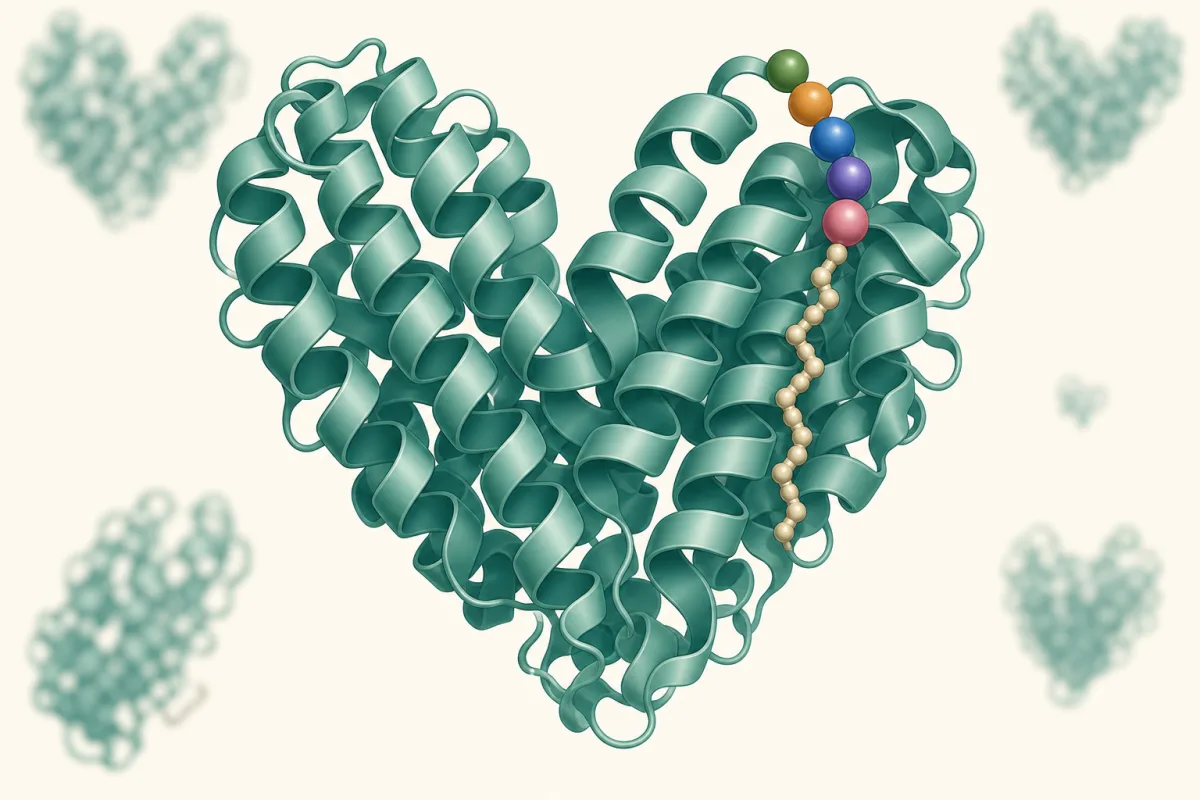
Four things explain most of the attention. The first is the number of medicines. Since the introduction of insulin almost a century ago, more than 80 peptide drugs have reached the market for a wide range of diseases, including diabetes, cancer, osteoporosis, multiple sclerosis, HIV infection and chronic pain [6]. A 2022 review gives the same figure of more than 80 approved worldwide [1]. An earlier 2018 review counted over 60 approved in the United States and other major markets and more than 150 peptides in active clinical development [5]. The two counts use different geographies, so they are not a clean growth rate, but both describe a class that kept enlarging.
The second is commercial scale. Peptide drugs account for a significant proportion of the pharmaceutical market, with worldwide sales that more than doubled between 2013 and 2019 [1]. That is a market observation reported by the review, and it says nothing about any single compound.
The third is engineering. Natural peptides have a short half-life and fast elimination [1], and the work described in the previous section is largely the story of making them last. Semaglutide shows the result: it has an approximate half-life of one week, helped by extensive albumin binding [9]. Compared with 1.5 minutes for native GLP-1 given intravenously [3], that is a change of several orders of magnitude, and it is what makes once-weekly administration possible in the trials below.
Approved peptide drugs
80+
Peptide drugs that have reached the market, as reviewed in 2021 and 2022
Native GLP-1, i.v.
1.5 min
Half-life in humans after intravenous dosing
Semaglutide half-life
~1 week
Approximate half-life, with extensive albumin binding
Oral semaglutide
0.4-1%
Absolute oral bioavailability under optimised fasting conditions
The fourth is the receptor. The GLP-1 receptor agonists mediate their effects via the GLP-1 receptor, which is expressed in the pancreas, the gastrointestinal tract, the heart, the lungs, the kidneys and the brain [3]. Significant weight loss led to the approval of liraglutide (3.0 mg) for the treatment of obesity, an indication under investigation with semaglutide at the time of that review [3].
Large trials of GLP-1 receptor agonists have also been widely reported. They are worth reading in their own terms, as two separate studies of different drugs.
Randomised trial · 2021Mean change in body weight from baseline to week 68 was -14.9% with semaglutide against -2.4% with placebo. Nausea and diarrhoea were the most common adverse events; 4.5% of the semaglutide group and 0.8% of the placebo group discontinued because of gastrointestinal events.
- Design
- Double-blind, randomised, placebo-controlled trial (STEP 1), funded by Novo Nordisk
- Population
- 1961 adults with a body-mass index of 30 or greater, or 27 or greater with at least one weight-related coexisting condition, without diabetes
- Intervention
- Participants received once-weekly subcutaneous semaglutide at a dose of 2.4 mg or placebo for 68 weeks, plus lifestyle intervention, assigned 2:1
- Finding
- Mean change in body weight from baseline to week 68 was -14.9% with semaglutide against -2.4% with placebo. Nausea and diarrhoea were the most common adverse events; 4.5% of the semaglutide group and 0.8% of the placebo group discontinued because of gastrointestinal events.
Randomised trial · 2022Mean percentage change in weight at week 72 was -15.0%, -19.5% and -20.9% with the three tirzepatide doses and -3.1% with placebo. Gastrointestinal events were the most common adverse events, mostly mild to moderate.
- Design
- Phase 3 double-blind, randomised, controlled trial (SURMOUNT-1), supported by Eli Lilly
- Population
- 2539 adults with a body-mass index of 30 or more, or 27 or more with at least one weight-related complication, excluding diabetes
- Intervention
- Participants received once-weekly subcutaneous tirzepatide at 5 mg, 10 mg or 15 mg, or placebo, for 72 weeks including a 20-week dose-escalation period
- Finding
- Mean percentage change in weight at week 72 was -15.0%, -19.5% and -20.9% with the three tirzepatide doses and -3.1% with placebo. Gastrointestinal events were the most common adverse events, mostly mild to moderate.
Mean percentage change from baseline in body weight at week 68 in adults without diabetes who had overweight or obesity.
Primary estimand, regardless of treatment discontinuation.
Source [7]
Mean percentage change from baseline in body weight at week 72 in adults without diabetes who had overweight or obesity.
Treatment-regimen estimand, intention-to-treat population. A separate trial from STEP 1; the two are not compared.
Source [8]
| STEP 1 [7] | 1961 adults, body-mass index 30 or greater (27 or greater with a weight-related condition), no diabetes | 68 weeks | Semaglutide 2.4 mg weekly; placebo | -14.9%; -2.4% |
| SURMOUNT-1 [8] | 2539 adults, body-mass index 30 or more (27 or more with a weight-related complication), no diabetes | 72 weeks, including a 20-week dose-escalation period | Tirzepatide 5 mg, 10 mg or 15 mg weekly; placebo | -15.0%, -19.5%, -20.9%; -3.1% |
Peptides are also being discussed outside the clinic. A 2026 review in Missouri Medicine notes that injectable peptides are increasingly used without prescriptions, driven by digital marketing and social media [12]. That is a description of a trend, and part of the context for the section on research peptides below.
The limits: half-life, oral absorption and manufacture
Peptides have well-documented drawbacks, and the engineering described above exists because of them. The first is stability: peptides have poor stability in vivo, and the amide bonds can be hydrolysed by enzymes in the body, leaving a short half-life and fast elimination [1]. Fatty acid conjugation and albumin binding are one answer to it [1], [3].
The second is the route. Oral delivery is desirable, but acceptable bioavailability has not been achieved for large hydrophilic peptides and proteins, because oral absorption typically requires a low molecular weight and a certain hydrophobicity [3]. A 2026 review in Pharmaceutics states that typically less than 1% of orally administered peptide therapeutics reaches the systemic circulation [10]. For oral semaglutide, absolute bioavailability is only approximately 0.4 to 1% under optimised fasting conditions with restricted water intake, and systemic exposure is essentially absent in the fed state [9].
The reasons are physical. A 2026 review attributes the low exposure of oral semaglutide to peptide degradation within the gastrointestinal tract, poor epithelial permeability, gastric physiological constraints and presystemic metabolism [9]. The oral form uses an absorption enhancer, sodium N-(8-[2-hydroxybenzoyl]amino) caprylate (SNAC), which helps gastric absorption by raising the local pH, reducing acid-induced peptide unfolding and suppressing pepsin activation [9]. The Pharmaceutics review lists enzymatic degradation and pH effects, motility, microbiota, transporters, tight junctions and inflammation as the physiological factors that govern oral peptide absorption [10]. It adds that transporter-mediated uptake appears unlikely to account for the absorption of intact peptide drugs, because of their size [10].
The third limit is manufacturing. The 2025 analysis of FDA approvals notes that peptide manufacturing and sustainability concerns, including the use of PFAS, remain key challenges, and that the high cost of innovative therapies limits access, particularly in low- and middle-income countries [11]. The solid-phase method that made peptides practical has also been improved since 1963 [1], so the situation is not static. It is a field in which the main difficulties are known and are being worked on.
- Stability: amide bonds are broken by enzymes, so natural peptides have short half-lives [1].
- Half-life: native GLP-1 lasts 1.5 minutes after intravenous dosing and 1.5 hours after subcutaneous dosing in humans [3].
- Oral route: typically less than 1% of an orally administered peptide reaches the circulation [10]; oral semaglutide manages approximately 0.4 to 1% [9].
- Manufacture: peptide manufacturing and sustainability concerns remain key challenges [11].
Approved medicines and research peptides: where each sits
An approved peptide medicine is one a regulator has reviewed and licensed for a defined use. In 2025, the FDA approved 44 new drugs, and one of them was a peptide [11]. Semaglutide and tirzepatide are described in a 2026 review as evidence-based, FDA-approved peptides that offer significant clinical benefits under medical supervision [12]. Insulin is the oldest example of the class [1].
An investigational compound is one still being tested. Retatrutide is an investigational triple agonist, not an approved medicine, and the same review lists it among agents that lack established human safety profiles [12]. Other compounds, including BPC-157, TB-500 and melanotan-II, are described by that review as unapproved peptides that lack established human safety profiles [12]. The review says that an expanding illicit market provides easy access to many unapproved experimental drugs without a prescription, and it lists product contamination, manufacturing impurities and inaccurate dosing among the potential risks [12].
| Insulin | First commercial peptide drug, 1923 | [1] |
| Semaglutide | FDA-approved peptide | [12] |
| Tirzepatide | FDA-approved peptide | [12] |
| Retatrutide | Investigational triple agonist | [12] |
| BPC-157 | Unapproved peptide | [12] |
| TB-500 | Unapproved peptide | [12] |
This is where the term research peptide needs care. In this guide it means a compound supplied for laboratory investigation rather than as a medicine, and compounds sold as research reagents are not approved for human use. Such a compound may have a large human trial record, a small one, or none, and the status of a molecule in the table above says what a regulator or a reviewing physician has concluded, not what a laboratory supplier can claim. The trials in the previous section were run on specific products, in specific populations, under medical supervision. They are evidence about those products.
What remains open is considerable. The reviews describe stability, delivery and manufacture as problems that are being worked on, not solved [1], [9], [10], [11]. Oral peptide absorption in particular is still poorly understood in its mechanisms, with the Pharmaceutics review finding no single dominant pathway [10]. The accurate summary of the field is that a handful of peptides have been engineered into well-studied medicines, a larger number are in development, and the evidence for many others is thin or absent.
On our shelf
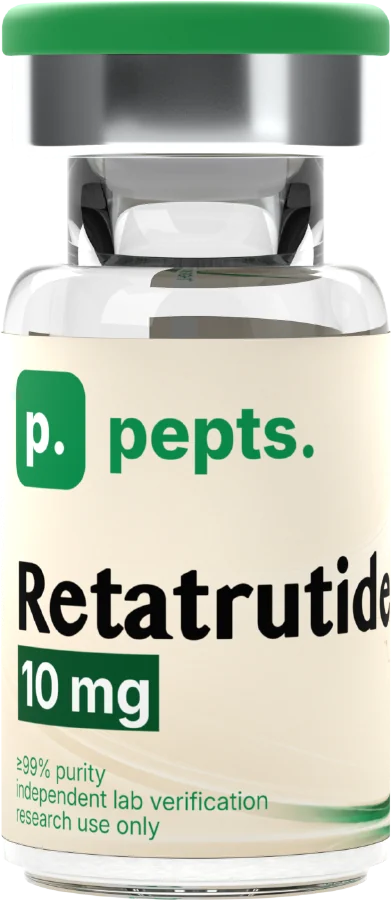
Research-grade Retatrutide, for laboratory use only.
View the listing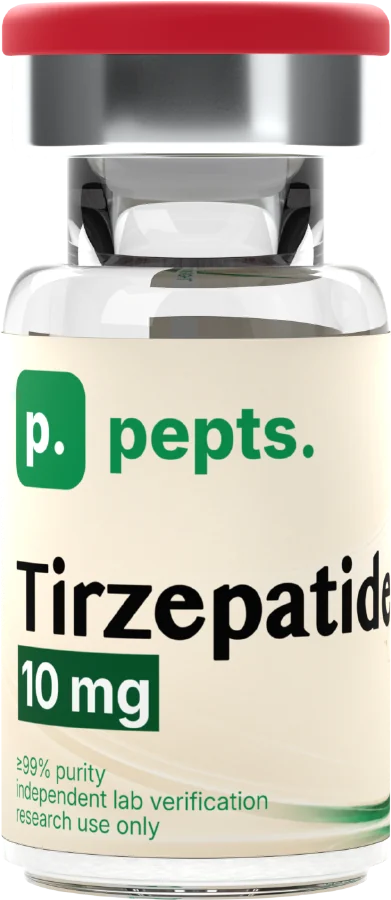
Research-grade Tirzepatide, for laboratory use only.
View the listing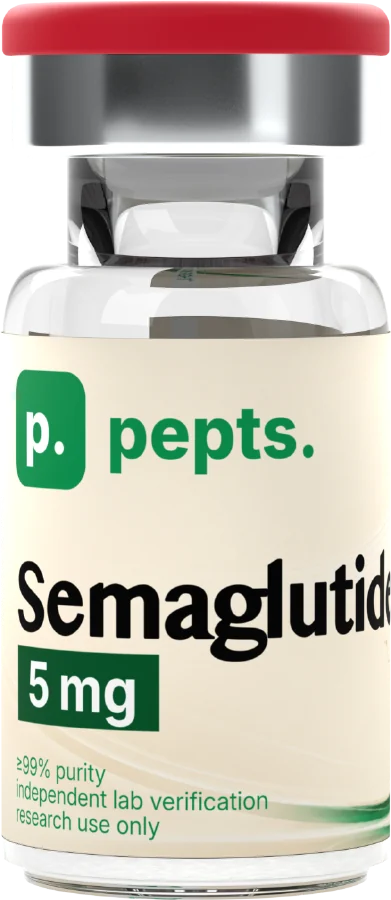
Research-grade Semaglutide, for laboratory use only.
View the listing
Research use only This guide summarises published research for laboratory use. It is not medical advice, it describes no use in people, and nothing sold on this site is for human or veterinary use.
References
Every figure in this guide points at one of the sources below; the number in brackets is the entry it came from.
- S
Wang L, Wang N, Zhang W, Cheng X, Yan Z, Shao G, Wang X, Wang R, Fu C.
ReviewSignal transduction and targeted therapy2022DOI 10.1038/s41392-022-00904-4PMID 35165272PMC8844085doi.org
- E
U.S. Food and Drug Administration
Regulator or registryElectronic Code of Federal Regulations, Title 21, Part 6002026ecfr.gov
- F
Knudsen LB, Lau J.
ReviewFrontiers in endocrinology2019 - C
Drucker DJ.
ReviewCell metabolism2018 - B
Lau JL, Dunn MK.
ReviewBioorganic & medicinal chemistry2018 - N
Muttenthaler M, King GF, Adams DJ, Alewood PF.
ReviewNature reviews. Drug discovery2021 - T
Wilding JPH, Batterham RL, Calanna S, Davies M, Van Gaal LF, Lingvay I, McGowan BM, Rosenstock J, Tran MTD, Wadden TA, Wharton S, Yokote K, Zeuthen N, Kushner RF, STEP 1 Study Group.
Randomised trialThe New England journal of medicine2021 - T
Jastreboff AM, Aronne LJ, Ahmad NN, Wharton S, Connery L, Alves B, Kiyosue A, Zhang S, Liu B, Bunck MC, Stefanski A, SURMOUNT-1 Investigators.
Randomised trialThe New England journal of medicine2022 - P
Vahora S, Shah V, Patel B.
ReviewPharmaceutical research2026 - P
Ali Hussein L, Nedic A, Sitovs A, Mohylyuk V.
ReviewPharmaceutics2026DOI 10.3390/pharmaceutics18091091PMID 42797266PMC13610202doi.org
- M
de la Torre BG, Albericio F.
ReviewMolecules (Basel, Switzerland)2026DOI 10.3390/molecules31030419PMID 41683395PMC12898419doi.org
- M
Moiz A, O'Keefe EL, O'Keefe JH.
ReviewMissouri medicine2026PMID 42757290PMC13585006pubmed.ncbi.nlm.nih.gov
Questions
What is the difference between a peptide and a protein?
Both are chains of amino acids joined by amide bonds [1]. The FDA defines a protein as a polymer greater than 40 amino acids, which makes a chain of 40 or fewer a peptide in its terms [2]. Natural peptides also lack the stability that secondary or tertiary structure gives a folded protein [1].
How do peptides work in the body?
Many act as hormones and signals. GLP-1, for example, is released from gut cells and acts through the GLP-1 receptor in tissues such as the pancreas and brain, augmenting insulin and inhibiting glucagon secretion [3], [4]. Natural peptides are broken down quickly, with native GLP-1 having a half-life of 1.5 minutes after intravenous dosing [3].
How many peptide drugs are approved?
Reviews published in 2021 and 2022 each put the figure at more than 80 peptide drugs on the market or approved worldwide [1], [6]. An earlier 2018 review counted over 60 in the United States and other major markets [5].
Why are peptides so popular?
Reasons given in the literature include a growing number of medicines, worldwide sales that more than doubled between 2013 and 2019, and engineering that extended half-lives [1], [3], [6]. Large, separate trials of two GLP-1 receptor agonists also drew attention [7], [8]. A 2026 review also links the use of injectable peptides without prescription to digital marketing and social media [12].
What are research peptides?
In this guide the term means compounds supplied for laboratory investigation rather than as medicines. A 2026 review separates approved peptides such as semaglutide and tirzepatide from investigational or unapproved ones such as retatrutide, BPC-157 and TB-500, which lack established human safety profiles [12]. Compounds sold as research reagents are not approved for human use.