Key points
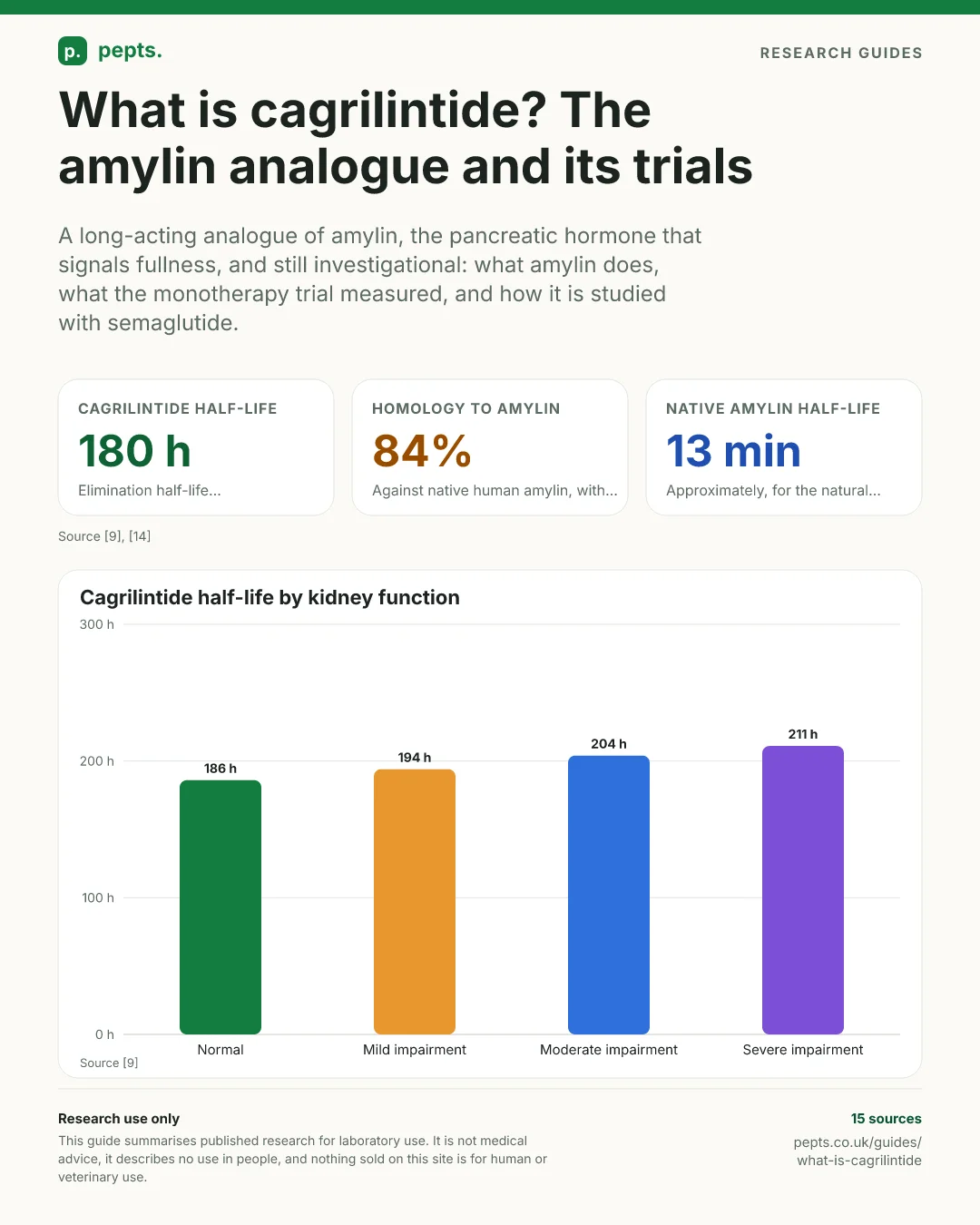
- Cagrilintide is a long-acting, lipidated amylin analogue with 84% homology to native human amylin and an elimination half-life of approximately 180 hours, against about 13 minutes for amylin itself [9], [10], [14].
- It binds the calcitonin receptor and all three amylin receptors [9]; knocking down prolactin-releasing hormone (Prlh) in the dorsal vagal complex abolished cagrilintide's effects in rats, and the authors define Calcr/Prlh neurons as mediators of amylin receptor agonist action [12].
- In the phase 2 monotherapy trial in 706 adults, mean weight reductions at 26 weeks were 6.0% to 10.8% across five once-weekly doses against 3.0% on placebo, under the trial product estimand [1].
- With semaglutide, as CagriSema, the estimated mean change in body weight at 68 weeks was -20.4% against -3.0% on placebo in REDEFINE 1 and -13.7% against -3.4% in REDEFINE 2, under the treatment policy estimand [5], [7].
- Gastrointestinal events, primarily nausea in the phase 2 trial, were the most common adverse events in the monotherapy and phase 2 combination trials, and cagrilintide remains under development, alone and as CagriSema [1], [4], [8], [9].
Listen to the summary
A short two-voice summary of this guide.
Transcript
- Host
- Cagrilintide comes up whenever amylin does. Start simple: what is it?
- Researcher
- It is a long-acting analogue of amylin, a hormone the pancreas releases together with insulin after food and that acts as a satiety signal in the brain. Cagrilintide is investigational. It is under development on its own and in a combination with semaglutide called CagriSema.
- Host
- Why build an analogue rather than copy amylin as it is?
- Researcher
- Human amylin tends to clump into amyloid fibrils, which makes it a hard molecule to give. Another analogue, pramlintide, approved in the United States, gained stability from three amino acid substitutions inspired by rat amylin, but its half-life is only about twenty to forty-five minutes, and natural amylin's about thirteen. Cagrilintide differs from pramlintide by a lipid group and three amino acid substitutions, and its elimination half-life is about one hundred and eighty hours, roughly seven and a half days.
- Host
- And where does it act?
- Researcher
- It binds the calcitonin receptor and all three amylin receptors. A twenty twenty-six atlas of the brainstem found that in rats, knocking down prolactin-releasing hormone in the dorsal vagal complex abolished cagrilintide's effects, but not semaglutide's. The authors define brainstem neurons that carry the calcitonin receptor and make that hormone as mediators of amylin receptor agonist action.
- Host
- What did the trial of cagrilintide on its own measure?
- Researcher
- The phase two trial randomised seven hundred and six adults with obesity or overweight to five once-weekly doses, daily liraglutide or placebo for twenty-six weeks. Assuming everyone stayed on treatment, mean weight reductions ran from six percent to ten point eight percent across the doses, against three percent on placebo.
- Host
- And CagriSema?
- Researcher
- In REDEFINE one, three thousand four hundred and seventeen adults without diabetes were followed for sixty-eight weeks. Counting everyone regardless of adherence, the estimated change in body weight was minus twenty point four percent on the combination against minus three percent on placebo. In REDEFINE two, in adults with type two diabetes, it was minus thirteen point seven percent against minus three point four.
- Host
- What did the trials record as adverse events?
- Researcher
- Mostly gastrointestinal events. In the phase two trial, nausea affected twenty to forty-seven percent across the cagrilintide doses against eighteen percent on placebo. In REDEFINE one, gastrointestinal events affected seventy-nine point six percent on the combination and thirty-nine point nine percent on placebo, mainly transient and mild to moderate.
- Host
- So where does it stand today?
- Researcher
- It is still investigational, alone and as CagriSema, and a trial registry entry calls CagriSema a new investigational medicine not yet being prescribed by doctors. A registered trial comparing CagriSema with tirzepatide is listed as completed; its results are not among the guide's sources. Every figure I have given is in the guide with its source.
What is cagrilintide?
What is cagrilintide? It is a long-acting amylin analogue: a peptide modelled on amylin, the pancreatic hormone that induces satiety, under investigation for weight management [1]. It is under development both as a monotherapy and as a fixed-dose combination with the glucagon-like peptide-1 (GLP-1) receptor agonist semaglutide, called CagriSema, for weight management and type 2 diabetes [9].
Pharmacology papers and reviews also call it AM833, and the registry entry of its phase 2 trial calls it NNC0174-0833 [2], [11], [15]. Novo Nordisk funded the phase 2 monotherapy trial, the phase 1b and phase 2 trials of the combination, and the phase 3 trials REDEFINE 1 and REDEFINE 2 [1], [3], [4], [5], [7].
- Its developers describe it as stable, lipidated and long acting, selected for clinical development with obesity as the indication [10].
- It binds the calcitonin receptor and all three amylin receptors, AMY1, AMY2 and AMY3 [9].
- The phase 1b, phase 2 and REDEFINE 1 trials gave it by subcutaneous injection once a week [1], [3], [4], [6].
Amylin: the hormone cagrilintide copies
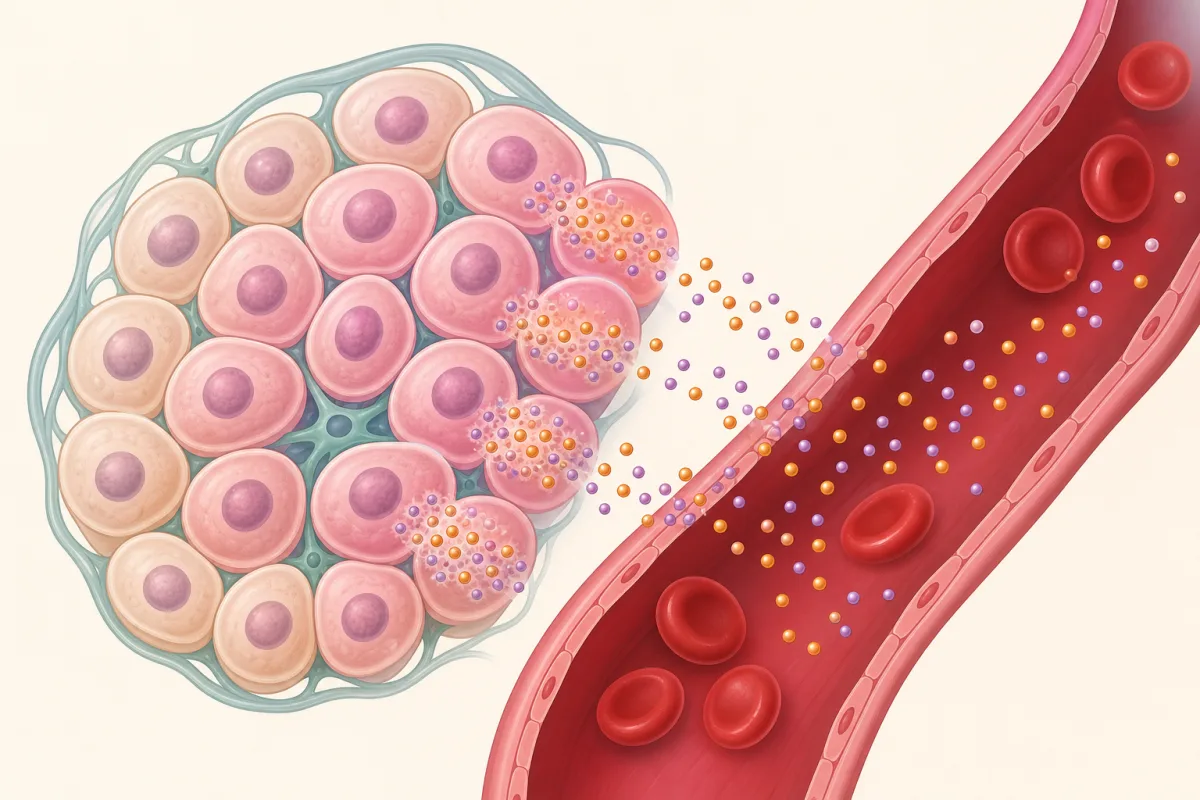
Amylin is a 37-amino acid peptide hormone made mainly in the beta cells of the pancreas and released together with insulin in response to ingested nutrients [14]. It has a well-established role as a satiety signal, through amylin receptors in the area postrema and the nucleus of the solitary tract of the brain; it also slows gastric emptying and may suppress glucagon secretion through central mechanisms [14]. A second review adds that it acts on homeostatic and hedonic brain regions and suppresses the glucagon response to meals [15].
It has several characteristics of a satiating hormone: it is released after food, has a short half-life of about 13 minutes, and given to rats decreases food intake in a dose-dependent way, mainly at supraphysiological doses [14]. Blocking its receptors with the antagonist AC187, injected into the bloodstream or into the area postrema, acutely increases food intake in rats [14].
Each amylin receptor is a pair: a core unit, the calcitonin receptor, joined to one of three receptor activity-modifying proteins, RAMP1 to RAMP3 [14]. The pairing is not exclusive, since amylin receptors also respond to calcitonin and related hormones, and the review calls the importance of each individual receptor difficult to establish [14].
Native human amylin is hard to give. It tends to aggregate into amyloid fibrils, which are often found in the pancreatic islets of people with type 2 diabetes, and infusions of it often need highly supraphysiological doses to produce little or no effect [14]. Cagrilintide's development paper calls that propensity a hallmark of the hormone and a challenge for drug design [10].
Several stable amylin analogues have been developed [14]. One is pramlintide, approved by the US Food and Drug Administration as an adjunct to mealtime insulin, whose greater stability than human amylin came from three amino acid substitutions inspired by rat amylin [10], [14]. Its half-life in people is still short, about 20 to 45 minutes [14]. In obesity trials described in the same review, it lowered body weight by roughly 2% over 6 weeks in 60 people, and by 3.7% over 4 months in 108, both significantly more than placebo [14].
How cagrilintide was built, and where it acts
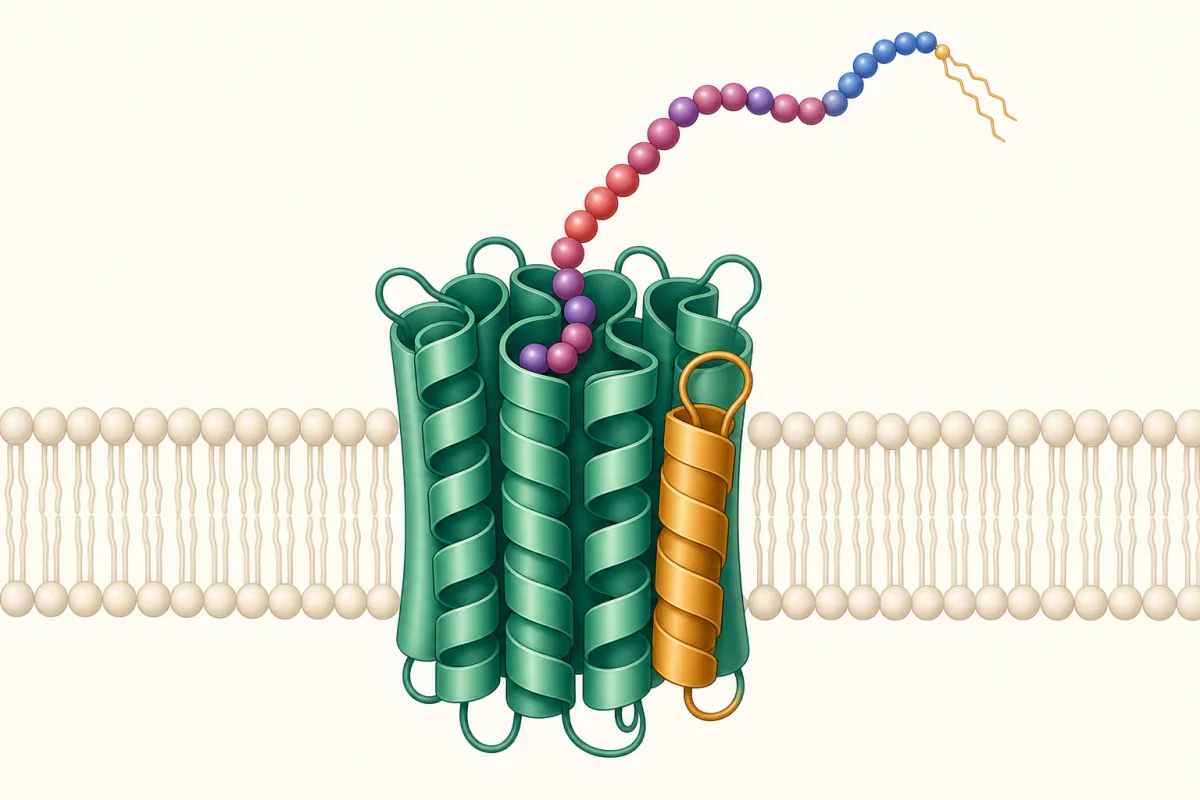
A 2021 review notes that cagrilintide is very similar in sequence to pramlintide, differing by the lipidation of the lysine at its N-terminus and by three amino acid substitutions, N14E, V17R and P37Y [15]. Against native human amylin it has 84% homology, with substitutions and other chemical alterations made to enhance stability, potency and biological half-life [9].
The review credits the lipidation and the three substitutions together with making it nonselective, an agonist of both amylin receptors and the calcitonin receptor [15]. A 2021 pharmacology study gives the rationale: amylin receptor agonists that can also activate the calcitonin receptor may have improved efficacy in obesity, although activating calcitonin receptors selectively is not effective [11]. Compared across 25 endpoints of receptor binding, activation and regulation with pramlintide, calcitonins and other lipidated analogues, cagrilintide showed a unique profile [11].
The changes show in how long it lasts: its elimination half-life is approximately 180 hours, or 7.5 days, which a 2026 pharmacokinetic paper calls compatible with once-weekly administration [9]. In the phase 1b trial, given alongside semaglutide at doses of 0.16 to 4.5 mg, its half-life was 159 to 195 hours, and its exposure rose in proportion to the dose without affecting semaglutide's [3].
Cagrilintide half-life
180 h
Elimination half-life, approximately 7.5 days
Homology to amylin
84%
Against native human amylin, with substitutions and chemical alterations
Native amylin half-life
13 min
Approximately, for the natural hormone; pramlintide about 20 to 45 minutes
Two single-dose studies asked whether kidney or liver impairment changes this: 33 adults grouped by kidney function received 0.6 mg, and 32 grouped by liver function received 0.9 mg [9]. Total exposure was similar across groups, the ratio of mean exposure against normal function running from 1.18 to 1.23 in kidney impairment and from 0.99 to 1.11 in liver impairment [9].
Geometric mean elimination half-life after a single 0.6 mg dose in 33 adults grouped by kidney function: 14 normal, 7 mild, 7 moderate and 5 severe impairment.
A single-dose study in a few dozen adults. Individual values overlapped widely, from 149 to 244 h in the normal group alone.
Source [9]
In liver impairment the half-life tended to rise, from 174 hours with normal function to 199 hours with severe impairment [9]. Within the limitations of small sample sizes, the authors found no clinically relevant differences in pharmacokinetics in either study [9].
Where it acts was mapped in 2026, in a transcriptomic atlas of over 530,000 caudal brainstem cells from rats, mice and macaques, with spatial mapping of the rat dorsal vagal complex [12]. Acute cagrilintide changed gene expression in area postrema neurons carrying Calcr and Ramp3, but activating those neurons directly in rats did not change long-term food intake or body weight [12]. Long-term treatment in rats raised the expression of prolactin-releasing hormone (Prlh) in Calcr/Prlh cells of the nucleus of the solitary tract, cells conserved across rodents, macaques and humans [12]. Knocking down Prlh in the dorsal vagal complex abolished cagrilintide's effects in rats, and the authors define Calcr/Prlh neurons as mediators of amylin receptor agonist action [12].
The phase 2 cagrilintide trial: the compound on its own
Among this guide's sources, one trial tested cagrilintide on its own across several doses, a phase 2 dose-finding study published in 2021: multicentre, randomised, double-blind, controlled against placebo and an active drug, at 57 sites in ten countries including the UK [1]. It enrolled adults without diabetes with a body-mass index of at least 30, or at least 27 with hypertension or dyslipidaemia [1].
Participants were randomised to once-weekly subcutaneous cagrilintide at 0.3, 0.6, 1.2, 2.4 or 4.5 mg, once-daily liraglutide 3.0 mg, or placebo, for 26 weeks of treatment and 6 of follow-up [1]. The registry entry adds talks with study staff on food choices and physical activity [2]. Between March and August 2019, 706 participants were randomised in all: 100 to 102 per cagrilintide dose, 99 to liraglutide and 101 to placebo [1], [15].
The primary endpoint, the percentage change in body weight at week 26, was analysed two ways: the trial product estimand assumes everyone kept to treatment, and the treatment policy estimand counts everyone regardless of adherence [1]. Under the trial product estimand, mean weight reductions were 6.0% to 10.8% across the doses against 3.0% on placebo (p<0.001), with similar results under treatment policy; 4.5 mg also exceeded liraglutide, 10.8% against 9.0% (p=0.03) [1].
Participants randomised
706
Adults with obesity or overweight, without diabetes
Weight reduction, 4.5 mg
10.8%
At 26 weeks, trial product estimand; 3.0% on placebo
Lost 5% or more, 4.5 mg
88.74%
Predicted share at 26 weeks; 30.90% on placebo
Lost 10% or more, 4.5 mg
53.49%
Predicted share at 26 weeks; 10.44% on placebo
The registry entry reports the same endpoint descriptively, over the in-trial period from randomisation to last contact: -6.1% on 0.3 mg, -6.9% on 0.6 mg, -8.5% on 1.2 mg, -9.5% on 2.4 mg and -10.8% on 4.5 mg, against -8.5% on liraglutide and -3.0% on placebo [2]. Those descriptive figures are a different summary from the paper's estimand, so the chart uses them alone.
Phase 2 monotherapy trial: mean percentage change in body weight from baseline to week 26 over the in-trial period, from the registry entry, 95 to 99 participants analysed per arm.
Descriptive in-trial figures, not the paper's trial product estimand. Liraglutide, a different drug given daily, is in the table rather than the chart.
Source [2]
| Cagrilintide 0.3 mg [2] | 96 | -6.1 | 57.47% | 15.28% |
| Cagrilintide 0.6 mg [2] | 97 | -6.9 | 61.98% | 24.06% |
| Cagrilintide 1.2 mg [2] | 98 | -8.5 | 75.84% | 35.79% |
| Cagrilintide 2.4 mg [2] | 99 | -9.5 | 74.12% | 43.97% |
| Cagrilintide 4.5 mg [2] | 97 | -10.8 | 88.74% | 53.49% |
| Liraglutide 3.0 mg [2] | 95 | -8.5 | 76.16% | 39.43% |
| Pooled placebo [2] | 95 | -3.0 | 30.90% | 10.44% |
Source [2]
The trialists concluded that cagrilintide led to significant reductions in body weight, supporting the development of molecules with novel mechanisms of action for weight management [1]. Cagrilintide alone also had arms in two later trials. In the phase 2 trial in type 2 diabetes, 30 participants on cagrilintide 2.4 mg changed body weight by -8.1% and HbA1c by -0.9 percentage points over 32 weeks [4]. In REDEFINE 1, 302 adults were randomised to cagrilintide 2.4 mg alone for 68 weeks [5]; a 2026 analysis of that trial quotes the arm's weight loss, set out with the CagriSema results below [6].
Randomised trial · 2021Weight reductions of 6.0% to 10.8% against 3.0% on placebo, trial product estimand
- Design
- Phase 2, randomised, double-blind, placebo-controlled and active-controlled dose-finding trial at 57 sites in ten countries
- Population
- 706 adults without diabetes, body-mass index of 30 or more, or 27 or more with hypertension or dyslipidaemia
- Intervention
- Once-weekly cagrilintide at 0.3 to 4.5 mg, once-daily liraglutide 3.0 mg, or placebo, for 26 weeks
- Finding
- Weight reductions of 6.0% to 10.8% against 3.0% on placebo, trial product estimand
CagriSema: cagrilintide with semaglutide
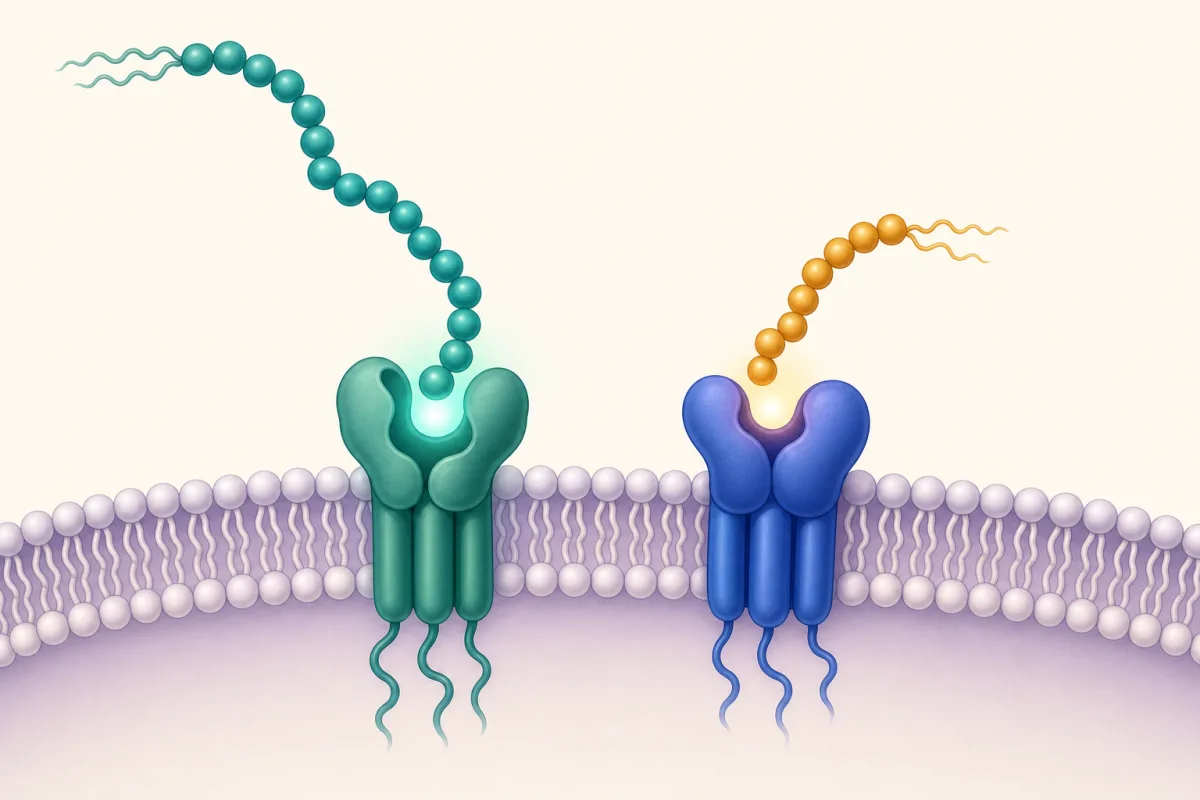
CagriSema pairs cagrilintide with semaglutide, a GLP-1 receptor agonist, on the rationale that the two may have complementary effects on appetite and glucose regulation [9]. In rats, knocking down Prlh in the dorsal vagal complex abolished the effects of cagrilintide but not those of semaglutide [12].
A phase 1b trial of the pair ran at a single US centre: 96 otherwise healthy adults aged 18 to 55 with a body-mass index of 27.0 to 39.9 were randomised 3:1 to once-weekly cagrilintide at 0.16 to 4.5 mg or placebo, all with once-weekly semaglutide 2.4 mg [3]. At week 20, after 16 weeks of escalating both drugs together and 4 weeks at each arm's assigned dose, body weight had fallen by 15.7% with cagrilintide 1.2 mg and 17.1% with 2.4 mg against 9.8% for pooled placebo, and by 15.4% with 4.5 mg against 8.0% for its matched placebo [3].
A phase 2 trial in type 2 diabetes randomised 92 adults on metformin, with or without an SGLT2 inhibitor, to once-weekly CagriSema, semaglutide or cagrilintide, each escalated to 2.4 mg, for 32 weeks [4]. HbA1c fell by 2.2, 1.8 and 0.9 percentage points respectively, the combination's fall greater than cagrilintide's but not significantly greater than semaglutide's; body weight changed by -15.6%, -5.1% and -8.1%, more with the combination than with either component [4].
The phase 3a trial REDEFINE 1 randomised 3417 adults without diabetes, with a body-mass index of 30 or more or of 27 or more with an obesity-related complication, 21:3:3:7 to the combination, semaglutide alone, cagrilintide alone or placebo, each drug at 2.4 mg with lifestyle intervention, for 68 weeks [5]. Under the treatment policy estimand, consistent with the intention-to-treat principle, the estimated mean change in body weight was -20.4% on the combination against -3.0% on placebo [5].
A 2026 blood pressure analysis of the trial quotes weight loss in all four arms, 22.7% with CagriSema, 16.1% with semaglutide, 11.8% with cagrilintide and 2.3% with placebo [6]. It quotes them alongside results it labels as the trial product estimand [6], which assumes participants stayed on treatment [1], so they are kept apart here from the primary paper's treatment policy result [5].
REDEFINE 1, a phase 3a trial in 3417 adults with overweight or obesity and without diabetes, once-weekly treatment for 68 weeks; each active drug at 2.4 mg.
As quoted in the 2026 blood pressure analysis, beside results it labels as the trial product estimand. The primary paper's treatment policy figures are in the text, not here.
Source [6]
That analysis's own subject was blood pressure: systolic pressure fell by 10.9 mm Hg on CagriSema against 2.8 on placebo, and 63.0% against 32.0% reached blood pressure targets at week 68 [6].
REDEFINE 2 randomised 1206 adults with type 2 diabetes, a body-mass index of 27 or more and an HbA1c of 7 to 10%, 3:1 to the combination or placebo, with lifestyle intervention, for 68 weeks [7]. Under the treatment policy estimand, the estimated mean change in body weight was -13.7% against -3.4% on placebo [7]. An HbA1c of 6.5% or less was reached by 73.5% on the combination against 15.9% on placebo [7].
A registered trial comparing CagriSema with tirzepatide in people with obesity is listed as completed, and its entry calls CagriSema a new investigational medicine not yet being prescribed by doctors [8]. No results from it are among this guide's sources.
A 2026 study in diet-induced obese male rats gave cagrilintide daily together with retatrutide, a GLP-1, GIP and glucagon receptor tri-agonist [13]. In those rats the pair reduced body weight and food intake in a dose-dependent way, more than equimolar doses of either compound alone [13]. No human study of cagrilintide with retatrutide is among this guide's sources.
Randomised trial · 2021Cagrilintide half-life 159 to 195 h; body weight down 15.7% and 17.1% on 1.2 and 2.4 mg against 9.8% on placebo
- Design
- Phase 1b, randomised, placebo-controlled, multiple-ascending dose trial, single US centre
- Population
- 96 otherwise healthy adults with a body-mass index of 27.0 to 39.9
- Intervention
- Once-weekly cagrilintide at 0.16 to 4.5 mg or placebo, each with semaglutide 2.4 mg, for 20 weeks
- Finding
- Cagrilintide half-life 159 to 195 h; body weight down 15.7% and 17.1% on 1.2 and 2.4 mg against 9.8% on placebo
Randomised trial · 2023HbA1c -2.2, -1.8 and -0.9 percentage points; body weight -15.6%, -5.1% and -8.1%
- Design
- Phase 2, randomised, double-blind, active-controlled trial at 17 US sites
- Population
- 92 adults with type 2 diabetes on metformin
- Intervention
- Once-weekly CagriSema, semaglutide or cagrilintide, each to 2.4 mg, for 32 weeks
- Finding
- HbA1c -2.2, -1.8 and -0.9 percentage points; body weight -15.6%, -5.1% and -8.1%
Randomised trial · 2025Body weight -20.4% on the combination against -3.0% on placebo, treatment policy estimand
- Design
- Phase 3a, double-blind, placebo-controlled and active-controlled trial (REDEFINE 1)
- Population
- 3417 adults with overweight or obesity, without diabetes
- Intervention
- The combination, either drug alone or placebo, each at 2.4 mg, for 68 weeks
- Finding
- Body weight -20.4% on the combination against -3.0% on placebo, treatment policy estimand
Randomised trial · 2025Body weight -13.7% against -3.4%, treatment policy estimand
- Design
- Phase 3a, double-blind, randomised, placebo-controlled trial in 12 countries (REDEFINE 2)
- Population
- 1206 adults with type 2 diabetes and a body-mass index of 27 or more
- Intervention
- Once-weekly cagrilintide and semaglutide at 2.4 mg each, or placebo, for 68 weeks
- Finding
- Body weight -13.7% against -3.4%, treatment policy estimand
What the trials reported as adverse events
In the phase 2 monotherapy trial the most frequent adverse events were gastrointestinal disorders, such as nausea, constipation and diarrhoea, and administration-site reactions [1]. Gastrointestinal events affected 41% to 63% of participants across the cagrilintide doses against 32% on placebo, primarily nausea, at 20% to 47% against 18% [1]. In all, 73 participants (10%) stopped treatment permanently, in similar numbers across groups; adverse events were the main reason, for 30 of them [1].
| Cagrilintide 0.3 mg [2] | 20/101 | 11/101 | 15/101 | 4/101 | 6/101 |
| Cagrilintide 0.6 mg [2] | 27/100 | 9/100 | 10/100 | 4/100 | 2/100 |
| Cagrilintide 1.2 mg [2] | 37/102 | 8/102 | 8/102 | 7/102 | 7/102 |
| Cagrilintide 2.4 mg [2] | 32/102 | 17/102 | 18/102 | 12/102 | 3/102 |
| Cagrilintide 4.5 mg [2] | 47/101 | 21/101 | 7/101 | 10/101 | 4/101 |
| Liraglutide 3.0 mg [2] | 39/99 | 26/99 | 18/99 | 1/99 | 4/99 |
| Placebo pool [2] | 18/101 | 7/101 | 9/101 | 0/101 | 3/101 |
Source [2]
On the registry entry, injection-site reactions were recorded in 4 to 12 participants per cagrilintide arm against none on placebo, and serious adverse events in 2 to 7 per cagrilintide arm against 3 on placebo [2]. The authors described cagrilintide as well tolerated in this trial [1].
In the phase 1b combination trial, 207 (37%) of 566 adverse events were gastrointestinal disorders and most events were mild to moderate [3]. In the phase 2 trial in type 2 diabetes, adverse events were reported by 68% on CagriSema, 71% on semaglutide and 80% on cagrilintide, with no level 2 or 3 hypoglycaemia [4]. Gastrointestinal events affected 79.6% on the combination against 39.9% on placebo in REDEFINE 1, and 72.5% against 34.4% in REDEFINE 2, mostly transient and mild to moderate [5], [7]. The single-dose renal and hepatic studies reported no serious adverse events, no withdrawals because of adverse events and no deaths, and no rise in adverse events with worsening impairment [9].
Where cagrilintide stands, and what is still open
Cagrilintide is investigational: the phase 2 report describes it as under investigation, a 2021 review as an investigational drug, and a 2026 paper as under development, alone and as a fixed-dose combination with semaglutide [1], [9], [15]. The registry entry for a CagriSema trial calls CagriSema a new investigational medicine that is not yet being prescribed by doctors [8]. On 16 October 2026, the date of this guide, the MHRA's products register, the EMA's medicines database and the FDA's Drugs@FDA listed no marketing authorisation for cagrilintide, alone or as CagriSema.
Much remains open. In this guide's evidence, the only trial of cagrilintide alone across several doses lasted 26 weeks, and longer data on it alone come from single arms inside combination trials [1], [4], [6]. The phase 1b authors called for larger and longer trials to fully assess the combination, the organ-impairment studies were limited by small sample sizes, and the brainstem pathway was defined in rats [3], [9], [12].
2018
The phase 1b trial with semaglutide begins screening in July.[3]
2019
The phase 2 monotherapy trial randomises its participants; the first of the two organ-impairment studies is registered.[1], [9]
2020
A review sets out the physiology of amylin and calcitonin and the case for drugs based on them.[14]
2021
The phase 2 and phase 1b results, the development paper and the receptor pharmacology study are published.[1], [3], [10], [11]
2022
The second organ-impairment study is registered.[9]
2023
The phase 2 trial in type 2 diabetes is published; a comparison with tirzepatide is registered.[4], [8]
2025
REDEFINE 1 and REDEFINE 2, phase 3a trials of the combination, are published.[5], [7]
2026
The renal and hepatic studies, the brainstem atlas, the blood pressure analysis and a rat study with retatrutide are published.[6], [9], [12], [13]
On our shelf
Research-grade Cagrilintide, for laboratory use only.
View the listing
Research use only This guide summarises published research for laboratory use. It is not medical advice, it describes no use in people, and nothing sold on this site is for human or veterinary use.
References
Every figure in this guide points at one of the sources below; the number in brackets is the entry it came from.
- L
Lau DCW, Erichsen L, Francisco AM, et al.
Randomised trialLancet (London, England)2021 - C
- L
Enebo LB, Berthelsen KK, Kankam M, et al.
Randomised trialLancet (London, England)2021 - L
Frias JP, Deenadayalan S, Erichsen L, et al.
Randomised trialLancet (London, England)2023 - T
Garvey WT, Blüher M, Osorto Contreras CK, et al.
Randomised trialThe New England journal of medicine2025 - H
Verma S, Böttcher M, Brown P, et al.
Randomised trialHypertension (Dallas, Tex. : 1979)2026DOI 10.1161/hypertensionaha.125.26055PMID 41328546PMC12822771doi.org
- T
Davies MJ, Bajaj HS, Broholm C, et al.
Randomised trialThe New England journal of medicine2025 - C
- C
Nielsen MJF, Becker NP, Duus HHH, et al.
Clinical trialClinical pharmacokinetics2026DOI 10.1007/s40262-026-01654-0PMID 42228334PMC13356073doi.org
- J
Kruse T, Hansen JL, Dahl K, et al.
PreclinicalJournal of medicinal chemistry2021 - T
Fletcher MM, Keov P, Truong TT, et al.
PreclinicalThe Journal of pharmacology and experimental therapeutics2021 - N
Ludwig MQ, Coester B, Gordian D, et al.
PreclinicalNature metabolism2026DOI 10.1038/s42255-026-01539-3PMID 42260119PMC13303089doi.org
- N
Petersen J, Merrild C, Holm SK, et al.
PreclinicalNature metabolism2026 - F
Mathiesen DS, Lund A, Vilsbøll T, et al.
ReviewFrontiers in endocrinology2020 - J
Dehestani B, Stratford NR, le Roux CW.
ReviewJournal of obesity & metabolic syndrome2021
Questions
Is cagrilintide a peptide?
Yes. A 2021 pharmacology study describes the cagrilintide peptide as a lipidated amylin analogue, and amylin itself is a 37-amino acid peptide hormone [11], [14]. Cagrilintide has 84% homology to native human amylin [9].
What is an amylin analogue?
A molecule modelled on amylin, the satiety hormone co-secreted with insulin, but made stable, since native human amylin tends to aggregate into amyloid fibrils [14]. The amylin analogue cagrilintide is a long-acting, lipidated example that also activates the calcitonin receptor [15].
What is CagriSema?
CagriSema is cagrilintide combined with semaglutide, a GLP-1 receptor agonist, as a fixed-dose combination [9], and it is the combination studied in the REDEFINE trials [5], [7]. A registry entry describes it as a new investigational medicine developed by Novo Nordisk, not yet being prescribed by doctors [8].
Why was cagrilintide given once a week in its trials?
It is investigational [8], [9], and on 16 October 2026 no regulator listed a marketing authorisation for it, so it has no authorised schedule. Once-weekly administration is a feature of how its trials were designed [1], [3], and a 2026 paper describes its elimination half-life of approximately 180 hours as compatible with once-weekly administration [9].
Is cagrilintide studied with drugs other than semaglutide?
Against other drugs, yes: its phase 2 trial included liraglutide 3.0 mg as an active control [1], and a registered trial comparing CagriSema with tirzepatide in people with obesity is listed as completed, with no results among this guide's sources [8]. In combination, only in rats among those sources: a 2026 study gave cagrilintide together with retatrutide to diet-induced obese male rats [13].
Is cagrilintide approved in the UK?
No. On 16 October 2026, the date of this guide, the MHRA's products register listed no marketing authorisation for cagrilintide, alone or as CagriSema. A 2026 paper describes it as under development, and a trial registry entry calls CagriSema a new investigational medicine not yet being prescribed by doctors [8], [9].