Key points
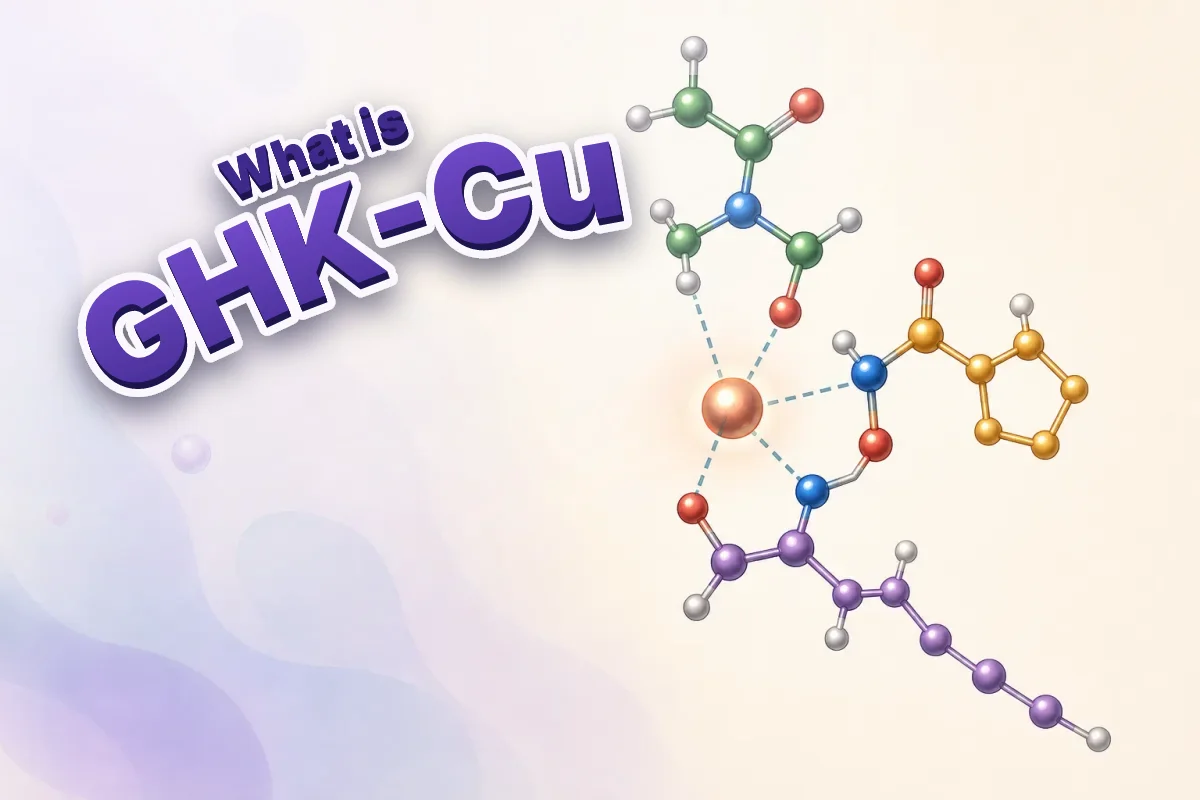
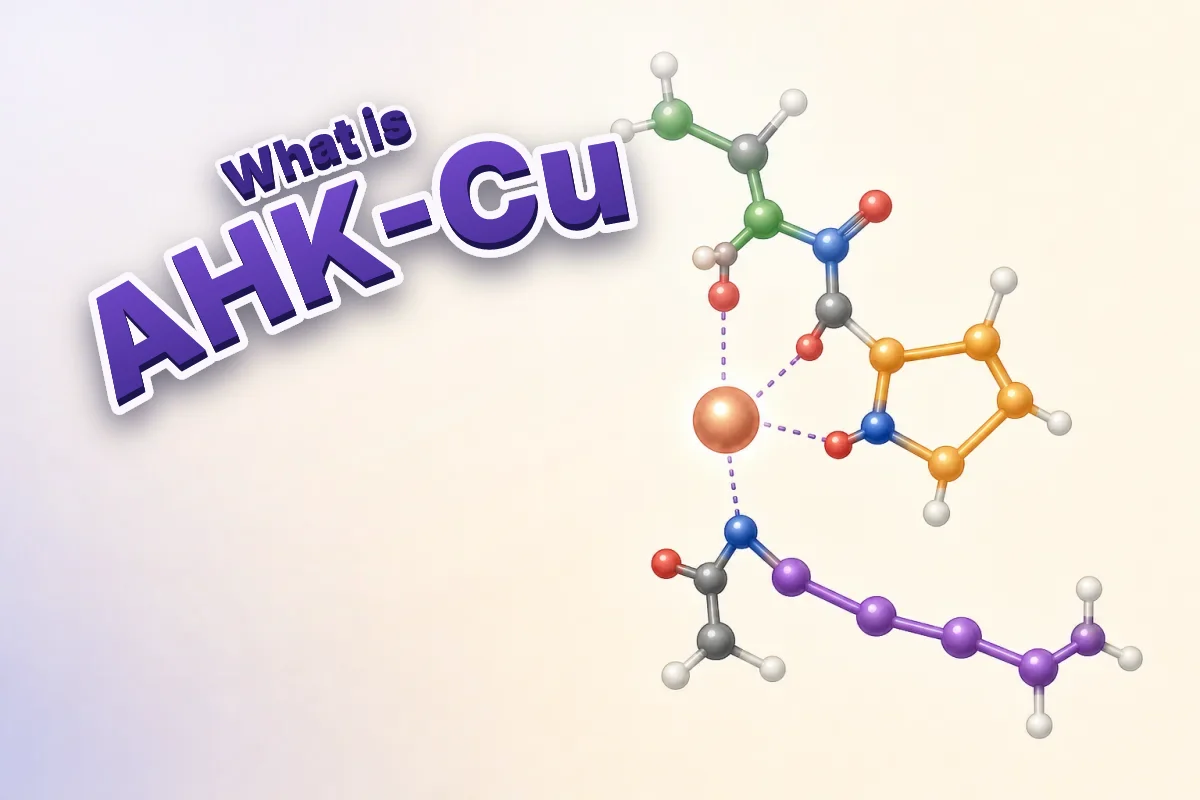
- AHK-Cu is the copper(II) complex of the synthetic tripeptide Ala-His-Lys, which differs from GHK in its first residue, alanine for glycine [1], [4], [9].
- The only peer-reviewed study of AHK-Cu found that it stimulated elongation of cultured human hair follicles and the proliferation of cultured dermal papilla cells; the apoptosis count it measured did not reach significance, and nothing was measured in people [1].
- The only animal experiments are in a ProCyte patent filed in 1994 and granted in 1996, a legal document rather than a journal article; it reports hair at injection sites in telogen-phase C3H mice and a localised effect in infant rats, which is not evidence about people [2].
- The copper-binding papers measured GHK, DAHK and AHH, not AHK-Cu, so how AHK-Cu holds copper is inferred from relatives [6], [7].
- One 2026 review classes the evidence on AHK-Cu as experimental [3] and another calls it thin and poorly characterised [4]; AHK-Cu is investigational and not approved for human use in the UK.
Listen to the summary
A short two-voice summary of this guide.
Transcript
- Host
- I keep seeing AHK-Cu next to GHK-Cu. What is it?
- Researcher
- It is a copper complex of a synthetic tripeptide, alanine, histidine and lysine. GHK-Cu has glycine in the first place, so the two differ by a single amino acid. GHK was isolated in nineteen seventy-three as an activity in human albumin, and it is present in human plasma; AHK is synthetic.
- Host
- How much research is there on AHK-Cu?
- Researcher
- Very little. One peer-reviewed study, from two thousand and seven, tested it on human hair follicles kept in culture and on cultured dermal papilla cells. It stimulated follicle elongation and cell proliferation in the cultures. The count of dying cells fell, but not significantly. Nothing was measured in people.
- Host
- And animals?
- Researcher
- Only in a patent from ProCyte, filed in nineteen ninety-four and granted in nineteen ninety-six. It reports hair growth at injection sites in mice in the telogen phase of the hair cycle, a topical comparison with a phenylalanine version in mice, and a localised effect in infant rats. A patent is a legal document, and this one reports means and no statistical comparisons. None of it is evidence about people.
- Host
- Do we know how it holds copper?
- Researcher
- Not directly. Peptides with histidine in second place form well-known copper complexes, and GHK has been solved by crystallography, with three nitrogens around the copper. But none of the papers measured AHK-Cu itself, so its structure is inferred from relatives.
- Host
- What do recent reviews say?
- Researcher
- One 2026 review classes the evidence as experimental, and another calls it thin and poorly characterised. There is also a registered early phase one study, measuring transcriptomic aging clocks in skin, with a planned forty-eight participants, that lists AHK-Cu among five peptides. It has not reported, and a result from it would not be a result for AHK-Cu alone.
- Host
- So what is its status?
- Researcher
- AHK-Cu is investigational, and it is not approved for human use in the UK. No source records a marketing authorisation from the MHRA, the EMA, the FDA or Colombia's INVIMA. Every figure in this summary is in the written guide, with its source.
What is AHK-Cu?
What is AHK-Cu? It is the copper(II) complex of a synthetic tripeptide [4], L-alanyl-L-histidyl-L-lysine, written Ala-His-Lys or AHK [1], [3]. Its sequence differs from the better-known GHK, glycyl-L-histidyl-L-lysine, in the first residue only: alanine stands where GHK has glycine [1], [9]. A 2026 review of copper-binding peptides describes AHK-Cu as synthetic, with histidine-anchored Cu(II) coordination, and as resting on a thin, poorly characterised evidence base [4].
A tripeptide is a chain of three amino acids; a copper complex is the peptide with a Cu(II) ion held in its structure. Everything below is a description of published research, and the research is sparse. The sources used here are one peer-reviewed study of AHK-Cu itself [1], one US patent holding the only animal experiments among them [2], two 2026 reviews that mention the compound briefly [3], [4], and one trial registration that lists it [5]. Two copper-binding papers study neighbouring peptides rather than AHK [6], [7], a cell-culture study uses the same three residues without copper [8], and the remaining sources concern GHK-Cu [9], [10], [11].
- The peer-reviewed study is Pyo and colleagues, 2007: human hair follicles kept alive outside the body, and cultured dermal papilla cells [1].
- The animal work is a patent from ProCyte Corporation, a legal document with worked examples rather than a journal paper [2].
- The copper-binding papers measured GHK, DAHK and AHH; none of them measured AHK-Cu [6], [7].
- One 2026 review classes the evidence as experimental [3]; another calls it thin and poorly characterised [4].
- The registered study is a single-group, early phase 1 plan that lists AHK-Cu among five peptides [5].
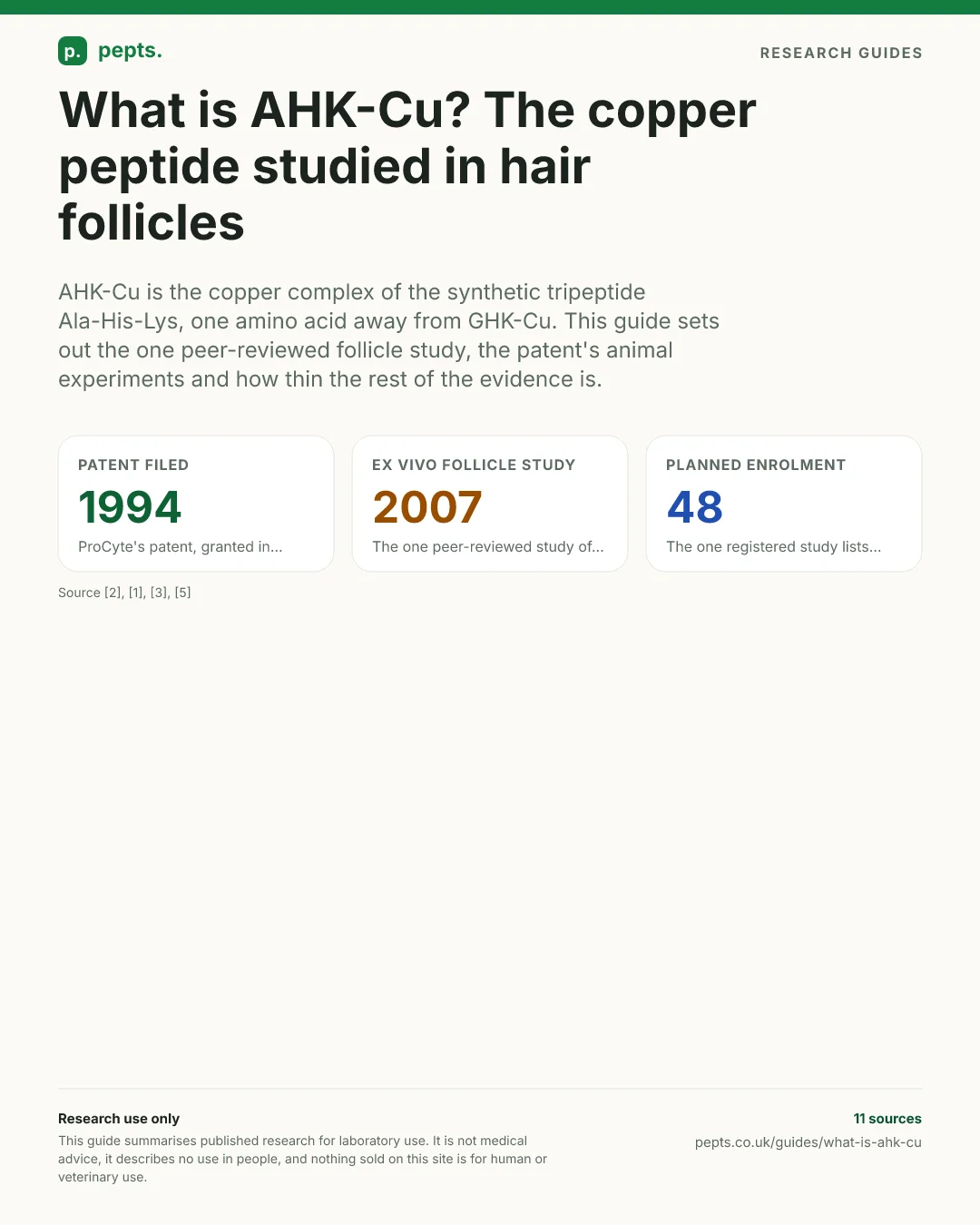
Patent filed
1994
ProCyte's patent, granted in 1996, holds the only animal experiments of AHK:Cu among the sources.
Ex vivo follicle study
2007
The one peer-reviewed study of AHK-Cu, in human follicles and dermal papilla cells in culture.
Planned enrolment
48
The one registered study lists AHK-Cu among five peptides and has not reported.
The timeline below is short because the record is short. It also shows that AHK-Cu is not new: the patent was filed in 1994 and the one peer-reviewed study is from 2007, so the thinness of the evidence is not the thinness of a recent compound.
1973
Pickart isolates GHK-Cu as an activity in human albumin; GHK is present in human plasma.[9]
1994
ProCyte Corporation files the application for US Patent 5,538,945.[2]
1996
US Patent 5,538,945, assigned to ProCyte Corporation, is granted: it discloses peptide-copper complexes, with hair-growth experiments in mice and infant rats in which AHK:Cu is among the complexes tested.[2]
2007
Pyo and colleagues report that AHK-Cu stimulated the elongation of human hair follicles ex vivo and the proliferation of dermal papilla cells in vitro.[1]
2026
One 2026 review describes AHK-Cu as supported by experimental, ex vivo evidence; another describes it as resting on a thin, poorly characterised evidence base.[3], [4]
October 2026
A single-group early phase 1 study that lists AHK-Cu among five peptides in one topical serum is first posted on the trial registry.[5]
One further paper uses the same three residues without copper. A 2018 cell-culture study tested a vitamin C-linker-conjugated Ala-His-Lys tripeptide on mouse myoblast cells, which is a different molecule from AHK-Cu and is not evidence about it [8].
How AHK-Cu holds copper
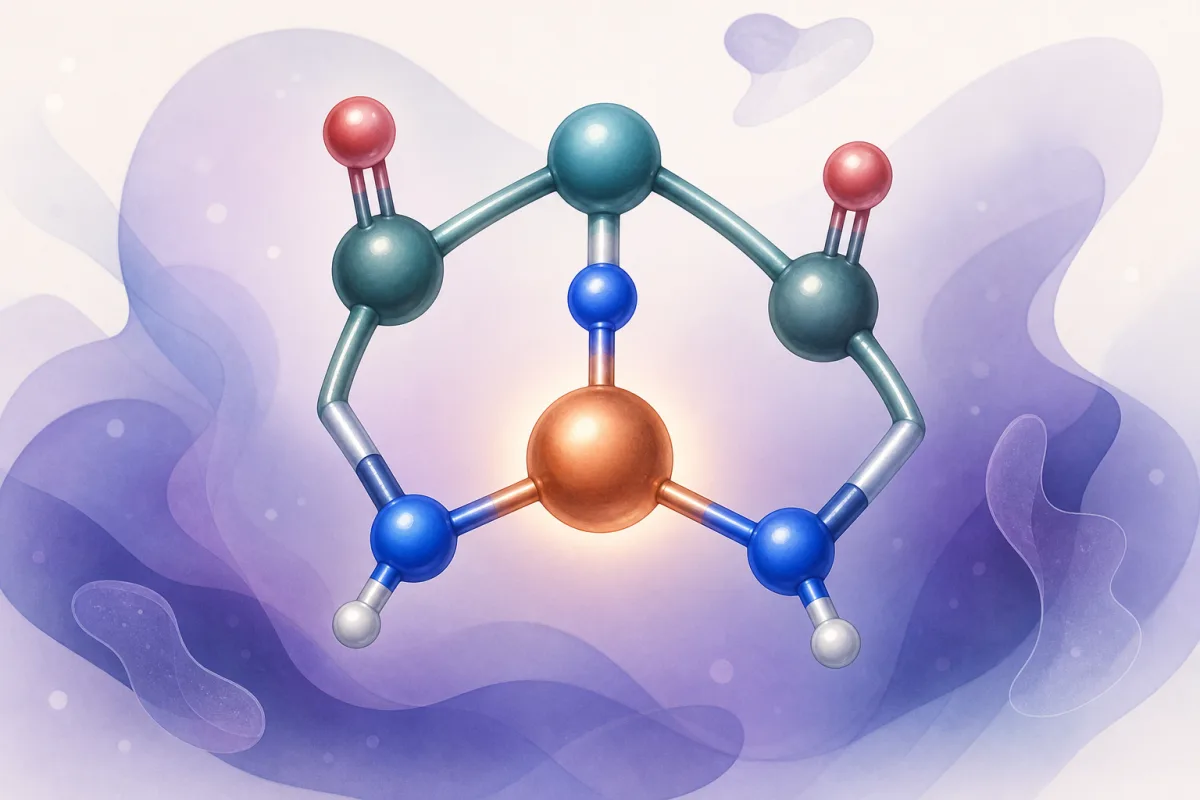
Whether a peptide holds copper depends on which atoms can reach the ion. A 2017 inorganic chemistry paper describes peptides and proteins with the N-terminal motif NH2-Xxx-His, where Xxx is any residue and histidine sits second, as forming well-established Cu(II) complexes. In that arrangement Cu(II) is bound by three nitrogens from the peptide and an external ligand in the equatorial plane, called the 3N form [6]. The paper names Gly-His-Lys as the canonical peptide of the Xxx-His motif and Asp-Ala-His-Lys, from human serum albumin, as the canonical peptide of the Xxx-Zzz-His motif, in which Cu(II) is bound by four nitrogens from the peptide (the 4N form) [6].
AHK has histidine second, so by sequence it fits the Xxx-His pattern, with alanine as Xxx [6]. That is as far as the sources go. They contain no spectroscopy, crystal structure or binding measurement of AHK-Cu, so how AHK-Cu actually sits around the copper ion has not been shown in them. The nearest measurement is of a different peptide, Ala-His-His (AHH), which the 2017 paper found could form both the 3N type and a four-nitrogen 4N type depending on pH: the 3N form predominated at about pH 4 to 6.5 and the 4N form at about pH 6.5 to 10 [6]. AHH is a neighbour of AHK, not AHK, and it shows only that small changes in a sequence can change the way a peptide holds copper.
GHK is the best-characterised relative. A 2011 study solved the crystal structure of the Cu(II) complexes of GHK and DAHK and examined them in solution. In solution, [Cu(II)(GHK)] is a monomer with three nitrogen ligands, from the amino group, an amidyl nitrogen and the imidazole of histidine, while in the solid state the complex is a dimer whose fourth site is held by an oxygen from a carboxylate [7]. DAHK, by contrast, binds through its amino group, two amidyl nitrogens and one imidazole nitrogen, with a water molecule apical to the copper [7].
The same paper shows why one cannot assume that near-identical peptides behave alike. Copper exchange between DAHK peptides was very slow, unlike the fast exchange seen with GHK, and [Cu(II)(GHK)] could be reduced to Cu(I) at about -0.62 V against a silver chloride reference with release of the copper, whereas [Cu(II)(DAHK)] could not [7]. Two plasma peptides that both bind copper through histidine therefore differed in how they exchange and release copper [7].
The ProCyte patent describes the family of complexes it covers in plain chemical terms: dipeptides or tripeptides chelated to copper at a molar ratio from about 1:1 to 3:1, with histidine, arginine or a derivative in the second position from the amino terminus [2]. It also records that the solution of one prepared complex was a dark blue-purple with a characteristic absorption maximum at 563 to 580 nm [2]. That colour is an observation about a solution, not a structure.
The patent's mouse and rat hair studies
The only animal experiments among the sources are in US Patent 5,538,945, filed by ProCyte Corporation in 1994 and granted in 1996 [2]. A patent is a legal document that describes an invention and gives worked examples; it is not a journal article. The excerpts of it used here report group means, some with a ± spread, and no statistical comparisons [2]. The experiments are worth describing because they are the only place AHK:Cu was tried in a living animal, and for the same reason they should be read as the patent's own account.
In Example 12, AHK:Cu was injected into the skin of telogen-phase C3H mice, 60 days old, the resting phase of the hair cycle, and was followed by hair growth at the injection sites [2]. The investigators counted the mice growing hair at the injection site and measured the diameter of the hair-growth region at day 21 [2]. AHK:Cu was tested at a molar ratio of 2:1 in groups of four animals [2].
A further example repeated the intradermal experiment in C3H mice, 60 days old and in the telogen phase of hair growth, with versions of AHK:Cu built from D-amino acids, the mirror-image forms of the natural L-amino acids [2]. The patent states that substituting D-amino acids for the corresponding L-amino acids did not affect hair-growth activity [2]. Its table, which reports an area of hair growth in units the excerpt does not state, shows lower means for the version with D-alanine in the first position than for the other versions [2].
The topical experiment compared AHK:Cu with AHF:Cu, a complex in which lysine is replaced by phenylalanine, in telogen-phase female C3H mice aged 60 to 65 days [2]. The point of the experiment, as the patent reads it, is lysine against phenylalanine. The response, called Percent Treatment Area, was read at day 20, day 27 and day 34 [2]. At one of the two strengths tested, AHK:Cu reached a mean of 1.29% on day 20, 23.07% on day 27 and 90.14% on day 34, while AHF:Cu reached 0.00%, 0.00% and 12.91% [2].
Reported means for AHK:Cu and AHF:Cu from the patent's topical experiment in telogen-phase female C3H mice, read at days 20, 27 and 34. These are mice in a patent, not people.
The patent reports each mean with a spread (for example 1.29 ± 1.29) and the excerpts report no statistical comparison. Only the rows for one of the two strengths tested are drawn.
Source [2]
The patent reads this as showing that complexes with hydrophilic residues, such as the lysine of AHK:Cu, are more active by topical application than similar peptides with hydrophobic residues such as the phenylalanine of AHF:Cu, and it notes that the reverse holds for injection, where the hydrophilic complexes were less active [2]. That is the patent's interpretation of a single comparison in mice, not an established rule.
The last example used infant rats. Sprague-Dawley pups, 8 days old and kept in 5 litters of 10 to 11, were given one intradermal injection of AHK:Cu in sterile saline, or saline alone [2]. From the next day designated animals received 7 consecutive daily intraperitoneal injections of a chemotherapy drug, cytosine arabinoside (Ara-C), and on day 10 hair loss at the injection site was scored from 0 for normal to 4 for total loss of hair [2]. The scale runs through 1 for slight thinning, 2 for moderate thinning and 3 for sparse hair cover [2].
Ara-C caused significant hair loss by days 5 to 6 in most animals. Saline-only animals scored 0.00, animals given Ara-C alone scored 4.00, and every AHK:Cu group scored lower than that, between 3.25 and 1.11 [2]. The patent says the injection generally kept hair within a 0.25 cm radius of the site, and that sections showed normal-looking anagen follicles, the growing phase, at the site while follicles away from it were dystrophic and non-functional [2]. This was a localised effect in infant rats, reported in a patent, and is not evidence about people given chemotherapy.
| Example 12 | Intradermal injection | Telogen-phase C3H mice, 4 per group | Animals growing hair and region diameter at day 21 | Hair growth at the injection sites [2] |
| D-amino acid versions | Intradermal injection | C3H mice, 60 days old, telogen phase | Area of hair growth | The patent states no effect on activity; the D-alanine version had lower means [2] |
| AHK:Cu against AHF:Cu | Topical | Telogen-phase female C3H mice, 60 to 65 days old | Percent Treatment Area, days 20, 27, 34 | AHK:Cu ahead of AHF:Cu at one of the two strengths tested [2] |
| Example 16 | Intradermal injection, with a chemotherapy drug given into the abdomen | Sprague-Dawley rat pups, 8 days old | Alopecia score 0 to 4 at day 10 | Every AHK:Cu group scored lower than Ara-C alone; hair kept near the injection site [2] |
Source [2]
The human hair follicle study
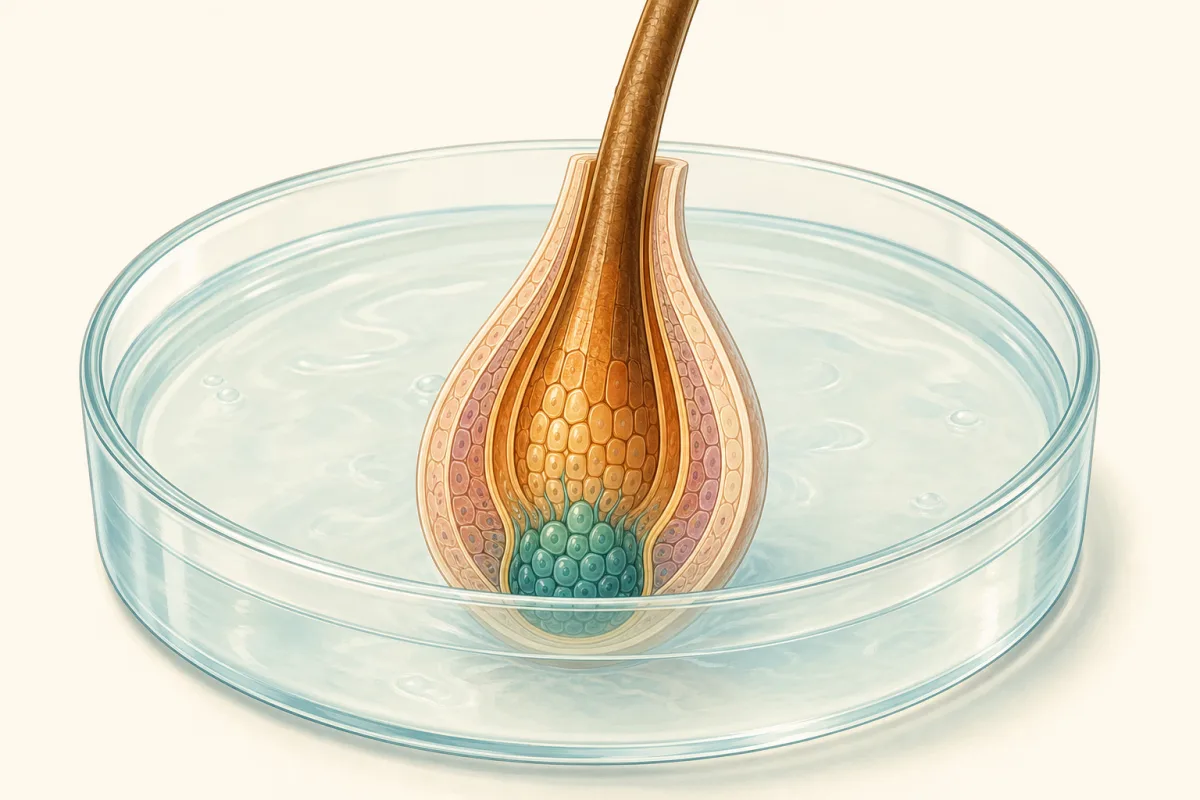
The one peer-reviewed study of AHK-Cu itself was published in 2007 by Pyo and colleagues in Archives of Pharmacal Research [1]. Its title speaks of human hair growth in vitro, and its design has two parts. The first is an ex vivo model: human hair follicles are removed from skin and kept alive in culture, so that their lengthening can be measured outside the body. The second is a cell culture of dermal papilla cells, which the paper describes as specialised fibroblasts that are important in the morphogenesis and growth of hair follicles [1]. Neither part involves a person receiving anything; this is tissue and cells in a dish.
The abstract opens by recalling that a tripeptide-copper complex has been described as a growth factor for various differentiated cells, stimulating proliferation of dermal fibroblasts and raising production of vascular endothelial growth factor while lowering secretion of transforming growth factor-beta1 [1]. The authors then evaluated L-alanyl-L-histidyl-L-lysine-Cu2+ on human hair growth ex vivo and on cultured dermal papilla cells [1].
AHK-Cu at 10⁻¹² to 10⁻⁹ M, a range from picomolar to nanomolar concentrations, stimulated the elongation of human hair follicles ex vivo and the proliferation of dermal papilla cells in vitro [1]. The abstract does not give the lengths, the number of follicles or the donors, so the size of the effect cannot be stated from it [1]. A 2026 review tabulates the same ex vivo work as covering 10⁻¹³ M to 10⁻⁷ M; that differs from the abstract's range, and the abstract's is the one used here [3].
The authors also asked whether the cells were dying less often. Annexin V-fluorescein isothiocyanate and propidium iodide labelling with flow cytometry, a method that counts cells by stage of cell death, showed that 10⁻⁹ M AHK-Cu reduced the number of apoptotic dermal papilla cells, but the decrease was not statistically significant [1]. Alongside that count, they report that the ratio of Bcl-2 to Bax was elevated and the levels of the cleaved forms of caspase-3 and PARP were reduced by treatment with 10⁻⁹ M AHK-Cu, and they propose from this the preclusion of the apoptosis of dermal papilla cells [1].
The authors proposed that AHK-Cu promotes the growth of human hair follicles, and that the stimulatory effect may occur through stimulating the proliferation of dermal papilla cells and precluding their apoptosis [1]. The wording is a proposal. The one direct count of dying cells did not reach significance, and the supporting evidence is protein markers at a single concentration [1].
A 2026 review of short peptides in hair research summarises the study as having shown that AHK-Cu stimulated elongation of human hair follicles in ex vivo research, and that AHK-Cu promoted growth of dermal papilla cells in vitro [3]. The same review adds that AHK-Cu's specific signalling mechanism is less well characterised than that of GHK-Cu [3].
AHK-Cu vs GHK-Cu
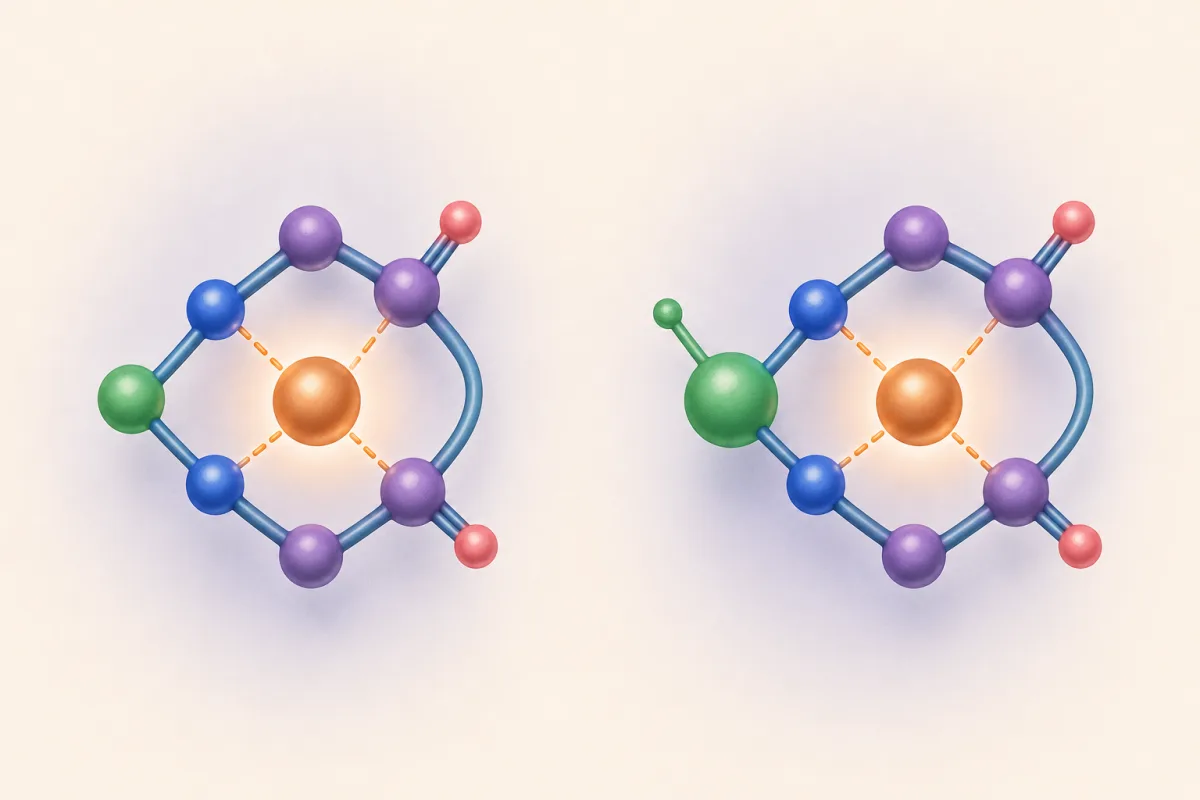
The two complexes are close in structure and far apart in how much has been written about them. GHK-Cu is the glycine peptide; AHK-Cu replaces that glycine with alanine [1], [9]. Both place histidine second, which is the position the Xxx-His copper-binding motif depends on [4], [6]. The 2026 review that compares them describes AHK-Cu as sharing the motif but resting on a thin, poorly characterised evidence base [4].
| Sequence | Ala-His-Lys [1] | Gly-His-Lys [9] |
| Origin | Synthetic [4] | Occurs naturally in human plasma, saliva and urine [9] |
| Copper-binding motif | Histidine second, the Xxx-His pattern; no structure of AHK-Cu in these sources [4], [6] | Same pattern; three nitrogen ligands in solution and a solved X-ray structure [6], [7] |
| Research focus | Human hair follicles ex vivo and dermal papilla cells [1]; hair experiments in a patent [2] | Gene expression, fibroblasts, wound healing and skin [9], [10] |
| Peer-reviewed evidence | One study of AHK-Cu itself [1] | Several reviews summarising work across skin, wound and gene-expression studies [9], [10] |
| Human trials | None among these sources; listed in a registered study with other peptides [5] | A 1994 randomised, placebo-controlled trial of a GHK-copper gel in diabetic ulcers [11]; placebo-controlled skin studies summarised in a review [9] |
| 2026 reviews | Experimental evidence, ex vivo [3]; thin and poorly characterised [4] | Set beside AHK-Cu in a table in the 2026 review [4]; no experiment in these sources tests both in the same assay [1], [2] |
GHK-Cu's literature has a different texture. GHK is present in human plasma, saliva and urine [9]. Gene-expression profiling with the Broad Institute's Connectivity Map found that GHK changed the expression of 31.2% of human genes by 50% or more [10]. In people, a multicentre, randomised, evaluator-blinded, placebo-controlled trial of a GHK-copper gel in diabetic neuropathic ulcers was published in 1994 [11]. None of that transfers to AHK-Cu, which has not been put through the same experiments.
The comparison that would answer the obvious question, AHK-Cu and GHK-Cu in the same assay, does not appear in the sources. Pyo and colleagues studied AHK-Cu alone [1], the patent compared AHK:Cu with AHF:Cu and not with GHK:Cu in the excerpts used here [2], and the registration lists AHK-Cu and GHK-Cu among five peptides in one peptide serum intervention [5].
How much is known, and its regulatory status
Taken together, the evidence is one cell-and-tissue study, one patent with animal experiments, and two reviews that each describe the compound briefly. The Biomedicines review lists AHK-Cu under experimental evidence, in the human hair follicle organ, with hair follicle elongation as the outcome and a proposed action of stimulating dermal papilla cell proliferation and preventing apoptosis [3]. The Pharmaceutics review calls the evidence base thin and poorly characterised and lists the compound's rationale as cosmetic angiogenesis, hair and skin claims [4].
The registered study is NCT07888595. It is interventional, early phase 1, single group, with no masking and an estimated enrolment of 48, and it measures transcriptomic biological age in treated against untreated skin; blood and skin samples are analysed, with IL6 and IL8 measured in serum [5]. It has a single group whose one arm covers systemic agents and/or a topical formulation. The topical part is a peptide serum applied to defined skin sites, with untreated skin on the same participant as the control, and the registration lists five peptides in that one intervention: GHK-Cu, AHK-Cu, Epitalon, PGP and CLV [5].
The status is enrolling by invitation, the record was first posted on 22 October 2026, the estimated start is 21 October 2026 and the estimated primary completion is 14 October 2028 [5]. The record is a study plan registered by its sponsor, a third party's intended research, and this guide describes it without suggesting any use. A registration describes a plan. It reports no findings, and because AHK-Cu is one of several peptides in the intervention, a result from it would not be a result for AHK-Cu alone [5].
No source in this guide records a marketing authorisation for AHK-Cu from the MHRA, the EMA, the FDA or Colombia's INVIMA. The research described here was done on isolated cells, cultured follicles and animals, and a registered plan that has not reported.
What is still open
Because so little has been done, the list of what has not been measured is longer than the list of what has. Each item below is an absence in the sources used here, not a claim that the work does not exist anywhere.
- No results from any human study of AHK-Cu are among the sources; the one registered study has not reported and lists several peptides together [5].
- No peer-reviewed animal study of AHK-Cu is among them; the animal experiments are the patent's own [2].
- No structure, spectrum or binding measurement of AHK-Cu itself is among them; the copper-binding work covers GHK, DAHK and AHH [6], [7].
- No experiment places AHK-Cu and GHK-Cu side by side in the same assay [1], [2].
- The abstract of the ex vivo study gives no follicle lengths, follicle numbers or donors [1].
- Whether the cell-culture results in dermal papilla cells carry over to a hair follicle in a person is not addressed by any source here [1].
For a reader weighing how much to read into the name, the plain summary is that AHK-Cu is a copper-binding relative of GHK-Cu with one 2007 follicle study, one patent and a place in a recent registration, while GHK-Cu has a literature across gene expression, wounds, skin and a handful of human trials [1], [2], [5], [9], [10], [11]. The comparison above shows where the two overlap, and where AHK-Cu is simply unstudied.
On our shelf
Research-grade GHK-Cu, for laboratory use only.
View the listing
Research-grade AHK-Cu, for laboratory use only.
View the listing
Research-grade BPC-157 + TB-500 + GHK-Cu, for laboratory use only.
View the listing
Research use only This guide summarises published research for laboratory use. It is not medical advice, it describes no use in people, and nothing sold on this site is for human or veterinary use.
References
Every figure in this guide points at one of the sources below; the number in brackets is the entry it came from.
- A
Pyo HK, Yoo HG, Won CH, Lee SH, Kang YJ, Eun HC, Cho KH, Kim KH.
PreclinicalArchives of Pharmacal Research2007DOI 10.1007/BF02978833PMID 17703734pubmed.ncbi.nlm.nih.gov
- U
Pallenberg AJ, Patt LM, Trachy RE.
OtherUS Patent 5,538,945 (ProCyte Corporation)1996patents.google.com
- B
Fan C, Chen Y, Huang Q, Ou WY, Zhang C, Sun Y, Wu T, Leung OY, Iu HC, Shi J.
ReviewBiomedicines2026DOI 10.3390/biomedicines14040864PMID 42072405PMC13113319doi.org
- P
Mateescu D-M, Gavrilescu D-M, Mincioaga R-I, Pah A-M, Toma A-O, Serban D-V, Avram CA, Craciun M-L, Enache B, Muresan C-O, et al.
ReviewPharmaceutics2026DOI 10.3390/pharmaceutics18091077PMID 42797253PMC13610439doi.org
- C
Frontiers in Bioscience Research Institute and Aging
Regulator or registryClinicalTrials.gov2026NCT07888595clinicaltrials.gov
- I
Gonzalez P, Vileno B, Bossak K, El Khoury Y, Hellwig P, Bal W, Hureau C, Faller P.
PreclinicalInorganic Chemistry2017 - C
Hureau C, Eury H, Guillot R, Bijani C, Sayen S, Solari PL, Guillon E, Faller P, Dorlet P.
PreclinicalChemistry (Weinheim an der Bergstrasse, Germany)2011 - D
Jung JI, Park KY, Lee Y, Park M, Kim J.
PreclinicalDifferentiation2018 - B
Pickart L, Vasquez-Soltero JM, Margolina A.
ReviewBioMed Research International2015 - I
Pickart L, Margolina A.
ReviewInternational Journal of Molecular Sciences2018 - W
Mulder GD, Patt LM, Sanders L, et al.
Randomised trialWound Repair and Regeneration1994
Questions
What is the difference between AHK-Cu and GHK-Cu?
AHK-Cu is Ala-His-Lys bound to copper and GHK-Cu is Gly-His-Lys bound to copper, so they differ in the first amino acid only [1], [9]. GHK-Cu was isolated in 1973 as an activity in human albumin, GHK is present in human plasma, and it has a wide literature, while AHK-Cu is synthetic and rests on one peer-reviewed study and a patent [2], [4], [9].
Is AHK-Cu a copper peptide?
Yes. It is a tripeptide bound to Cu(II), with histidine in the second position, the pattern that forms well-established Cu(II) complexes in other peptides [4], [6]. No structure of AHK-Cu itself appears in the sources, so how it holds the ion is inferred from relatives [6], [7].
What does AHK-Cu hair follicle research show?
In a 2007 study, AHK-Cu stimulated the elongation of cultured human hair follicles and the proliferation of cultured dermal papilla cells [1]. A patent filed in 1994 also reports hair growth at injection sites in telogen-phase C3H mice and a localised effect in infant rats [2]. None of it was measured in people.
How many AHK-Cu studies are there?
Among the sources used here there is one peer-reviewed study of AHK-Cu [1], one patent with animal experiments [2], one 2026 review that classes the evidence as experimental [3] and another that calls it thin and poorly characterised [4], and one registered early phase 1 study that lists it with other peptides [5].
Is AHK-Cu approved?
AHK-Cu is investigational, and it is not approved for human use in the UK. No source in this guide records a marketing authorisation for it from the MHRA, the EMA, the FDA or Colombia's INVIMA.